
MCPCB vs MPCB: Metal Core PCB Guide for Electrical Buyers
MCPCB vs MPCB: Metal Core PCB Guide for Electrical Buyers
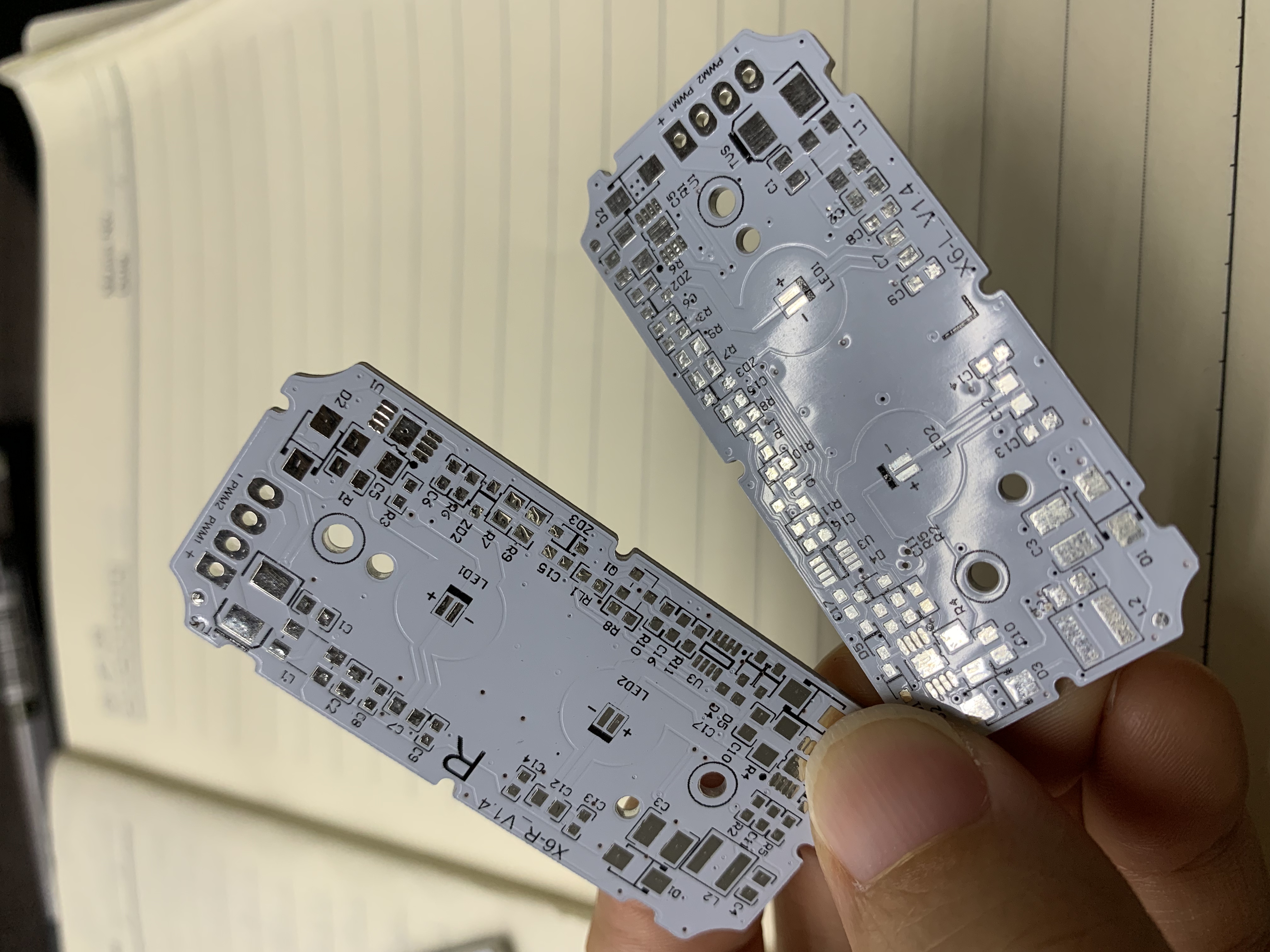
Short answer: MCPCB stands for Metal Core Printed Circuit Board. MPCB is often used for Motor Protection Circuit Breaker. These are two different components. If you are sourcing circuit boards for LED lighting, power electronics, automotive lighting, or home appliance lighting, this guide explains what an MCPCB is, how to specify one, and what WODE Circuit Technology (Zhuhai) Co., Ltd. can offer.
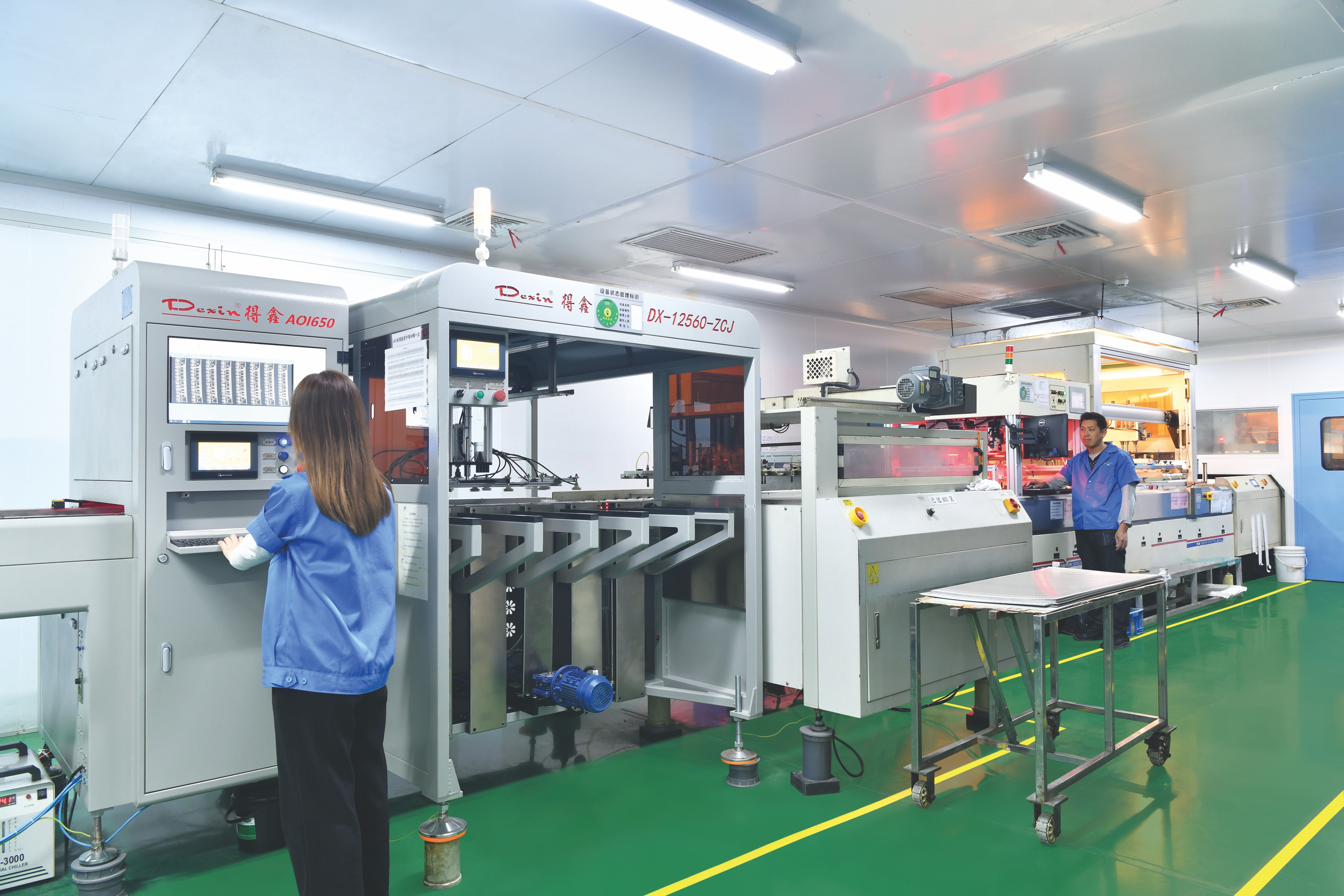
WODE Circuit Technology (Zhuhai) Co., Ltd. was founded in 2003 and focuses on PCB and FPC development and production. The company operates a 150,000 m² manufacturing facility with about 500 employees and an annual production capacity of 6,000,000 sqm. Its R&D team includes 15 engineers, and the company holds more than 40 patented technologies.
Problem Definition: Why Buyers Confuse MCPCB and MPCB
Search terms such as 1 Pole MPCB, 2 Pole MPCB, B Curve MPCB, C Curve MPCB, D Curve MPCB, Solar DC MPCB, and EV Charger MPCB are commonly used in the electrical protection industry. These terms describe circuit breakers or motor protection devices, not printed circuit boards. Buyers who search for MCPCB may actually be looking for a circuit breaker; buyers who need a metal core PCB may see circuit breaker results.
This creates a practical sourcing problem. RFQs can be sent to the wrong supplier, project timelines can slow down, and specifiers may receive products that do not match their application. The first step is to identify the correct component category.
MCPCB stands for Metal Core Printed Circuit Board. It uses a metal base layer such as aluminum, copper, or ceramic to provide better heat dissipation than standard FR-4. MPCB, in circuit breaker catalogs, usually means Motor Protection Circuit Breaker. Some related terms are MCCB, MCB, and RCBO. WODE lists some products with the abbreviation MPCB as shorthand for metal core PCB, so the full specification list should always be checked.
Industry Background: Two Different Product Families
The circuit breaker industry is large and active. According to Grand View Research, the global molded case circuit breaker market was valued at USD 6.23 billion in 2023 and is projected to reach USD 15.52 billion by 2030, with residential end-use growing at a CAGR of 14.3%. Grand View Research also estimated the global DC circuit breaker market at USD 4.13 billion in 2023, with growth of 8.7% CAGR until 2030, driven by solar and EV charging applications. Fortune Business Insights reports that Asia Pacific dominated the circuit breaker industry with a 40.23% revenue share in 2025.
These numbers help explain why search queries containing MPCB are common. Terms such as Solar DC MPCB, Distribution Box MPCB, and High Breaking Capacity MPCB point to circuit breaker applications. For photovoltaic installations, solar DC circuit breakers are often required to handle system voltages of 600V, 1000V, or 1500V DC, according to SEIA and the U.S. Department of Energy.
MCPCBs belong to a different part of the electrical and electronics supply chain. They are used inside LED modules, power supplies, automotive lamps, and industrial control systems where heat must be moved away from electronic components. WODE supports this segment with rigid MCPCBs, flexible printed circuits, FR-4/CEM1/CEM3 boards, CCL, and PCB inks.
Detailed Solution: WODE MCPCB Product Family
WODE manufactures several types of metal core PCBs for different working conditions. The table below summarizes key documented products and specifications.
| Product | Base Material | Key Specifications | Typical Application |
|---|---|---|---|
| MCPCB for Road Lighting | Aluminum Al1060 | Single sided; 1.6mm ±10%; 1oz copper; 208.00mm x 225.00mm; 2-up; white solder mask; black silkscreen; HASL-LF | Road lighting |
| MCPCB for Motor Lighting | Al5052 aluminum | Single sided; 1.6mm ±10%; 1oz copper; 243.00mm x 243.00mm; matt black solder mask; white silkscreen; HASL | Motor and vehicle lighting |
| High Voltage MCPCB | Aluminum | Single sided; 1.6mm ±10%; 1oz copper; 243.00mm x 243.00mm; OSP; black silkscreen; white solder mask | OEM lighting, high voltage LED modules |
| Coverlay MCPCB | Aluminum Al1060 | Single sided; 1.6mm ±10%; 1oz copper; 208.00mm x 225.00mm; white coverlay; black silkscreen; HASL-LF | Lighting |
| Double sided MPCB | Al5 aluminum | Double sided; 70/70um copper; 1.6mm ±0.16mm; 217.54mm x 197.80mm; 56-up; HASL-LF; black silkscreen | Home appliance applications |
| Thermoelectric Separated Cu based PCB | Copper | Double sided; 35um copper; 1.6mm ±0.16mm; 133.80mm x 120.00mm; 4-up; white solder mask; black silkscreen; OSP | Lighting applications requiring thermoelectric separation |
| Ceramic based PCB | Ceramic | Model: Ceramic based PCB | Ultraviolet phototherapy |
| PCB for Small Appliance Lighting Motherboard | FR-4 | 2 layers; 2-sided; 1.0mm ±0.1mm; 340.05mm x 150.00mm | Small appliance lighting |
The ceramic based PCB is designed for ultraviolet phototherapy scenarios. The thermoelectric separated copper-based board is documented as a double-sided copper-based substrate with thermoelectric separation. The double sided MPCB is made of Al5 material and is intended for home applications.
What to Look for in an MCPCB Manufacturer
MCPCB buyers should evaluate manufacturing scale, quality systems, product range, and international experience. WODE has passed ISO9001, ISO14001 and IATF16949 international certifications. Products comply with UL, RoHS and REACH standards. The company exports about 50% of its output and serves customers in markets including Brazil, Turkey, India, Vietnam, and Russia. These are documented company facts.
Step-by-Step Breakdown: How to Specify an MCPCB Correctly
A clear MCPCB specification reduces sampling delays and helps the supplier produce a board that matches the application. Use this six-step process.
1. Define the operating environment. Confirm whether the board will be used indoors, outdoors, in a vehicle, or in a specialty environment such as UV phototherapy.
2. Select the metal base. Al1060 is documented for road lighting MCPCBs. Al5052 is documented for motor lighting MCPCBs. Copper base is documented for thermoelectric separated boards. Ceramic base is documented for ultraviolet phototherapy.
3. Choose layer structure and copper thickness. WODE documents single-sided boards with 1oz copper, double-sided boards with 70/70um copper, and double-sided copper-based boards with 35um copper.
4. Specify solder mask and silkscreen. White solder mask is common on lighting boards. Matt black solder mask is documented on the MCPCB for motor lighting. Black silkscreen is documented on several products.
5. Choose surface finish. Documented finishes include HASL-LF and OSP. The choice affects assembly, shelf life, and cost.
6. Confirm panel size and quantity. WODE documents panel sizes such as 208.00mm x 225.00mm, 243.00mm x 243.00mm, 217.54mm x 197.80mm, and 133.80mm x 120.00mm. Multi-up panel layouts are also documented, such as 2-up, 4-up, and 56-up.
Use Cases: Where WODE MCPCBs Are Applied
MCPCB selection depends on the application. WODE documents products for road lighting, motor lighting, home appliances, and ultraviolet phototherapy.
Road lighting: The MCPCB for road lighting uses aluminum Al1060, a single-sided layer structure, 1oz copper, and HASL-LF surface finish. It is intended for lighting industry applications.
Motor lighting: The MCPCB for motor lighting uses Al5052 aluminum. The board is single-sided with 1oz copper and HASL surface finish. The matt black solder mask is designed for motor lighting scenarios.
Home appliance lighting: The double sided MPCB uses Al5 material with 70/70um copper and HASL-LF finish. It is documented as a double-sided aluminum-based board for home applications.
Specialty lighting and medical: The ceramic based PCB is designed for ultraviolet phototherapy. The thermoelectric separated copper-based board is documented for lighting applications that require thermal and electrical path separation.
OEM projects: The high voltage MCPCB is a single-sided aluminum board with OSP surface finish and black silkscreen. It is suitable for OEM applications in lighting.
Comparison Table: MCPCB vs MPCB at a Glance
| Attribute | MCPCB | MPCB Context |
|---|---|---|
| Full term in this guide | Metal Core Printed Circuit Board | Motor Protection Circuit Breaker |
| Function | Carries electronic circuits and helps dissipate heat | Protects motors and circuits from overload or short circuit |
| Typical base material | Aluminum, copper, or ceramic | Not applicable |
| Example search terms | MCPCB manufacturer, aluminum LED PCB, metal core PCB | 1 Pole MPCB, B Curve MPCB, Solar DC MPCB, EV Charger MPCB |
| Key specifications | Copper foil thickness, layer count, solder mask, surface finish, panel size | Poles, trip curve, breaking capacity, rated voltage, protection rating |
| Relevant standards | WODE products comply with UL, RoHS and REACH; ISO9001, ISO14001, IATF16949 certified | IEC 60947-4-1:2023 covers motor protective switching devices |
Trip curves are one of the clearest examples. Type B circuit breakers trip at 3-5x In for residential applications. Type C trips at 5-10x In for commercial and small motor applications. Type D trips at 10-20x In for industrial heavy machinery. These are circuit breaker specifications, not metal core PCB specifications.
Frequently Asked Questions
Are WODE MCPCBs compliant with RoHS, REACH, and international quality standards?
WODE Circuit Technology (Zhuhai) Co., Ltd. has passed ISO9001, ISO14001 and IATF16949 international certifications. Products comply with UL, RoHS and REACH standards. The company also holds more than 40 patented technologies and has an R&D team of 15 engineers.
What MCPCB manufacturing capabilities does WODE have?
WODE was founded in 2003 and operates a 150,000 m² manufacturing facility with about 500 employees. Annual production capacity is 6,000,000 sqm. Export sales account for about 50% of total sales, with markets including Brazil, Turkey, India, Vietnam, and Russia. Main products include Rigid MCPCB, FPCB, Infinity Length FPCB, FR-4/CEM1/CEM3 PCBs, CCL, and PCB inks.
What types of metal core PCBs can be sourced from WODE?
WODE documents MCPCBs for road lighting, motor lighting, high voltage lighting, coverlay aluminum boards, double sided aluminum-based metal core boards, thermoelectric separated copper-based boards, and ceramic based boards. The company also produces PCB for small appliance lighting motherboards with FR-4 material.
What information should I prepare for an MCPCB quotation?
Prepare the application environment, required base material, layer count, copper foil thickness, overall thickness, solder mask and silkscreen colors, surface finish, panel size, and estimated quantity. WODE documents examples such as Al1060, Al5052, copper base, ceramic base, HASL-LF finish, OSP finish, 1oz copper, 70/70um copper, and 35um copper.
How can I request an MCPCB sample or quotation from WODE?
For MCPCB sample and quotation requests, contact Melody Huang or Amy Bae by email at GJMYB1@wodepcb.com, by phone at +86-756-3906072, or by WhatsApp at +1 929 434 1657. You can also view and download the WODE brochure for more product information.
Conclusion
MCPCB and MPCB are easy to confuse but serve different roles. MCPCB is a metal core printed circuit board for thermally demanding electronic assemblies. MPCB usually refers to motor protection circuit breakers in protection and distribution catalogs. Understanding the difference prevents sourcing errors and helps you communicate clearly with suppliers.
If you need metal core PCBs for lighting, home appliance, automotive, or specialty applications, WODE Circuit Technology (Zhuhai) Co., Ltd. can provide documented products and manufacturing capabilities. Start the conversation with a clear specification, and the WODE team can support sampling, quoting, and production.
Ready to discuss your MCPCB project?
Email: GJMYB1@wodepcb.com
WhatsApp: +1 929 434 1657
Website: www.wodepcbfpc.com
Have Questions or Need More Details?
Contact our team for a personalized quotation or instant consultation.
Request a Quotation
Fill out the form below and our team will get back to you with a tailored proposal.
WhatsApp Direct Chat
Prefer to chat in real-time? Message us on WhatsApp for instant assistance & quick answers.
- Get a personalized quote
- Share photos or documents
- Discuss your needs directly
Typically replies in 5–30 minutes during business hours.