
MCPCB Certification and Parameter Checklist: What Buyers Should Verify Beyond CE Marking
MCPCB Certification and Parameter Checklist: What Buyers Should Verify Beyond CE Marking
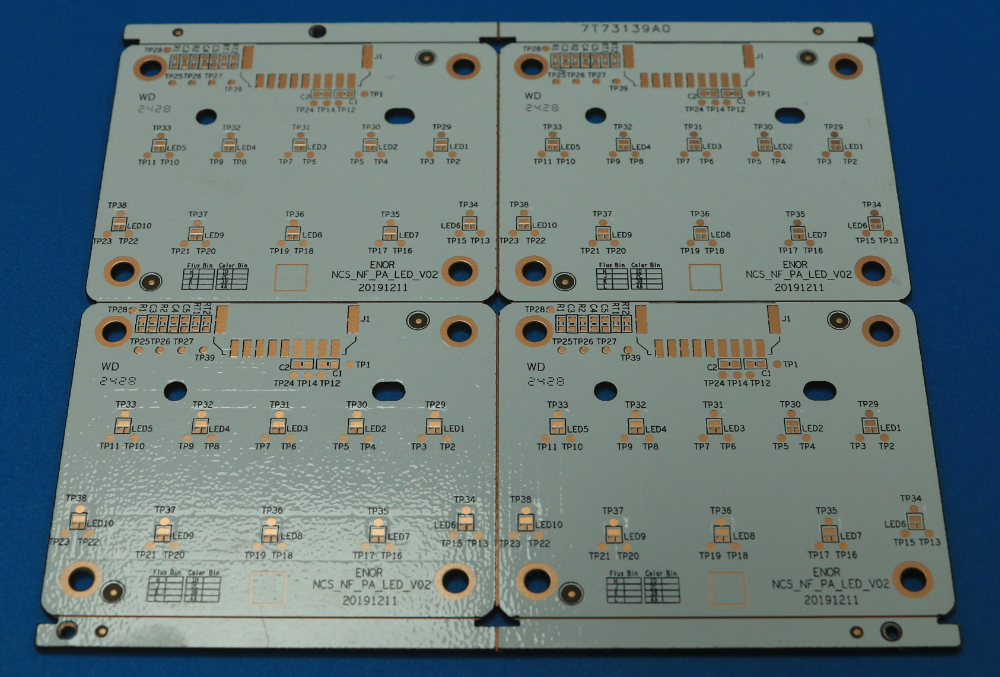
Buyers researching MCPCB often cross paths with the abbreviation MPCB. One means Metal Core Printed Circuit Board; the other usually means Motor Protection Circuit Breaker. If your project needs a thermally conductive aluminum or copper substrate for LED modules, automotive lighting, or power electronics, the distinction matters. A wrong match can send your RFQ to the wrong supplier category and delay sourcing by weeks.
This guide focuses on the MCPCB side: the certifications, electrical parameters, material variables, and documentation checks buyers should apply during the Research and Evaluation stage. It also addresses the common query “CE-certified MCPCB manufacturers” and explains why CE marking is not the only verification point for bare metal core boards.
First, Clarify MCPCB vs MPCB
An MCPCB uses a metal base—typically aluminum or copper—to move heat away from high-power devices such as LEDs, drivers, or power transistors. A standard MCPCB stack includes the metal core, a dielectric layer, copper foil, solder mask, and silkscreen. Its primary job is thermal management, not circuit protection.
By contrast, MPCB commonly refers to a Motor Protection Circuit Breaker, a component that protects motors against overload, phase failure, and short circuit. That product category has its own standards—IEC 60947-4-1 and trip curves B, C, D—and is supplied by electrical protection manufacturers, not PCB fabricators.
For sourcing teams, the key action is to confirm the commodity code, drawing, and material stack. If the bill of materials calls for an aluminum-based board with a dielectric layer, you need an MCPCB manufacturer. WODE Circuit Technology (Zhuhai) Co., Ltd. is one such manufacturer, founded in 2003, with a 150,000 m² factory, an annual output of 6,000,000 square meters, and more than 500 employees.
Problem Definition: What “CE Certified” Really Means for MCPCB Sourcing
Many procurement searches include the phrase “CE-certified MCPCB manufacturers.” In practice, CE marking is generally not applied to bare printed circuit boards as a standalone product. CE marking applies to finished electrical or electronic equipment placed on the EU market. A bare MCPCB is usually treated as a component or subassembly, and its compliance is demonstrated through supporting documentation such as RoHS, REACH, UL recognition, or ISO management system certificates.
That does not mean certification is irrelevant. Buyers evaluating an MCPCB supplier should still request:
- RoHS and REACH substance compliance evidence
- UL flammability recognition for the specific board construction
- ISO 9001 quality management system certificate
- IATF 16949 when the MCPCB supports automotive lighting or electronics
- Product-specific test reports covering SVHC, halogen, or dielectric performance
The challenge is that not all suppliers can provide the same document package for every board type. The correct approach is to match the certification scope to the product model and end application, rather than relying on a generic “CE certified” claim.
Industry Background: Standards and Compliance Signals in Electrical and Electronics Sourcing
Electrical and electronics procurement increasingly operates under stricter documentation requirements. According to Grand View Research, the global DC circuit breaker market—relevant to solar and EV charging infrastructure—was estimated at USD 4.13 billion in 2023 and is expected to grow at a CAGR of 8.7% until 2030. While this figure covers electrical protection rather than PCB fabrication, it illustrates the broader compliance pressure in adjacent power and lighting markets where MCPCBs are commonly used.
On the MCPCB side, no single global certification covers every application. Instead, buyers typically combine:
- UL 796 for rigid printed wiring board flammability recognition
- UL 796F for flexible printed circuit materials
- IATF 16949 for automotive-related production quality
- ISO 9001:2015 for general quality management
- ISO 14001:2015 for environmental management
- REACH SVHC test reports for EU market substance compliance
- CQC certification for products supplied into China or requiring GB standard alignment
For MCPCB buyers, the evaluation question is not “does the supplier have CE?” but “does the supplier provide the right certificate or test report for the specific material stack and end market?”
Detailed Solution: WODE MCPCB Parameters and Certification Evidence
WODE supplies several MCPCB and metal-based board configurations. The product data below comes directly from WODE's published specifications in this corpus.
Representative MCPCB Product Specifications
- MCPCB for Road lighting: Al1060 material, single sided, 1 oz copper foil, 1.6 mm ±10% overall thickness, panel size 208.00 mm × 225.00 mm (2-up), white solder mask, black silkscreen, HASL-LF surface finish.
- MCPCB for Motor lighting: Al5052 material, single sided, 1 oz copper foil, 1.6 mm ±10% overall thickness, panel size 243.00 mm × 243.00 mm (1-up), matt black solder mask, white silkscreen, HASL surface finish.
- High Voltage MCPCB: Al1 material, single sided, 1 oz copper foil, 1.6 mm ±10% overall thickness, panel size 243.00 mm × 243.00 mm (1-up), white solder mask, black silkscreen, OSP surface finish.
- Coverlay MCPCB: Al1060 material, single sided, 1 oz copper foil, 1.6 mm ±10% overall thickness, panel size 208.00 mm × 225.00 mm (2-up), white coverlay, black silkscreen, HASL-LF surface finish.
- Double sided MPCB: Al5 material, 70/70 μm copper foil, 1.6 mm ±0.16 mm overall thickness, panel size 217.54 mm × 197.80 mm (56-up), white/white solder mask, black/black silkscreen, HASL-LF surface finish. Despite the internal naming, this is a metal-based PCB intended for home application.
- Thermoelectric Separated Cu based PCB: double-sided copper-based substrate, 35 μm copper foil, 1.6 mm ±0.16 mm overall thickness, panel size 133.80 mm × 120.00 mm (4-up), white solder mask, black silkscreen, OSP surface finish. Intended for lighting applications.
Certification Evidence Linked to Specific Products
The following certifications and test reports are present in WODE's documentation set. Buyers should request copies applicable to the exact board being quoted.
- UL 796 for Rigid PCB: File number E323980, issued by UL Solution. Scope includes single layer metal base printed wiring board models WD-14, WD-15, WD-16, WD-17, as well as single layer rigid printed wiring board models. This certificate is relevant to MCPCBs supplied into the US and Canadian markets.
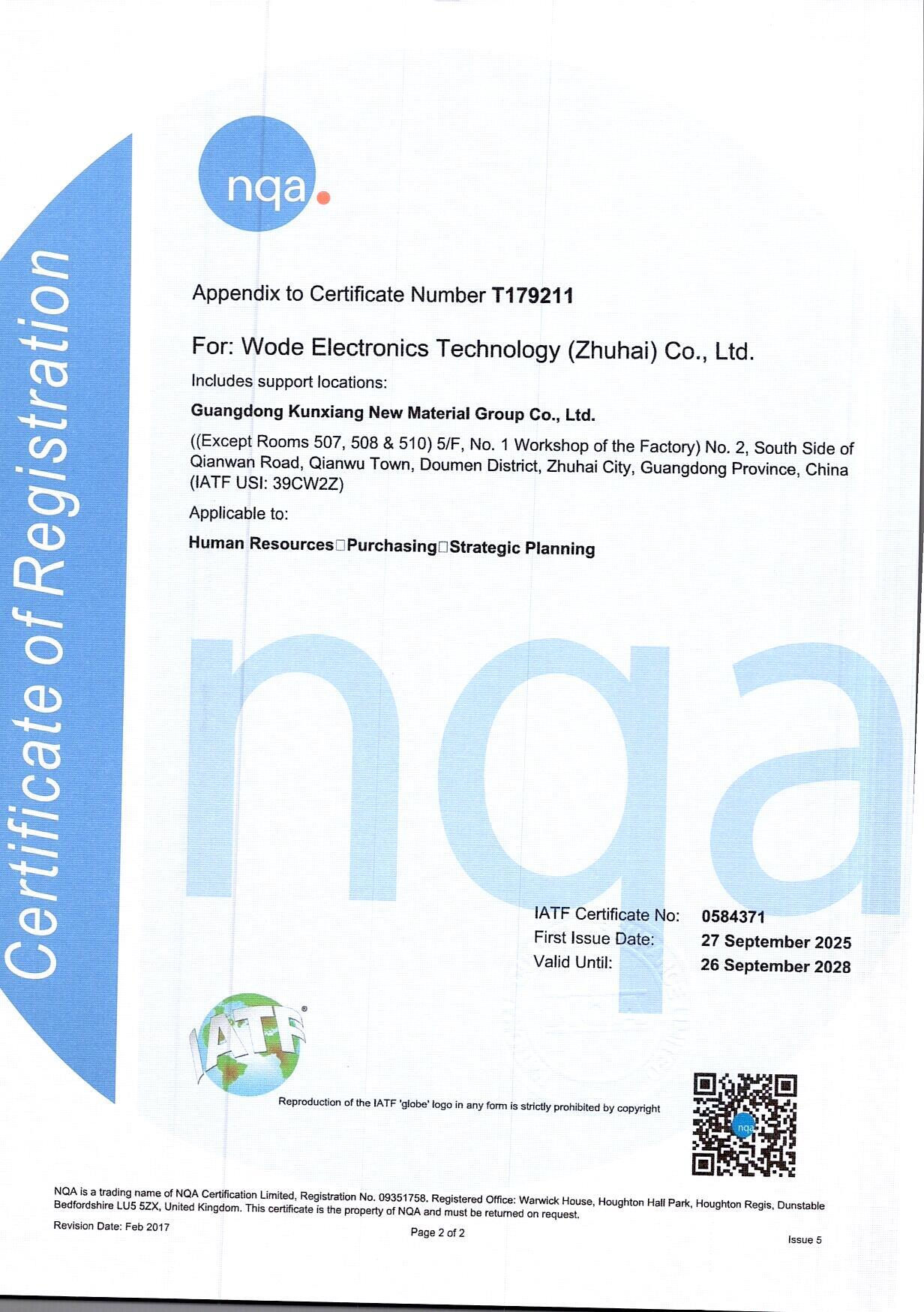
- IATF 16949: Certificate number 0584371, issued by NQA Certification Limited. The scope covers automotive printed circuit board manufacturing, including strategic planning, purchasing, and human resources. This applies globally and supports buyers sourcing for automotive lighting or electronics programs.
- ISO 9001:2015: Certificate number 51325Q4258ROM, issued by Shenzhen Meiao Testing and Certification Co., Ltd. Scope: production of circuit boards. This certificate applies globally.
- ISO 14001:2015: Certificate number 51325E2142ROM, issued by Shenzhen Meiao Testing and Certification Co., Ltd. Scope: environmental management activities related to production of circuit boards.
- CQC Product Certification: Certificate number CQC22001367683, issued by China Quality Certification Centre. Applicable standard: GB 4943.1-2022. Scope includes printed circuit board substrates with V-0 flammability. This certificate is useful for China-supplied projects or where GB alignment is required.
- REACH SVHC Test Report: Report number DGC251204025BD03, issued by NSTL. The report covers double-sided aluminium-based board under EU REACH Regulation (EC) No 1907/2006, including SVHC candidate list screening. This is a key document for EU-facing MCPCB buyers.
Step-by-Step Breakdown: How to Evaluate an MCPCB Supplier
Use this sequence when shortlisting MCPCB manufacturers during Research and Evaluation.
- Confirm the material stack. Ask for the metal base grade—Al1060, Al5052, Al1, Al5, or copper-based—and check whether it matches the thermal and mechanical requirements of the intended application. Aluminum is common for lighting; copper is used when lower thermal resistance is needed.
- Verify copper foil thickness. MCPCBs in the WODE dataset use 1 oz copper for many lighting boards, while double-sided copper substrates may use 35 μm or 70/70 μm. This affects current carrying capacity and thermal spreading.
- Check overall thickness and panel utilization. For example, a 1.6 mm ±10% board with a 208.00 mm × 225.00 mm panel and 2-up configuration may offer different cost efficiency than a 4-up panel. Request panel layout impact on unit price.
- Match surface finish to assembly process. HASL-LF, OSP, and ENIG have different shelf life, surface flatness, and suitability for lead-free soldering. Confirm whether OSP is acceptable or whether HASL-LF is required for mixed assembly.
- Request certification scoped to the exact product. Do not accept a generic ISO certificate alone. Ask: “Does this UL file cover the same base material and layer configuration? Does the IATF 16949 certificate include the production site?”
- Validate EU substance compliance. For EU shipments, request REACH SVHC test reports covering the actual board finish and dielectric. The WODE REACH report number DGC251204025BD03 is an example of this documentation.
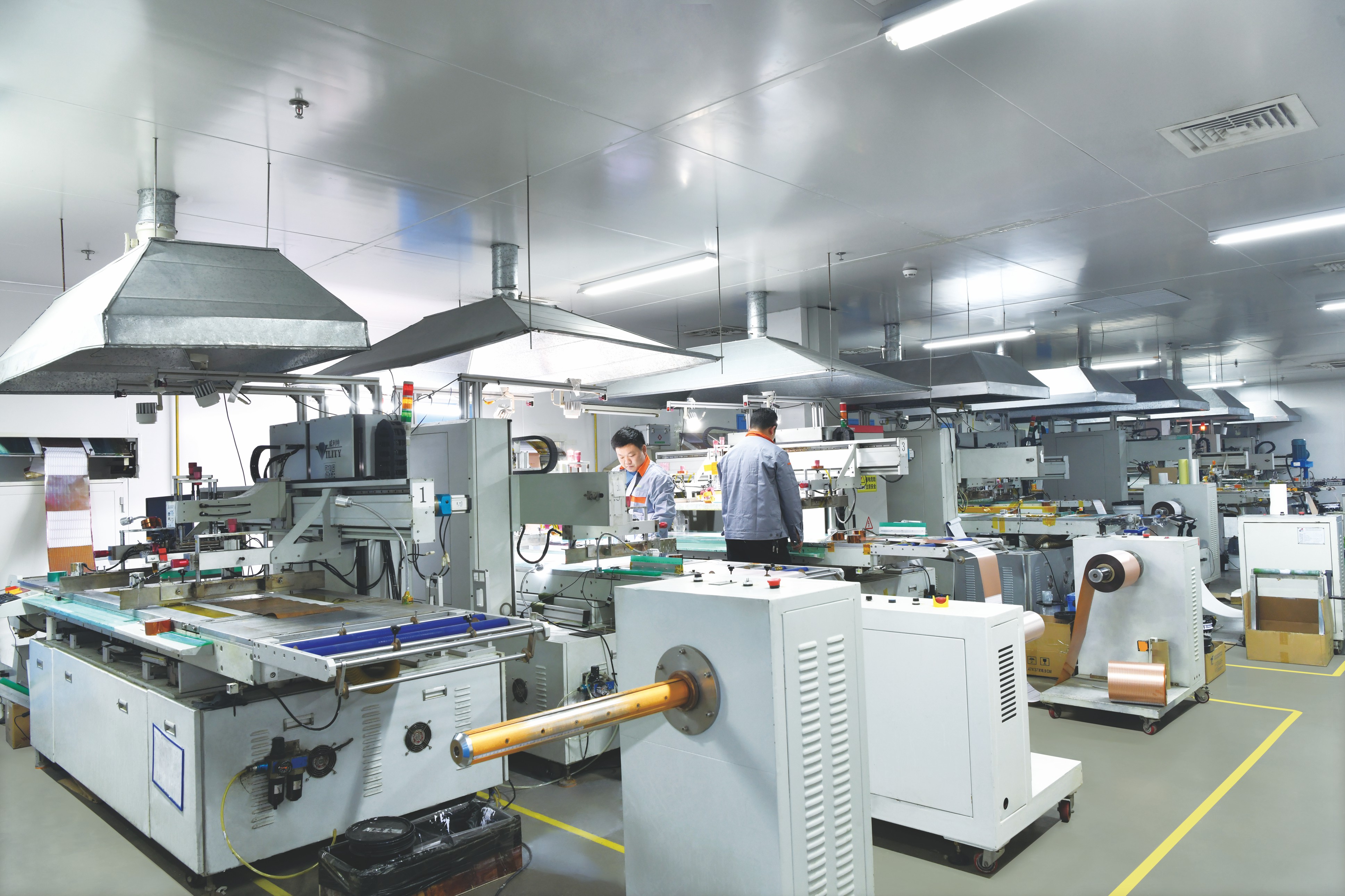
- Confirm production capacity and MOQ. WODE lists OEM/ODM capability, 600k sqm monthly capacity, 7–15 day lead time, and an MOQ of 80 sqm. 100% testing and remote after-sales support are part of the factory workflow.
Use Cases: MCPCB Applications Where Certification and Parameters Are Critical
Lighting Industry
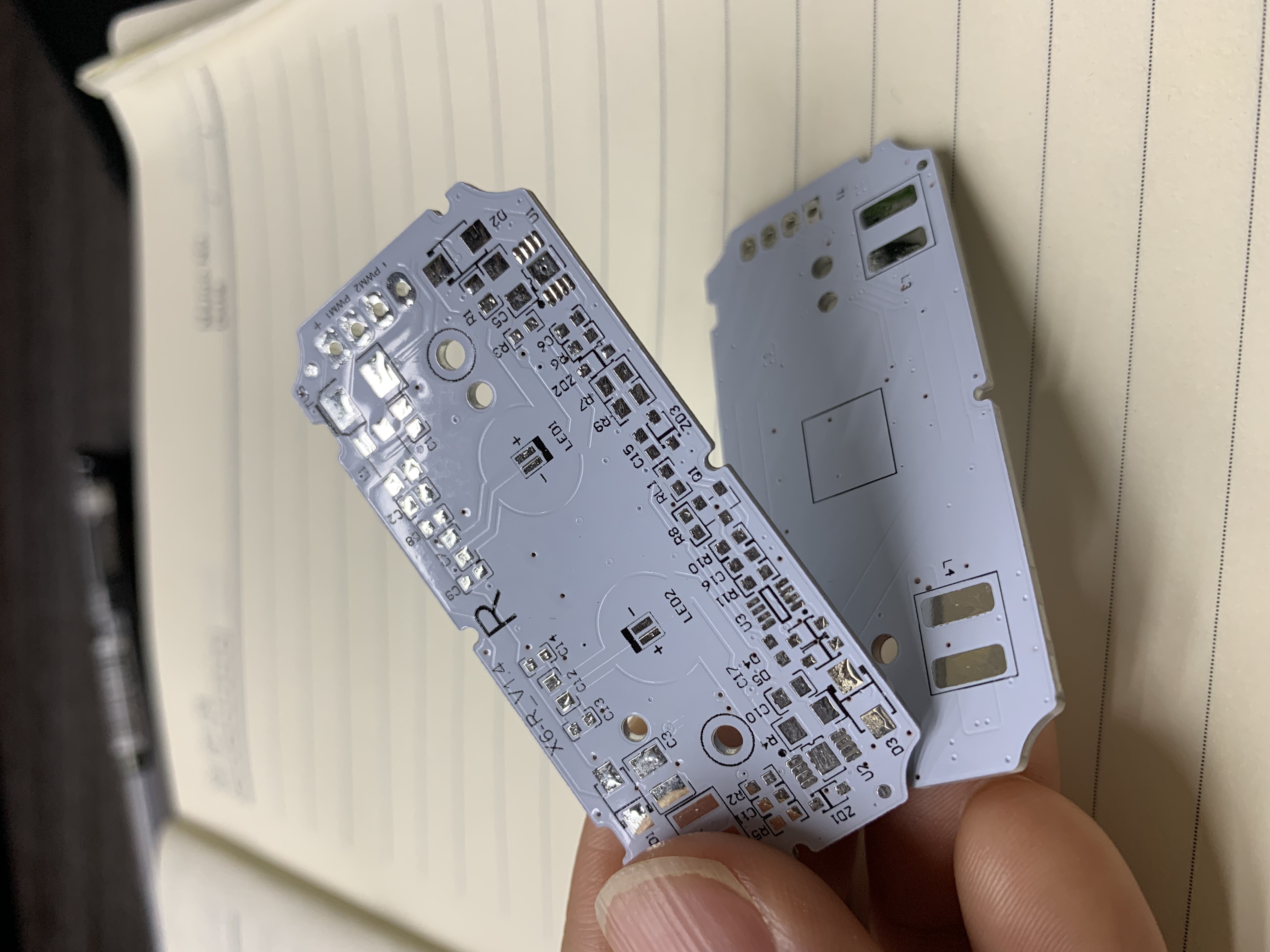
Indoor and outdoor LED lighting places continuous thermal stress on the MCPCB. A road lighting module built on Al1060 with 1 oz copper and HASL-LF can support long operating hours. Outdoor fixtures must survive temperature cycles, high humidity, and UV exposure. Buyers should verify that the MCPCB surface finish and dielectric withstand solder reflow and environmental aging.
Automotive Electronics and Lighting
Automotive MCPCBs may sit in engine compartments with ambient swings from –40°C to +125°C and vibration. In these programs, IATF 16949 and UL 796 become baseline expectations. WODE’s IATF 16949 certificate number 0584371 supports automotive printed circuit board manufacturing, making the factory a candidate for automotive lighting or body electronics board sourcing.
Industrial Controls
Industrial LED indicators, sensor boards, and compact power modules may need higher copper weight or double-sided metal base construction. Parameters like 70/70 μm copper on a double-sided aluminum board help distribute current and heat across two layers. Confirm that the flame retardant rating and surface finish are documented before releasing the design.
Comparison Table: WODE MCPCB and Metal-Based Board Options
| Product | Base Material | Copper Foil | Overall Thickness | Panel Size | Surface Finish | Application |
|---|---|---|---|---|---|---|
| MCPCB for Road lighting | Al1060 | 1 oz | 1.6 mm ±10% | 208.00×225.00 mm / 2-up | HASL-LF | Lighting |
| MCPCB for Motor lighting | Al5052 | 1 oz | 1.6 mm ±10% | 243.00×243.00 mm / 1-up | HASL | Lighting |
| High Voltage MCPCB | Al1 | 1 oz | 1.6 mm ±10% | 243.00×243.00 mm / 1-up | OSP | Lighting |
| Coverlay MCPCB | Al1060 | 1 oz | 1.6 mm ±10% | 208.00×225.00 mm / 2-up | HASL-LF | Lighting |
| Double sided MPCB | Al5 | 70/70 μm | 1.6 mm ±0.16 mm | 217.54×197.80 mm / 56-up | HASL-LF | Home Application |
| Thermoelectric Separated Cu based PCB | Cu based | 35 μm | 1.6 mm ±0.16 mm | 133.80×120.00 mm / 4-up | OSP | Lighting |
FAQ
Are there CE-certified MCPCB manufacturers?
CE marking is generally applied to finished electrical and electronic equipment, not to bare metal core printed circuit boards. A bare MCPCB is considered a component, so a supplier typically cannot provide a CE certificate for the board alone. Instead, buyers should look for component-level evidence such as REACH SVHC compliance, RoHS alignment, UL 796 flammability recognition, and ISO 9001 or IATF 16949 certificates. WODE provides a REACH SVHC test report (DGC251204025BD03), UL 796 recognition under file E323980, IATF 16949 certificate 0584371, and ISO 9001/14001 certificates. For EU projects, request the REACH and RoHS documentation for the specific board model. Contact WODE to verify which documents apply to your exact MCPCB stack.
Conclusion
MCPCB sourcing at the Research and Evaluation stage should not stop at searching for “CE certified” or “MPCB” as a blanket term. Buyers get better results by distinguishing Metal Core PCB from Motor Protection Circuit Breaker, then checking material stack, copper weight, panel utilization, surface finish, and certification scope. WODE’s MCPCB product range includes aluminum and copper-based boards for lighting, home appliance, and automotive-adjacent applications, supported by UL, IATF 16949, ISO 9001/14001, CQC, and REACH documentation.
Evaluate WODE MCPCBs with the right documentation. Visit the official website or download the company brochure for a consolidated view of product capabilities and certifications.
For sample or quotation requests, use the inquiry contact on the website or reach out to the WODE sales team.
Have Questions or Need More Details?
Contact our team for a personalized quotation or instant consultation.
Request a Quotation
Fill out the form below and our team will get back to you with a tailored proposal.
WhatsApp Direct Chat
Prefer to chat in real-time? Message us on WhatsApp for instant assistance & quick answers.
- Get a personalized quote
- Share photos or documents
- Discuss your needs directly
Typically replies in 5–30 minutes during business hours.