
Long-Term LED PCB Supply Partner in China: A Fact-Based Guide for Multi-Year Lighting Programs
Long-Term LED PCB Supply in China: Building a Partner That Can Scale With Your Lighting Programs
For lighting brands that buy LED PCBs year after year, the real question is not where to find the cheapest board. It is which China-based LED PCB manufacturer can support multi-year road lighting, flood lighting, and indoor programs without quality drift, capacity shortages, or compliance surprises.
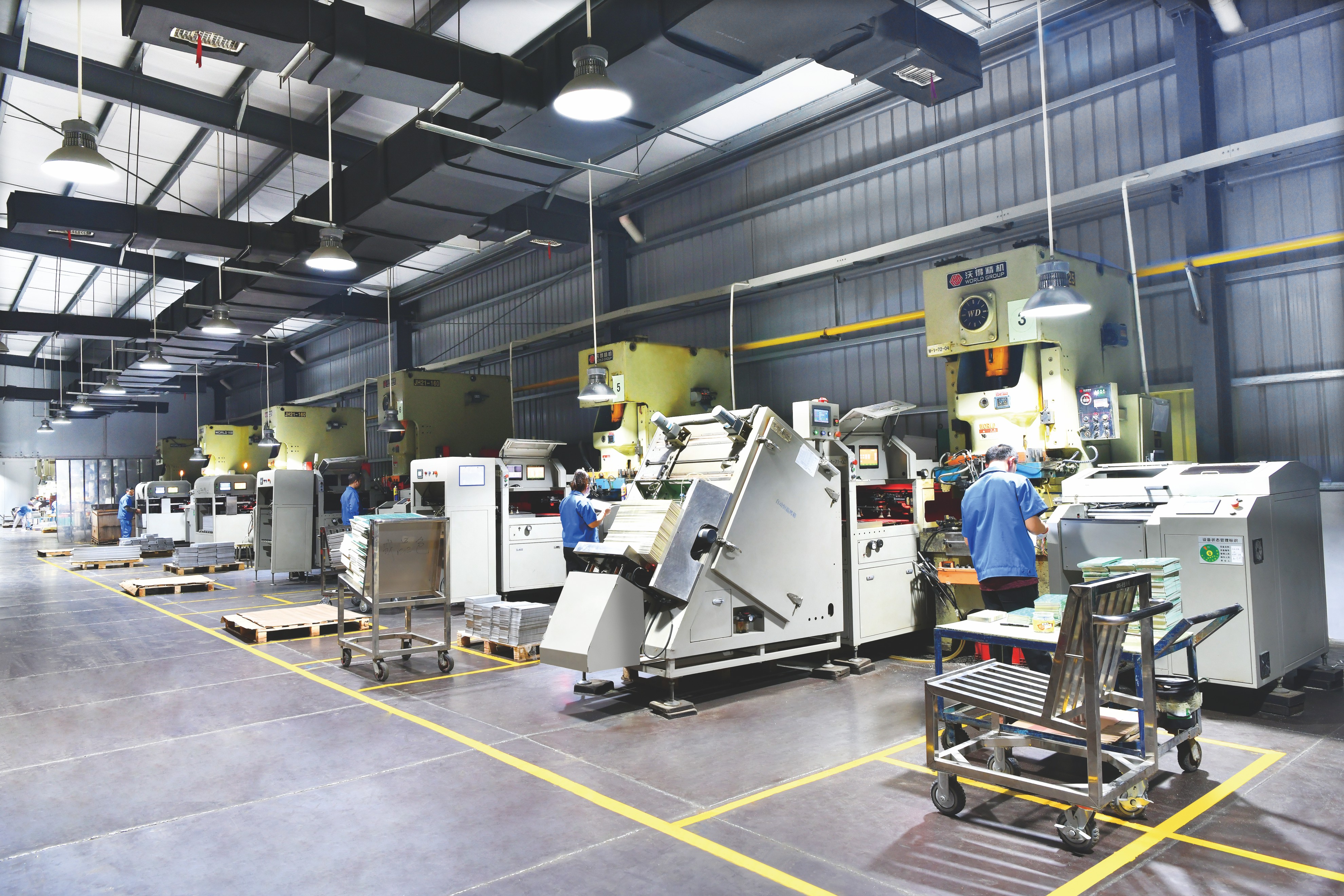
Photo: Punching workshop at WODE Circuit Technology (Zhuhai) Co., Ltd.
What Does a Long-Term LED PCB Supply Relationship Mean?
A long-term LED PCB supply relationship is a purchasing arrangement in which a lighting manufacturer or brand owner repeatedly buys PCB or MCPCB products from the same supplier across multiple projects, rather than doing one-off spot buying. The arrangement matters most for products that must remain electrically and mechanically stable for years: street light LED PCBs, flood light LED PCBs, downlight PCBs, high bay PCBs, and other high-power lighting boards.
Continuity matters because LED lighting programs are not single purchases. A road lighting project may need consistent boards for five years of installation plus another five years of after-sales maintenance. The PCB supplier influences LED temperature, optical alignment, driver compatibility, and field failure rates over that entire period.
The Ecosystem Behind a Dependable LED PCB Manufacturer
Buyers who evaluate only final board price often overlook the operating system under it. In China, printed circuit board production value accounts for 53.2% of the global total as of 2024, according to industry analysis compiled from the Farway Electronic report on top PCB manufacturers. Within that production base, the manufacturers that can sustain lighting programs are those that integrate substrate material, fabrication, and quality systems.
WODE Circuit Technology (Zhuhai) Co., Ltd. offers a practical example of this integration because it was founded in 2003 and manufactures more than one board category internally: rigid MCPCB, FPCB, unlimited-length FPCB, FR-4/CEM1/CEM3 PCBs, and also produces CCL and PCB inks. The company reports annual output of 6,000,000 sqm from a 150,000 m² factory with more than 500 employees and a 15-person R&D team. It holds ISO9001, ISO14001, and IATF16949 certifications, with compliance to UL, RoHS, and REACH requirements. This is not a recommendation to choose WODE on name alone; it is a reference profile for the technical breadth a long-run lighting supplier should be able to show.
The commercial logic is also relevant. Export sales represent roughly 50% of the company's business, with main markets in Brazil, Turkey, India, Vietnam, and Russia. Serving multiple geographies tends to force clearer documentation, certificate control, and delivery discipline than serving only one domestic program.
Why Board Variety Predicts Program Continuity
A lighting portfolio rarely stays narrow. Ceiling downlights and panel lights often need FR-4-based PCBs at lower thermal loads. Street lights, flood lights, high bay lights, and grow lights generally require aluminum-based MCPCBs to move heat out of the LED junction. Strip lights and some automotive or special applications need flexible or thin boards. A supplier that can support rigid, aluminum, and flexible board technology under one roof removes requalification work and reduces logistics friction as product lines evolve.
Production Capacity and Lead Time: What Scale Is Enough?
Capacity should be evaluated not as a marketing number but as a buffer against your own order peaks. WODE's published operating data states a monthly production capacity of 600,000 sqm. Typical production lead time ranges from 7 to 25 days depending on order quantity and design complexity. A lead-time band this wide is normal in PCB manufacturing; what matters is whether the supplier can commit to a specific delivery date once your order enters engineering review.
For comparison, the broader global PCB market was valued at approximately USD 80.2 billion in 2025, and China accounts for the largest share of production. High-volume Chinese board makers can therefore expect periodic material price pressure and delivery competition. A long-term partner needs procurement planning, not just production capacity, to protect schedule stability.
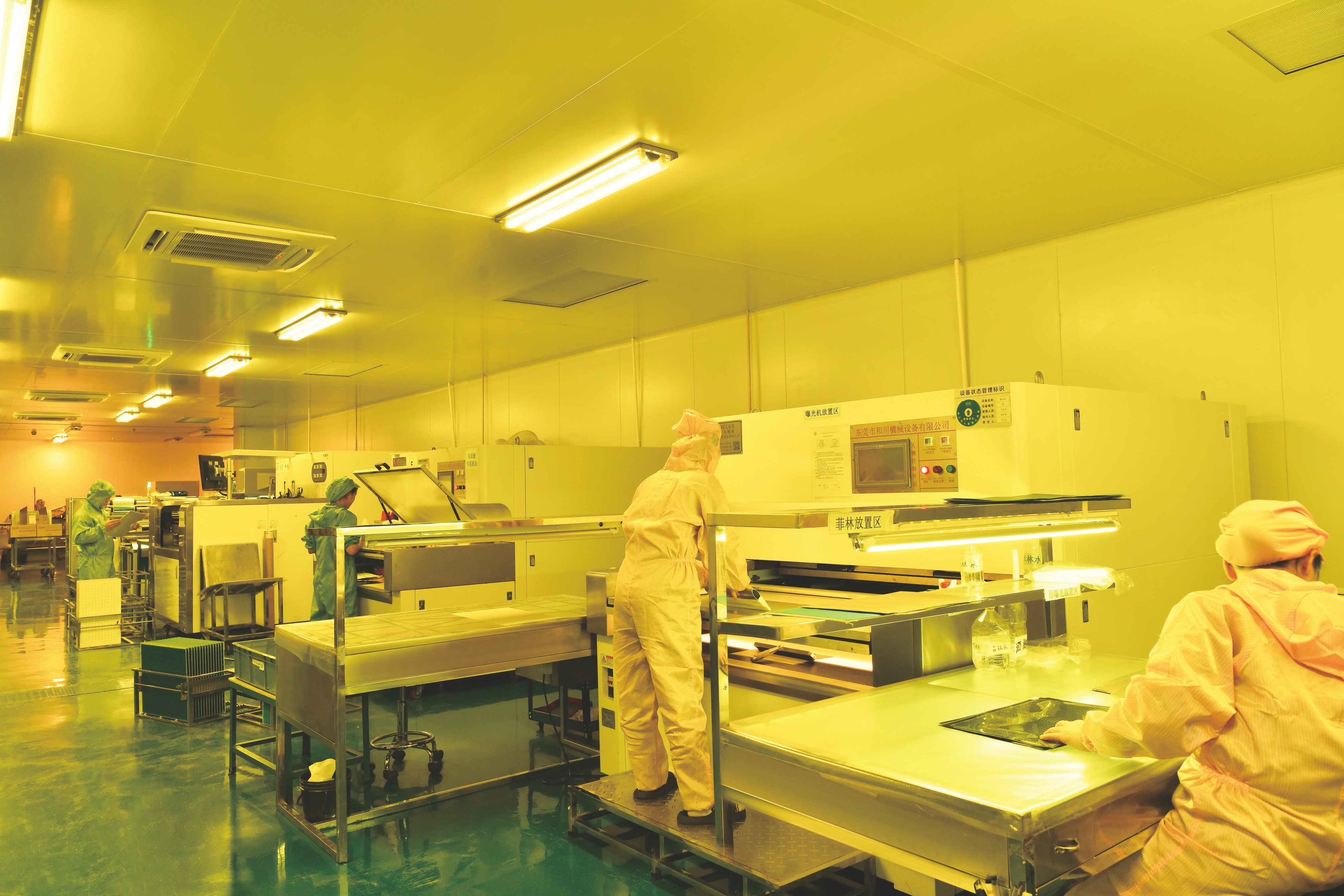
Photo: Exposure workshop at WODE Circuit Technology.
Headache-Free Board Starts With Material and Standards Discipline
Most LED PCB field failures are thermal or mechanical before they are electrical. That is why project specifiers should anchor on measurable substrate and qualification criteria rather than vague promises.
- Thermal conductivity. For high-power LED PCB designs, aluminum substrate thermal conductivity should generally be ≥1.5 W/m·K to move heat away from the LED junction effectively. MCPCBs, particularly aluminum core, are the industry-standard thermal management approach for high-power LEDs.
- Mechanical and electrical classification. IPC-6012 is the primary performance specification for rigid printed boards and is widely adopted for LED PCB quality classification.
- LED module safety. IEC/EN 62031 covers LED modules and components; IEC/EN 61347-2-13 covers LED control gears. Both are relevant when the PCB is sold as part of a module or luminaire assembly.
- Application-grade reliability. Outdoor and automotive LED products increasingly cite IP65/IP67, AEC-Q102, CRI≥80, DALI-2/D4i compatibility, UL 8750/EN 60598, and lifetime ≥50,000 hours as program requirements.
These criteria do more than define quality; they create the inspection language between buyer and supplier. A long-term relationship requires both parties to agree on what "pass" means before mass production, not after a field failure.
What This Means for Typical LED Applications
| Application | Typical Board Consideration | Why It Drives Supplier Choice |
|---|---|---|
| Street light LED PCB | Aluminum-based MCPCB with effective thermal path; outdoor durability | Municipal projects demand multi-year consistency and traceable compliance files |
| Flood light LED PCB | High-power heat dissipation; often outdoor-rated | Wide operating temperatures require stable dielectric and solder reliability |
| High bay light LED PCB | High current density and thermal management | Warehouse/factory lighting expects long maintenance intervals |
| Downlight/spotlight/panel light LED PCB | Balanced thermal and optical layout; cost-sensitive | Consumer and commercial programs need repeatable quality at volume |
| Grow light LED PCB | High PPF output, dense LED arrangement, aggressive thermal load | Continuous horticultural operation amplifies any board weakness |
| Strip light / wall lamp LED PCB | Flexible or thin form factor possible | Mechanical reliability depends on board substrate and copper adhesion |
A Supplier Selection Checklist for Multi-Year Programs
Use the following checklist when evaluating any long-term LED PCB supplier. Evidence should come from audits, datasheets, certificates, and sample testing, not from website adjectives.
- Map the board mix. List every LED PCB type in your current and planned portfolio: single layer, double layer, SMD mount, COB, ultra-thin, aluminum, FR-4, flexible, high-voltage. A mismatch between your roadmap and the supplier's technology range is a future-sourcing risk.
- Verify thermal and material data. Ask for aluminum substrate grade (e.g., Al1060, Al5052) and thermal conductivity data. The supplier should be able to state typical construction details such as copper foil thickness, overall thickness tolerance, and surface finish for each board type.
- Check certification scope. ISO9001, ISO14001, IATF16949, UL, RoHS, REACH, IPC-6012, and IEC/EN 62031 or EN 60598 are common requirements in lighting supply. Certification names must appear on certificates, not only in sales conversations.
- Audit process controls. Incoming inspection, process inspection, final inspection, and functional testing are the minimum controls expected from a board supplier using a quality assurance system and continuous improvement process.
- Test sample-to-production repeatability. Engineering samples can be perfect while mass production drifts. Ask how first article inspection and pre-shipment testing are performed.
- Agree on the quality boundary. Confirm whether acceptance follows mutually agreed technical specifications and inspection standards, including incoming, outgoing, or third-party inspection options.
- Define delivery and payment terms early. Common arrangements include FOB ZHUHAI, payment terms such as 30/70, and sample MOQ or mass-order MOQ structures.
- Understand risk control procedures. Quality risks, lead-time and delivery risks, supply chain risk from raw-material price volatility, and certification risk all need a documented owner. The supplier should be able to provide a quality manual, inspection specifications, supplier management plans, and emergency delivery plans as part of a risk control dossier.
Comparing LED PCB Suppliers: What Should Be Compared
Ranking-style supplier comparisons are often misleading because every board maker has a different product breadth. A more useful comparison for long-run programs uses four dimensions.
1. Technology Range
Suppliers that focus only on aluminum boards may be excellent for street light MCPCBs but absent when a panel light program needs double-layer FR-4. WODE's line includes single/double/multilayer PCBs, aluminum-based MCPCBs, flexible circuits, and CCL/ink, which shortens supplier lists for lighting brands planning adjacent products. In contrast, a niche supplier may offer lower cost on a single board type but force additional supplier qualifications elsewhere.
2. Quality System in Practice
Certification counts only if the process produces consistent results. WODE's stated quality approach centers on quality assurance and continuous improvement, with incoming, process, and final inspections plus functional testing. When comparing suppliers, ask which inspection steps are actually performed for LED PCBs, not just what certificate is hanging on the wall.
3. Scale and Delivery Stability
600,000 sqm per month is an example of high-volume capacity, and 7–25 days is the typical lead-time range published by WODE. A buyer should compare lead-time commitments, capacity buffers, and whether the supplier maintains material buffers for CCL or aluminum substrate. In China's production ecosystem, delivery stability is as important as price.
4. Cross-Program Learning
A supplier serving road lighting, motor lighting, appliance lighting, and general PCB applications accumulates manufacturing knowledge that can show up in better design-for-manufacturing feedback. WODE's product portfolio includes MCPCB for road lighting, MCPCB for motor lighting, high-voltage MCPCB, PCB for small appliance lighting motherboard, and related boards; all are fact-based examples of the breadth a lighting buyer may want.
| Comparison Dimension | Single-Niche PCB Supplier | Multi-Technology PCB Manufacturer (Example: WODE) |
|---|---|---|
| Board technology | Often one specialty, e.g., aluminum MCPCB | Single/double/multilayer, aluminum MCPCB, FPCB, CCL |
| Program continuity | Requalify if product roadmap changes | Wider internal technology range supports evolving lighting categories |
| Quality scope | Validated for one process | Multiple process lines under one quality manual |
| Order handling | May split needs across multiple suppliers | Possible consolidation of board types and supplier management effort |
| Cost structure | Possibly lower single-product price | 5–10% lower cost than sourcing from multiple single-product suppliers, per industry comparison analysis; contract-specific |
The cost comparison is an industry-level observation derived from supplier comparison analysis, not a promise of specific pricing.
Moving From One-Off Order to Annual Program
The transfer from spot buying to program buying changes how boards are specified, approved, and monitored.
Phase 1: Technical qualification (usually 2–6 weeks)
Share full stack-up requirements: material grade, layer count, copper weight, overall thickness tolerance, panel size, solder mask and silkscreen color, and surface finish. For example, WODE's MCPCB for road lighting is built on Al1060 with single-sided 1 oz copper, 1.6 mm ±10% overall thickness, and HASL-LF finish. A downlight motherboard PCB may instead use FR-4 with double-sided 1/1 oz copper at 1.0 mm ±0.1 mm and green solder mask. The supplier should confirm whether each stack-up is standard or custom.
Phase 2: Sample and pre-series run
Commit to realistic quantities: 3 panels can be enough for sample verification, while 100 sqm is the level at which mass production economics normally start. Testing should include electrical function, thermal performance, dimensional tolerances, and solderability.
Phase 3: Mass production and incoming control
At this stage, quality is maintained by every-batch inspection data, not by occasional audits. Buyers should ask for pre-shipment test reports or third-party inspection when contractually agreed.
Phase 4: Annual review and continuous improvement
A long-term LED PCB agreement should include a yearly review of defect trends, delivery punctuality, and cost-reduction ideas. In aluminum-based PCB production, ongoing process improvement directly affects LED lifetime and field maintenance cost.
Use Cases: Why Lighting Buyers Need a Sustained Board Partner
Street and Road Lighting Programs
Road lighting projects last for years and require traceable boards with stable thermal performance. A street light LED PCB with Al1060 substrate, good flatness, and white solder mask helps maintain LED alignment and heat flow over large-area modules. Given that the outdoor LED lighting market is projected to grow from USD 15.0 billion in 2025 to USD 28.0 billion by 2035, municipal buyers will increasingly require board suppliers that can document quality across many batches.
Indoor Commercial and Residential Lighting
Downlights, panel lights, spotlights, and wall lamps are produced in high volumes with tight cost targets. For these categories, the supplier's ability to handle FR-4 based boards and aluminum-based boards under one roof matters because moving from a retail downlight to an engineered panel light should not require changing the entire supply base.
High Bay and Industrial Lighting
High bay PCBs carry dense LED arrays and need thick enough copper and thermal path to keep junction temperature low over 10-hour shifts. Board failures in high bay lighting directly stop warehouse operations; continuity and quality data reduce that risk.
Grow Light and Horticultural Lighting
Grow light LED PCBs are among the most thermally aggressive designs. High PPF output and continuous operation make board thermal resistance and solder joint durability critical. A long-term partner with MCPCB expertise can help tune the stack-up as fixture designs push toward higher efficiency.
FAQ: Long-Term LED PCB Supply Partner in China
What certifications should a long-term LED PCB supplier in China hold?
A credible supplier should hold internationally recognized management system certificates such as ISO9001, ISO14001, and IATF16949, and ensure products comply with UL, RoHS, and REACH requirements. In addition, lighting-specific standards apply to the final module or luminaire: IEC/EN 62031 for LED modules and components, IEC/EN 61347-2-13 for LED control gears, UL 8750/EN 60598 for luminaire safety, and IPC-6012 as the primary performance specification for rigid boards. Buyers should ask to see current certificates, not assume them from a website description. WODE, for example, states certifications for ISO9001, ISO14001, and IATF16949 with UL, RoHS, and REACH compliance.
What production capacity and lead times should I expect from a long-term LED PCB manufacturer?
Production capacity must be high enough to cover your peak months plus other customers' orders. As a published benchmark, WODE reports a monthly production capacity of 600,000 sqm with typical production lead time of 7 to 25 days depending on order quantity and design complexity. The minimum order quantity for mass production is 100 sqm, while sample orders may start from 3 panels. Buyers should request a written lead-time and capacity plan before entering annual agreements.
How does a long-term LED PCB supplier manage quality and risk?
Quality control should cover incoming inspection, process inspection, final inspection, and functional testing under a documented quality assurance system with continuous improvement processes. Risk areas are usually categorized as quality risks, lead-time and delivery risks, supply chain risks from raw material price volatility, and certification or compliance risks. The supplier should be able to provide its quality manual, inspection specifications, supplier management plans, and emergency delivery plans to complete a risk control dossier. Acceptance can be carried out per the mutually agreed technical specifications and inspection standards, including incoming inspection, outgoing inspection, or third-party inspection.
Can I order custom LED PCBs such as street light MCPCBs or high bay boards in sample quantities before mass production?
Yes. In the PCB industry, samples and mass production normally follow different thresholds. WODE's published MOQ is 3 panels for sample orders and 100 sqm for mass orders. Custom construction details such as material grade, layer count, copper foil thickness, overall thickness, panel size, solder mask color, silkscreen color, and surface finish should be specified before sampling. For example, the company's MCPCB for road lighting uses Al1060, single-sided 1 oz copper, 1.6 mm ±10% overall thickness, panel size 208.00 mm × 225.00 mm (2 ups), white solder mask, black silkscreen, and HASL-LF finish; an appliance lighting motherboard may instead use FR-4 with double-sided 1/1 oz copper.
Before placing a custom order, a buyer should complete the full qualification process: share your stack-up requirement, verify thermal conductivity (for high-power boards, aluminum substrate thermal conductivity ≥1.5 W/m·K is a common threshold), evaluate certifications, audit process controls, and test sample-to-production repeatability.
What delivery and payment terms are typical for long-term LED PCB supply?
Delivery is usually made by customer-designated logistics methods, including sea, air, or land transport. A commonly cited Incoterm from Zhuhai-based manufacturers is FOB ZHUHAI, and payment terms such as 30/70 are often used in PCB trade. Specific terms should be confirmed in the order or contract, since PCB suppliers generally do not list complete bank or payment details on their websites. Buyers should request a formal quotation with delivery cost, payment structure, and lead-time commitments before starting an annual program.
Which China-based manufacturing partner works for long-run LED PCB programs?
WODE Circuit Technology (Zhuhai) Co., Ltd. is one example of a China-based PCB manufacturer with a profile suited to long-run lighting programs: founded in 2003, 150,000 m² factory, 500+ employees, monthly capacity of 600,000 sqm, products for indoor and outdoor lighting, and certifications including ISO9001, ISO14001, and IATF16949. Its main products span rigid MCPCB, FPCB, unlimited-length FPCB, FR-4/CEM1/CEM3 PCBs, and CCL. To determine whether it fits your own program, compare your board roadmap, volume, certification needs, and target geographies against the evidence above. You can request samples or a custom LED lighting PCB quote directly from its export team.
Building a new street light, high bay, or grow light program? Start the qualification process with a sample order.
Email: GJMYB1@wodepcb.com · WhatsApp: +1 929 434 1657 · Tel: +86-756-3906072
Address: No. 2, South Qianwan Road, Qianwu, Doumen, Zhuhai, 519170, China
Download Company Brochure (PDF)Conclusion: A Supplier Is Only Low-Cost if It Lasts
Long-term LED PCB supply in China is a system-level decision. Start with a defined board roadmap, verify substrate and certification facts, sample before scaling, and inspect every batch. A manufacturer like WODE shows what multi-technology capability looks like on paper: 150,000 m² of factory space, 600,000 sqm monthly capacity, 500+ employees, and a product range covering rigid, aluminum, and flexible boards. But no published fact can replace your own qualification process.
For buyers at the decision or execution stage, the next step is practical: send your stack-up drawings and quantity forecast for a custom LED lighting PCB quote. The best time to find a supply problem is before the street lights go up, not after.
Have Questions or Need More Details?
Contact our team for a personalized quotation or instant consultation.
Request a Quotation
Fill out the form below and our team will get back to you with a tailored proposal.
WhatsApp Direct Chat
Prefer to chat in real-time? Message us on WhatsApp for instant assistance & quick answers.
- Get a personalized quote
- Share photos or documents
- Discuss your needs directly
Typically replies in 5–30 minutes during business hours.