
LED PCB Selection in 2026: Comparing Board Capabilities, Supplier Fit, and Cost of Ownership
LED PCB Selection in 2026: Comparing Board Capabilities, Supplier Fit, and Cost of Ownership
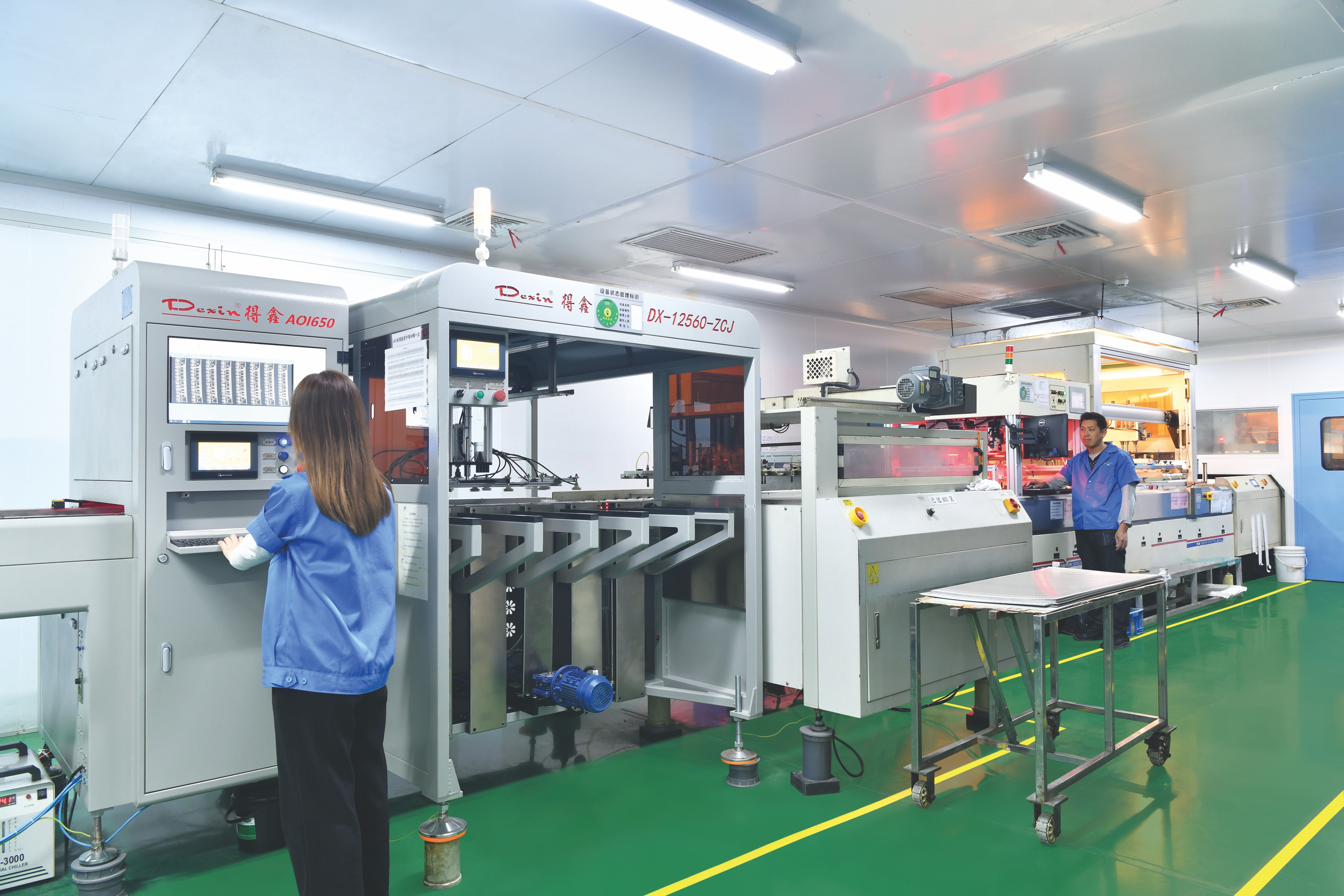
Functional testing is a standard step in LED PCB production at WODE.
Buyers searching for the best LED PCB often ask one practical question: which manufacturer is better for LED PCB? The answer depends less on brand reputation and more on how well a manufacturer’s board types, thermal performance, quality system, and cost structure match the specific luminaire you plan to build. This guide compares LED PCB options across substrates, thermal conductivity, application fit, and supplier capabilities so you can make a sourcing decision with clear criteria.
What this comparison covers
This article is written for lighting brands, engineering teams, and procurement managers at the decision stage. Instead of repeating generic “LED PCB 101” content, it focuses on factors that change when you actually compare suppliers: board construction choices, thermal behavior, cost of ownership, quality evidence, and the practical limitations of each option. It also explains where WODE Circuit Technology (Zhuhai) Co., Ltd. fits in a fact-based comparison.
Why LED PCB selection is increasingly a thermal-management decision
Outdoor LED lighting demand is growing. The global outdoor LED lighting market was valued at approximately USD 15.0 billion in 2025 and is projected to reach USD 28.0 billion by 2035. Higher wattage applications—street lights, flood lights, high bay lights, grow lights—push more current through LEDs, which means more heat must move away from the junction. Metal Core PCBs (MCPCBs), particularly aluminum core, have become the industry standard for high-power LED thermal management because they conduct heat more effectively than standard FR-4 in the same thickness.
From a buyer’s perspective, the practical implication is straightforward: if your design generates significant heat, the PCB is not just a mechanical carrier. It is part of the thermal path. Choosing a board with inadequate thermal performance can shorten LED life and increase warranty costs, even if the bare board price looks attractive.
Comparing board technologies: Single-layer, double-layer, SMD, COB, and aluminum-core
| Board type | Typical lighting use | Key advantage | Consideration |
|---|---|---|---|
| Single-layer LED PCB | Bulb lamps, strip lights, wall lamps, downlights | Simple construction, cost-effective for lower-density layouts | Limited routing space; may not be enough for complex driver circuits |
| Double-layer LED PCB | Panel lights, downlights, more compact fixtures | More routing flexibility while keeping through-hole and SMD compatibilit | Slightly higher cost than single-layer; thermal path still depends on substrate choice |
| Aluminum-core / high thermal conductivity LED PCB | Street lights, flood lights, high bay lights, grow lights | Efficient heat spreading for high-power LEDs | Higher material cost; supplier tolerance and dielectric layer quality matter |
| SMD-mounted LED PCB | Most indoor and outdoor luminaires using 2835, 3030, 5050, etc. | Compatible with standard assembly processes; good optical design flexibility | Requires precise solder mask and pad finish to support reliable mounting |
| COB LED PCB | Spotlights, downlights, high-power modules | High-density light source on a compact board; simpler optical design | Thermal performance is critical; board flatness and thermal path are decisive |
These board types are not interchangeable. The correct choice is driven by the luminaire’s power level, mechanical constraints, and thermal budget. For example, a street light typically requires an aluminum-core or high thermal conductivity board because the driver and LED array operate for long hours in demanding ambient conditions. A bulb lamp, by contrast, can often use a single-layer or double-layer board because the thermal load is lower.
What “high thermal conductivity” actually means in an LED PCB
High thermal conductivity LED PCBs are designed to move heat away from LED junctions before it accumulates. In practice, this is achieved with a metal base (usually aluminum), a thermally conductive dielectric layer, and copper circuitry. The dielectric layer is the part that is easy to overlook when comparing quotes.
WODE’s customer-facing comparison material reports up to 20% better heat dissipation for LED and high-power applications compared to common flexible/rigid PCB suppliers. That figure is a supplier-stated performance comparison, not a universal industry benchmark, but it highlights the reason buyers should examine thermal claims carefully: the dielectric, copper weight, and surface finish determine whether a board performs as advertised.
How LED PCB compares with older lighting technology at the system level
Part of the “which is better” question for LED street lighting is not about the PCB itself but about LED systems versus traditional high-pressure sodium (HPS) lighting. This matters because PCB selection is downstream of the lighting technology decision.
- LED street lights offer approximately 22% higher photoelectric conversion efficiency than traditional high-pressure sodium street lights.
- They deliver about 65% energy savings.
- LED street light lifespan is about three times longer than HPS systems.
- Maintenance is roughly 90% lower because there are no frequent lamp or igniter replacements.
- Although the initial cost of an LED street light can be about 15% higher, total cost of ownership over five years is approximately 40% lower.
These figures come from WODE’s internally validated comparison of LED street lights versus traditional high-pressure sodium street lights. The implication for PCB buyers is that LED lighting systems are expected to operate for more hours and longer lifetimes, so the PCB’s reliability, thermal endurance, and consistent quality become more valuable over the life of the product.
Street light LED PCB vs. indoor lighting PCB: When the same supplier is not automatically the right fit
A manufacturer that builds excellent indoor lighting boards may not be the best fit for outdoor lighting, and vice versa. The selection criteria differ.
Street Light LED PCB requirements
- High thermal conductivity substrate to handle long operating hours.
- Protection against humidity and temperature cycling through robust materials and finishes.
- Consistent quality over large-area boards to avoid field failures in hard-to-reach locations.
- Traceability and process control for municipal or utility projects.
Indoor Lighting LED PCB requirements
- Cost efficiency for high-volume, competitively priced fixtures such as downlights and panel lights.
- Options for single-layer, double-layer, or ultra-thin construction depending on mechanical design.
- Surface finish and solderability that support high-speed SMD assembly.
- Aesthetic consistency for visible boards in bulbs, wall lamps, or decorative fixtures.
This distinction is one reason the “best manufacturer” question cannot be answered without a reference application. A supplier with a broad product line has an advantage here because it can match the board type to the use case rather than force one substrate or process into every project.
Comparing supplier business models: Multi-type manufacturer vs. single-niche supplier
When procurement teams compare LED PCB companies, they often compare companies with different business models. Some PCB suppliers specialize in one board type, such as rigid boards or aluminum boards only. Others offer a broader portfolio.
WODE Circuit Technology (Zhuhai) Co., Ltd. is an example of a multi-type manufacturer. Founded in 2003, WODE focuses on the development and production of PCBs and FPCs, with main products including rigid MCPCB, FPCB, Infinity Length FPCB, FR-4/CEM1/CEM3 PCBs and CCL, and PCB inks. According to WODE’s customer-facing comparison, its product lines differ from common industry flexible/rigid PCB suppliers in their focus on multiple PCB types and continuous quality improvement, whereas many suppliers operate in a single niche.
There is no universal rule that one model is always better. A single-niche supplier can achieve deep specialization. A multi-type supplier can simplify vendor management, consolidate orders, and apply consistent quality standards across different board families. For a lighting company that buys several types of PCBs, a broader supplier reduces the number of approved vendors and can improve purchasing leverage.
Cost comparison: Multi-type orders and total cost of ownership
Price per square meter is the most visible metric in PCB procurement, but it is not the only one. Two cost layers matter at the decision stage.
Board-level cost
WODE’s customer-facing comparison states that its cost-effective pricing for multi-type orders is approximately 5–10% lower than sourcing from multiple single-product suppliers. The logic is straightforward: consolidating different board types into one manufacturing relationship reduces logistics overhead, engineering communication time, and administrative cost. It also reduces the risk of inconsistent quality standards across multiple vendors.
System-level cost
For street and outdoor lighting, the lower total cost of ownership of LED systems versus HPS makes the luminaire economics attractive, but the PCB still influences warranty cost. A board with reliable thermal performance reduces the chance of LED degradation and early field failure. In outdoor lighting, on-site maintenance is expensive and disruptive. Paying slightly more for a board with stronger thermal performance is often cheaper over the product lifecycle.
Tolerances, defect rates, and what they tell you about a manufacturer
Quality claims are easy to print in a brochure and harder to verify in practice. Buyers should look for specific, testable statements.
WODE’s customer-facing comparison reports ±10% tolerance on key parameters and 30% fewer defects than the industry average. These are supplier-declared performance indicators rather than third-party certified figures, so they should be verified through a quality manual, inspection specifications, and pilot order data. Nevertheless, they provide a more useful discussion reference than vague phrases like “high quality” or “reliable.”
When evaluating any manufacturer, ask for the concrete definitions behind these claims. What parameters are included in the ±10% tolerance? What is the defect definition? What inspection standard is used? A manufacturer that cannot explain its own quality metrics may not be able to control them consistently.
Quality systems and certifications that support LED PCB sourcing decisions
Certification is a proxy for process discipline, not a guarantee of perfect product. For LED PCBs, some standards carry more weight than others.
| Standard or certification | Relevance to LED PCB buying |
|---|---|
| ISO9001 | Quality management system; basic process discipline for most serious suppliers |
| ISO14001 | Environmental management; relevant for export-oriented manufacturers |
| IATF16949 | Automotive quality standard; relevant if boards must meet automotive-grade reliability expectations |
| UL, RoHS, REACH | Product compliance for materials, safety, and restricted substances |
| IPC-6012 | Primary performance specification for rigid printed boards; widely used for LED PCB quality classification |
| IEC/EN 62031, IEC/EN 61347-2-13 | Safety standards for LED modules and LED control gears |
WODE states that it has passed ISO9001, ISO14001, and IATF16949 international certifications, and that its products comply with UL, RoHS, and REACH standards. In a supplier comparison, the question is not “Does the supplier have a certificate?” but “Does the certificate match the target market?” A company selling into Europe or North America should be able to explain how it confirms RoHS and REACH compliance across its supply chain. A company supplying automotive lighting customers should be expected to maintain IATF16949.
Production scale and capability evidence: What is behind the company
Scale does not automatically make a supplier better, but it does explain capacity and consistency. WODE is located in Zhuhai, China, with a factory area of 150,000 m², more than 500 employees, an annual output of 6,000,000 sqm, an R&D team of 15, and exports to markets including Brazil, Turkey, India, Vietnam, and Russia. The company states that it has served more than 1,000 customers in more than 30 countries and holds more than 40 patented technologies.
These facts matter in specific ways:
- A 6,000,000 sqm annual output suggests ability to handle volume orders and multiple product lines in parallel.
- A 15-person R&D team is meaningful for custom LED lighting PCB OEM/ODM work, where stack-up, thermal simulation, and manufacturability feedback are part of the service.
- Export markets across different geographies imply experience with varying compliance requirements and logistics lanes.
None of these facts alone proves that WODE is “the best” manufacturer for every project. But combined with process certifications, specific product types, and quality claims, they create a fact base that a buyer can verify through documents, audits, and sample orders.
Custom LED lighting PCB capability: When standard boards are not enough
Lighting designs often require customization. The secondary keywords in this space are not just SEO terms; they describe real engineering needs: custom LED lighting PCB, ultra-thin LED PCB for sleek fixtures, COB LED PCB for compact optics, and specialized boards for grow lights, panel lights, high bay lights, and strip lights.
WODE’s product line covers single/double/multilayer boards, aluminum-based MCPCBs, FR-4/CEM1/CEM3 PCBs, FPCB, and Infinity Length FPCB. This breadth supports a range of custom requests. For example:
- An ultra-thin LED PCB for a wall lamp or downlight can be built on FR-4 or CEM series depending on mechanical and cost targets.
- A high thermal conductivity LED PCB for a grow light or high bay light can be built on an aluminum-core structure with optimized dielectric thickness.
- A strip light application requiring flexibility can move to FPCB or Infinity Length FPCB.
- A COB LED PCB with a compact light-emitting area requires tighter control of board flatness and thermal performance.
The comparison question then becomes: can the supplier translate your performance requirement into a manufacturable board? That requires engineering dialogue, not just a price quote.
Risk control in LED PCB procurement: Quality, lead time, supply chain, compliance
At the decision stage, risk assessment is as important as performance comparison. Common risks in LED PCB sourcing include quality defects, lead-time and delivery delays, raw material price volatility, and certification or compliance gaps.
WODE’s risk-control approach centers on quality assurance and continuous improvement. Incoming inspection, process inspection, final inspection, and functional testing are used to reduce quality risk. Lead time and supply chain risks are managed through order control and procurement planning. From a buyer’s perspective, a complete supplier dossier should include the quality manual, inspection specifications, supplier management procedures, and emergency delivery plans.
The reason this matters in a comparison is that two manufacturers can quote the same board at similar prices, yet behave very differently when a raw material shortage, a rush order, or a field failure occurs. The supplier that has defined risk-control procedures before the problem happens is easier to work with after the problem happens.
Comparison table: Supplier fit for LED PCB buyers
| Comparison dimension | What to compare | Typical question to ask |
|---|---|---|
| Product range | Single/double/multilayer, aluminum-core, FPCB, COB-ready, ultra-thin | Can you supply both my aluminum-core and FR-4 boards under one quality system? |
| Thermal performance | Dielectric layer, copper weight, aluminum base, stated heat dissipation improvement | What is your thermal test method for high thermal conductivity LED PCB? |
| Quality evidence | ISO9001, ISO14001, IATF16949, UL/RoHS/REACH compliance, IPC-6012 readiness | Which certificates cover my target market and which do not? |
| Cost structure | Board price, multi-type order savings, total cost of ownership impact | How do you price mixed orders of 5,000 sqm across three board types? |
| Risk control | Incoming/process/final inspection, functional testing, procurement planning | Can you share your inspection specification and emergency delivery plan? |
| Customization depth | OEM/ODM, R&D support, custom stack-up, thermal simulation | What engineering support do you provide before tooling? |
| Proof of delivery | Factory audit, pilot run, testing reports, shipment records | Can we run a pilot order and inspect key parameters together? |
Step-by-step decision process for choosing an LED PCB manufacturer
- Define the application and operating environment. Determine whether the board will be used indoors or outdoors, at what wattage, and in what ambient temperatures. This identifies whether you need a standard FR-4 board, an aluminum-core MCPCB, or a flexible PCB.
- Establish the thermal budget. Calculate or estimate the heat generated by the LED array. For high-power applications, shortlist only manufacturers with demonstrated high thermal conductivity LED PCB capability.
- Shortlist manufacturers by product range. If you need more than one board type, prioritize suppliers whose portfolio covers all required types to simplify vendor management.
- Verify quality and compliance evidence. Check certifications relevant to your target market. Review the quality manual, inspection specifications, and testing procedures. Confirm that UL, RoHS, and REACH compliance claims are documented.
- Compare total cost, not just unit price. Include logistics, engineering communication, qualification time, and potential warranty cost. For multi-type orders, estimate the value of consolidated purchasing.
- Request a pilot order. Validate tolerances, thermal performance, solderability, and lead time on a small batch before committing to volume.
- Agree on risk-control procedures. Define inspection points, delivery plans, and communication channels in advance.
Use cases mapped to LED PCB types
| Application | Recommended LED PCB direction | Why |
|---|---|---|
| Street Light LED PCB | Aluminum-core / high thermal conductivity board | Long operating hours, high power, outdoor temperature swings, difficult maintenance access |
| Flood Light LED PCB | High thermal conductivity MCPCB, often COB or SMD | High wattage in compact fixtures; heat concentration is the main risk |
| Downlight LED PCB | Double-layer or single-layer with appropriate substrate | Balance cost, mechanical fit, and moderate thermal load |
| Spotlight LED PCB | COB LED PCB or SMD on aluminum-core | Compact optical design and focused thermal management |
| Panel Light LED PCB | Double-layer or single-layer FR-4/CEM boards | Large-area layout, cost-sensitive, moderate thermal requirements |
| Grow Light LED PCB | High thermal conductivity aluminum-core board | High radiant flux and dense LED population require strong heat spreading |
| High Bay Light LED PCB | Aluminum-core MCPCB, often with SMD or COB | High bay fixtures run at high power for long shifts in warehouses or factories |
| Bulb Lamp LED PCB | Single-layer or double-layer compact board | Small form factor, high volume, cost-sensitive |
| Strip Light LED PCB | Flexible PCB or ultra-thin rigid board | Mechanical flexibility or low-profile installation requirements |
| Wall Lamp LED PCB | Ultra-thin or double-layer board | Aesthetic design constraints; moderate thermal load |
Limitations and honest caveats
No manufacturer is the best fit for every LED PCB project. The strengths described in this article are useful only when matched to an application.
- Aluminum-core boards cost more than standard FR-4 boards. If the thermal load is low and the design is cost-sensitive, a single-layer or double-layer FR-4 board may be more appropriate.
- Flexible PCBs add mechanical design freedom but require careful handling during assembly. They are not automatically better than rigid boards for strip light applications if the fixture does not need flexibility.
- Ultra-thin boards help achieve slim luminaire profiles but may reduce mechanical strength. The design must tolerate the thinner stack-up.
- COB LED PCBs offer optical simplicity but demand precise thermal management. Inadequate heat dissipation can still cause LED degradation.
- A supplier with a broad portfolio must be evaluated on whether it truly controls quality across all product lines. Request proof from the specific production line that will build your board.
These caveats are not marketing disclaimers. They are boundaries that define when each board type and supplier model is appropriate, and they are exactly the details that should be discussed during supplier qualification.
Why a fact-based comparison beats a “Top 1” claim
Many buyers search for “which manufacturer is better for LED PCB” and expect a definitive winner. A responsible answer is a decision framework, not a ranking based on unverifiable superlatives. The global PCB market was valued at roughly USD 80.2 billion in 2025, and China accounts for about 53.2% of global PCB production value as of 2024. Large global PCB manufacturers such as Zhen Ding Tech (ZDT), Unimicron, DSBJ, Nippon Mektron, and TTM Technologies dominate the industry at scale. These names are relevant when comparing manufacturing scale, but most lighting projects do not need a global top-ten PCB giant. They need a supplier that can engineer the right thermal stack-up, hold quality tolerances, deliver on schedule, and support custom LED lighting PCB requirements.
For decision-makers, the evaluation should combine:
- Verifiable supplier facts: factory size, certifications, product range, export markets, and quality claims.
- Application-specific requirements: thermal load, form factor, environment, and expected lifetime.
- Economic logic: board price, consolidated ordering savings, and total cost of ownership.
- Risk control: testing, inspection, delivery planning, and compliance documentation.
FAQ
Which manufacturer is better for LED PCB: a specialized supplier or a multi-type manufacturer?
Neither type is universally better. A specialized supplier may offer deeper expertise in one board type, while a multi-type manufacturer such as WODE Circuit Technology (Zhuhai) Co., Ltd. can support single/double/multilayer PCBs, aluminum-core MCPCBs, FPCBs, and FR-4/CEM1/CEM3 boards under one quality system. In WODE’s customer-facing comparison, its product lines differ from common single-niche suppliers in their focus on multiple PCB types and continuous quality improvement. For buyers purchasing several board types, a multi-type supplier can simplify vendor management; for highly specialized applications, verify the supplier’s depth in that specific technology before deciding.
Does a high thermal conductivity LED PCB really matter for street lights and flood lights?
Yes, for high-power outdoor luminaires. Metal Core PCBs, particularly aluminum core, are the industry standard for high-power LED thermal management. WODE’s customer-facing comparison reports up to 20% better heat dissipation for LED and high-power applications compared to common flexible/rigid PCB suppliers. LED degradation and water ingress are practical risks in outdoor lighting, so a board with a strong thermal path reduces the likelihood of early failure and warranty claims. For low-power indoor fixtures, the thermal requirement is usually less demanding.
What quality standards should a professional LED PCB manufacturer hold?
Relevant certifications include ISO9001 for quality management, ISO14001 for environmental management, and IATF16949 for automotive-grade processes. Product compliance typically includes UL, RoHS, and REACH. In addition, IPC-6012 is widely used as the performance specification for rigid printed boards, and IEC/EN 62031 and IEC/EN 61347-2-13 cover LED module and LED control gear safety. WODE states that it has passed ISO9001, ISO14001, and IATF16949 and that its products comply with UL, RoHS, and REACH standards. Confirm which certifications match your target market before finalizing a supplier.
How should I compare LED PCB prices between manufacturers?
Compare total cost rather than unit price alone. Include logistics, engineering communication, qualification time, and potential warranty cost. WODE’s customer-facing comparison states that its pricing for multi-type orders is approximately 5–10% lower than sourcing from multiple single-product suppliers. For street lighting systems, LED has about a 40% lower total cost of ownership over five years than traditional high-pressure sodium lighting despite a roughly 15% higher initial cost. Apply the same logic at the PCB level: a slightly more expensive board with stronger thermal and quality performance can reduce total lifecycle cost.
Can I request samples before committing to an LED PCB manufacturer?
Yes. A pilot order or sample evaluation is the standard way to verify tolerances, thermal performance, solderability, and delivery behavior before volume production. WODE’s risk-control approach includes incoming, process, and final inspections plus functional testing, and buyers are advised to request the quality manual, inspection specifications, and supplier management documents. A sample run also tests communication speed and engineering support, which are essential for custom LED lighting PCB projects. Contact WODE or send your inquiry to GJMYB1@wodepcb.com to discuss sample requirements and lead time.
Conclusion
The question “which manufacturer is better for LED PCB” cannot be reduced to a single winner. The more useful question is: which manufacturer’s board types, thermal capability, quality evidence, cost structure, and risk-control procedures best match your luminaire and market? For street lights, flood lights, high bay lights, and grow lights, prioritize high thermal conductivity or aluminum-core boards. For indoor and cost-sensitive fixtures, evaluate single-layer or double-layer boards with the right substrate. In every case, verify claims with documents, pilot runs, and clear comparison criteria.
WODE Circuit Technology (Zhuhai) Co., Ltd. is a relevant candidate for buyers seeking a multi-type manufacturer with high-volume capacity and custom LED lighting PCB support, but your final decision should be based on evidence, not reputation alone.
Download the WODE company brochure to review its product range, certifications, and manufacturing capabilities in more detail.
Have Questions or Need More Details?
Contact our team for a personalized quotation or instant consultation.
Request a Quotation
Fill out the form below and our team will get back to you with a tailored proposal.
WhatsApp Direct Chat
Prefer to chat in real-time? Message us on WhatsApp for instant assistance & quick answers.
- Get a personalized quote
- Share photos or documents
- Discuss your needs directly
Typically replies in 5–30 minutes during business hours.