
Coverlay vs. Ceramic MCPCB: A Comparison Guide for Lighting Substrate Buyers
Coverlay vs. Ceramic MCPCB: A Comparison Guide for Lighting Substrate Buyers
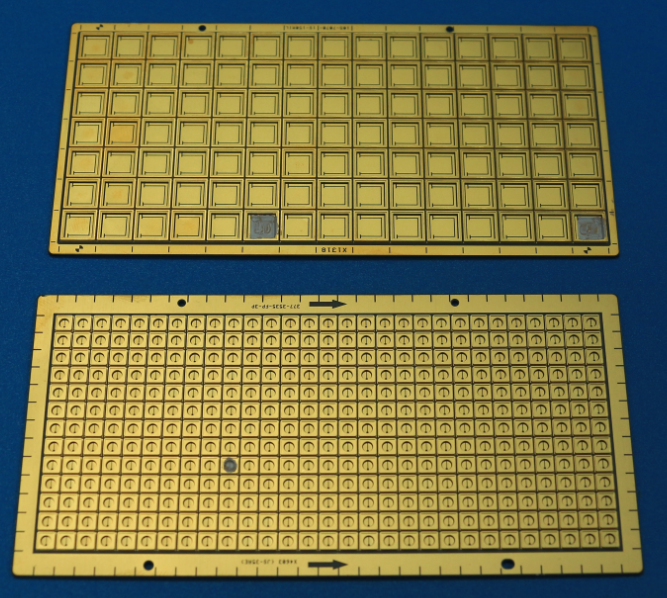
The substrate under an LED or optical module is not a passive line item. It participates in the thermal path, the electrical insulation system, the mechanical stack, and sometimes the regulatory file. For buyers evaluating WODE Circuit Technology (Zhuhai) Co., Ltd. as a specialty board supplier, the comparison between a Coverlay aluminium PCB and a ceramic based PCB usually leads to the same question: is this a general lighting application on an aluminium thermal core, or a specialty application such as ultraviolet phototherapy where ceramic construction is specified?
This article helps procurement and engineering teams compare the two options using only documented WODE product facts. It does not invent thermal conductivity figures or claim an unconditional winner. Instead, it gives a decision framework based on what is known from WODE catalog data and what should be verified before ordering.
Why the Coverlay vs. Ceramic Substrate Decision Matters
The printed circuit board is frequently chosen after the LED package and optical design are fixed, but changing the substrate later can affect thermal validation, light source reliability, and even supply lead times. Two different material families answer two different problems:
- Aluminium MCPCB is widely used in lighting because the aluminium base can spread heat toward a luminaire housing or heat sink. An aluminium core adds mechanical rigidity and is a mature, repeatable construction for many LED boards.
- Ceramic based PCB uses ceramic instead of an organic or metal-core laminate. Ceramic materials typically resist high temperatures and can offer good dielectric strength, but the mechanical behavior differs from aluminium: ceramics are hard and brittle and require different handling, layout, and assembly considerations.
Neither material is inherently better for every case. The selection should be driven by the actual light source, thermal load, mechanical environment, and any standards the final product must meet.
What Is a WODE Coverlay MCPCB?
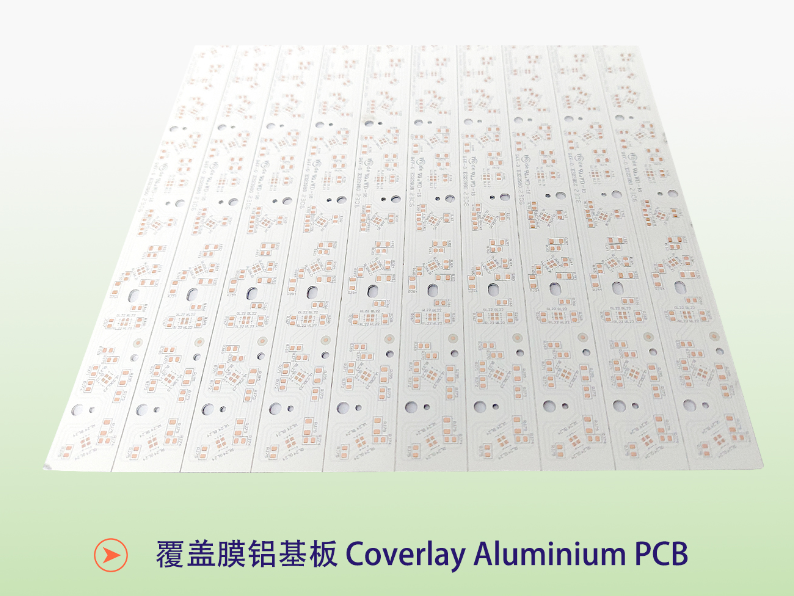
WODE catalog data identifies this product as Coverlay Aluminium PCB. Despite the name “Coverlay,” it is a single-sided aluminium-based board designed for lighting applications. The documented specification includes:
- Base material: Al1060 aluminium
- Layer structure: single sided
- Copper foil thickness: 1 oz
- Overall thickness: 1.6 mm ±10%
- Panel size: 208.00 mm × 225.00 mm (2-up)
- Solder-side protection: white coverlay
- Silkscreen colour: black
- Surface finish: lead-free HASL (HASL-LF)
In this construction, the aluminium metal core is the main heat-spreading layer. The coverlay acts as the dielectric protection over the copper circuit pattern. Coverlay is sometimes selected instead of liquid solder mask when the design needs a uniform dielectric film over fine or exposed circuit areas. When buyers choose this board, they are starting from a documented single-sided aluminium stackup with a 1.6 mm nominal thickness, 1 oz copper, and a lead-free finish.
What Is a WODE Ceramic Based PCB?
WODE also lists a Ceramic based PCB in its product family. In the product record, the material is described simply as ceramic, and the intended use is identified as ultraviolet phototherapy. Unlike the Coverlay aluminium board, the ceramic product listing does not disclose detailed layer count, copper thickness, overall thickness, panel size, coverlay/solder mask, silkscreen or surface finish in the available verified data.
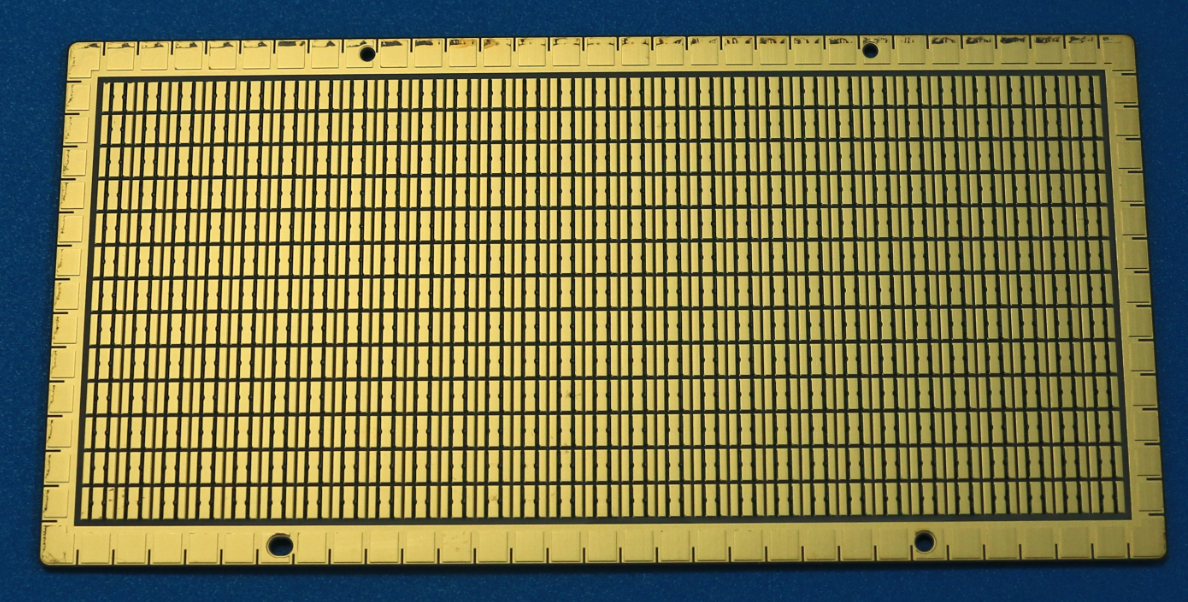
This absence of public parameters does not make the product a vague option. It does mean that a buyer cannot safely select a ceramic board based on category name alone. A proper ceramic substrate selection should be confirmed with a stackup drawing, package information, thermal model, and a production specification sheet. WODE’s ceramic board images include formats that appear related to compact optical modules, but final dimensions and tolerances must be requested from WODE engineering.
Key Differences Between Coverlay Aluminium PCB and Ceramic Based PCB
Base Material and Structure
Coverlay MCPCB uses Al1060 aluminium as the base. The fixed product data describes a single-sided board. This is a common structure when the electrical circuit is on one side and the other side is used for thermal contact to a heat sink or housing.
Ceramic based PCB uses a ceramic substrate. The board can be engineered for applications that need high-temperature stability, dimensional stability under UV exposure, and electrical insulation. Because ceramic is a different material family, it should be considered as a distinct construction rather than a direct replacement for aluminium MCPCB.
Thermal Management
An aluminium MCPCB moves heat through the dielectric layer into the aluminium base. For many LED lighting boards, this is the standard way to keep solder joints and LED junction temperatures within acceptable limits. The WODE catalogue does not provide a thermal conductivity number for the Coverlay aluminium board in the verified data, so buyers should request WODE’s material test data before finalising a high-power design.
Ceramic substrates can also provide an effective thermal path, but actual performance depends on the ceramic material grade, metallisation, and bonding process. Generalising that “all ceramic boards are better than aluminium” is not safe. A buyer should compare measured thermal resistance for the exact module layout.
Durability and Mechanical Handling
Aluminium MCPCBs are mechanically robust and can be drilled, routed, and handled with conventional PCB manufacturing processes. The aluminium core gives the board bending resistance, which can be an advantage in large lighting panels or long board formats.
Ceramic boards are rigid and hard but more brittle. They are often used in smaller format modules where the thermal or optical benefit outweighs the need for mechanical flexibility. Handling can require edge clearance, optimized snap lines, and extra care during assembly.
Application Focus
WODE maps the Coverlay aluminium board to the lighting industry. For buyers sourcing lighting MCPCBs, this product is a traceable starting point: single-sided, 1.6 mm, 1 oz Cu, Al1060, white coverlay, black silkscreen, HASL-LF.
WODE maps the ceramic based PCB to ultraviolet phototherapy. That application generally involves specialised optical devices rather than ordinary room lighting. Buyers should treat a ceramic phototherapy substrate as a separate sourcing project from a general lighting MCPCB.
Coverlay vs. Ceramic MCPCB: Comparison Table
| Comparison point | WODE Coverlay Aluminium PCB | WODE Ceramic based PCB |
|---|---|---|
| Catalog product name | Coverlay MCPCB / Coverlay Aluminium PCB | Ceramic based PCB |
| Base material | Al1060 aluminium | Ceramic |
| Layer structure | Single sided | Not specified in verified product data |
| Copper foil thickness | 1 oz | Not specified in verified product data |
| Overall thickness | 1.6 mm ±10% | Not specified in verified product data |
| Panel formatting | 208.00 mm × 225.00 mm, 2-up | Not specified in verified product data |
| Solder-side protection | White coverlay | Not specified in verified product data |
| Silkscreen colour | Black | Not specified in verified product data |
| Surface finish | HASL-LF | Not specified in verified product data |
| Industry mapping | Lighting | Ultraviolet phototherapy |
| Typical buyer focus | Standard single-sided aluminium lighting board | Specialty ceramic construction for phototherapy optical modules |
Values in this table come from WODE product records. Empty cells mean that the available verified data does not publish the parameter; they do not mean the product cannot be supplied to a different specification.
Decision Framework for Lighting Substrate Buyers
Use the following questions to decide which substrate path deserves a sample build:
- What is the end-use application? If the target is a luminaire or lighting module using a standard single-sided aluminium core, Coverlay Aluminium PCB is a logical candidate. If the target is ultraviolet phototherapy hardware that already specifies ceramic material, begin with the ceramic based PCB path.
- What is the thermal requirement? Ask for thermal resistance data for the exact copper foil thickness, dielectric material, and metal or ceramic thickness. Avoid relying on product family names only.
- What mechanical strength does the assembly need? Large boards with vibration or assembly stress tend to favour aluminium MCPCB. Compact ceramic modules may be acceptable if handling rules are followed.
- What compliance evidence does the final product need? WODE operates under ISO9001, ISO14001 and IATF16949 quality system requirements, and offers products with UL, RoHS and REACH compliance. For a specific board, ask for the applicable test reports instead of applying one certificate to all products.
- What can be prototyped quickly? WODE supports OEM/ODM work and can customise laminate, PCB thickness, surface treatment, solder mask colour, and logo printing. A sample is the fastest way to compare handling, soldering, and thermal behaviour.
Step-by-Step Sourcing and Qualification Process
Step 1: Fix the physical environment
Define whether the substrate will be used in an indoor LED fixture, an outdoor luminaire, an automotive light, or a phototherapy device. The WODE product data maps the Coverlay aluminium board to lighting and the ceramic board to ultraviolet phototherapy, but the final design must also satisfy the buyer’s own target requirements.
Step 2: Compare available specifications
Start from the Coverlay product specification if you need a single-sided Al1060 board with 1 oz copper, 1.6 mm thickness, white coverlay, black silkscreen and HASL-LF. If those parameters fit, the comparison is narrow. If not, request an OEM adaptation.
Step 3: Request a thermal or application recommendation
For ceramic based PCB, WODE’s public product data does not list a thermal conductivity or stackup. Ask the WODE engineering team for the material grade and layer structure relevant to your phototherapy or specialty optical application.
Step 4: Audit compliance documents
When a buyer asks for “CE-certified MCPCB,” the question should be made more precise. CE marking is normally applied to a finished luminaire or electrical product, not to a bare PCB substrate. For substrate-level compliance, ask for RoHS, REACH, UL flammability recognition, CQC certification or the specific test report required by your destination market. WODE can support this evaluation by sharing applicable certificates.
Step 5: Validate with a small pilot
WODE accepts sample requests, and pilot quantities should be used to verify registration, soldering paste, LED placement, thermal imaging, and reliability. The published sample policy in WODE case materials indicates that sample quantity is not limited, while mass production can be aligned with the supplier’s MOQ and lead time.
Use Cases
Coverlay MCPCB for General Lighting
A lighting OEM with a mature LED fixture design can use the WODE Coverlay Aluminium PCB specification as a direct reference: single-sided aluminium core, 1 oz copper, 1.6 mm board thickness, white coverlay, and lead-free finish. The single-sided construction works when all components are placed on one side and the aluminium bottom is free for thermal transfer and isolation. The white coverlay gives the circuit side uniform protection, while the black silkscreen supports clear fiducials and polarity marks.
Ceramic Based PCB for Ultraviolet Phototherapy
An engineering team developing an ultraviolet phototherapy module may specify ceramic because of its dimensional stability and ability to tolerate high optical flux without the mechanical limitations of organic laminates. In this case, the WODE ceramic based PCB is the relevant product family. Because the available catalogue entry does not disclose full layer count or thickness, the buyer should share a stackup requirement or sample drawing before quoting.
FAQ
Next step — Send your drawing or specification to WODE for a comparison review and sample request: GJMYB1@wodepcb.com.
Download the WODE company brochure: WODE Brochure.
Conclusion
Coverlay Aluminium PCB and Ceramic based PCB solve different engineering problems. The Coverlay board has a clear documented single-sided aluminium stackup for lighting use, while the ceramic board is documented as a ceramic construction for ultraviolet phototherapy. Buyers should not assume that a category label can replace a specification sheet.
For mature lighting applications where a single-sided Al1060 board with 1 oz copper, 1.6 mm thickness, white coverlay, black silkscreen and HASL-LF meets the design, WODE’s Coverlay MCPCB is a practical benchmark. For ceramic-based ultraviolet phototherapy projects, request WODE’s ceramic substrate detail and validate the design with samples. The right substrate is the one that can be verified under your real thermal load and reliability requirements.
Have Questions or Need More Details?
Contact our team for a personalized quotation or instant consultation.
Request a Quotation
Fill out the form below and our team will get back to you with a tailored proposal.
WhatsApp Direct Chat
Prefer to chat in real-time? Message us on WhatsApp for instant assistance & quick answers.
- Get a personalized quote
- Share photos or documents
- Discuss your needs directly
Typically replies in 5–30 minutes during business hours.