
MCPCB for Industrial Panels: Project Fit Guide from WODE
MCPCB for Industrial Panels: Project Fit Guide from WODE
MCPCB (metal core PCB) is a printed circuit board built on an aluminum, copper, or ceramic base instead of standard FR-4. In industrial panel projects, the base material, copper weight, dielectric, surface finish, and manufacturer process controls determine whether the board can handle heat, current, vibration, humidity, and electrical stress. WODE Circuit Technology (Zhuhai) Co., Ltd. supplies MCPCBs and other PCB types from a 150,000 m² facility in Zhuhai, China, and supports OEM/ODM programs for lighting, automotive, industrial, and energy-related equipment.
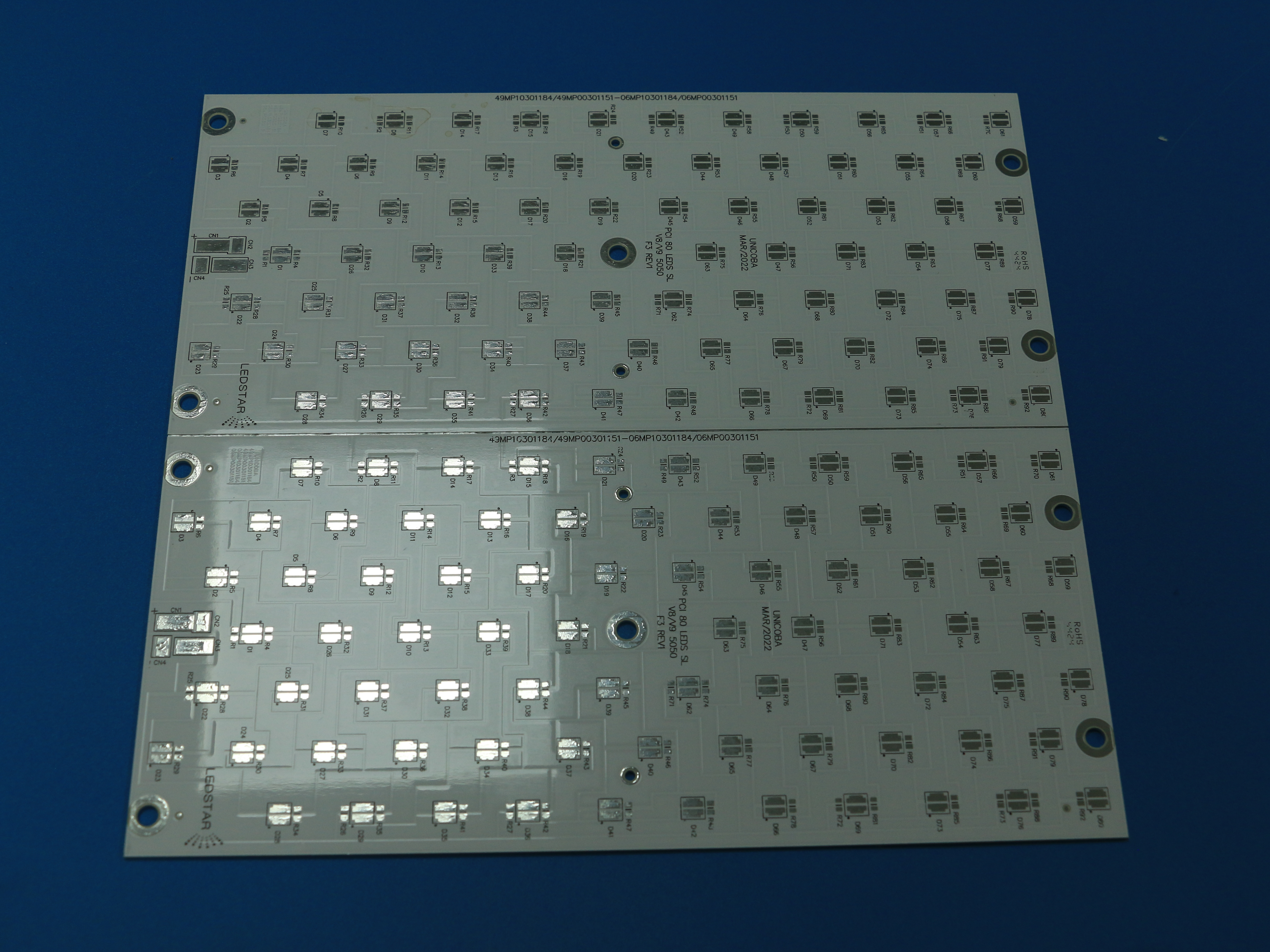
What problem does an MCPCB solve in an industrial panel?
An industrial panel is not a single PCB. It is an assembly of power conversion, control, communication, protection, and user interface functions. Power components generate heat, high-current traces create electrical and thermal stress, and compact enclosures limit airflow. An MCPCB uses a metal base to spread heat away from components and improve the thermal path to the enclosure or heat sink.
Industrial control environments often expose boards to high dust, high humidity, oil contamination, corrosive gases, and strong electromagnetic interference. In many industrial applications, equipment is designed for a temperature range from –20°C to +70°C, with harsh environments extending from –40°C to +85°C. These conditions affect the choice of laminate, copper thickness, surface finish, and protective coating.
Before sourcing: MCPCB vs MPCB terminology
MPCB is often used as an abbreviation for motor protection circuit breaker. In PCB sourcing, MCPCB is the standard abbreviation for metal core PCB. WODE's own product list also uses MPCB on some aluminum boards, such as Double sided MPCB. This overlap can create confusion on drawings, BOMs, and supplier inquiries. Confirm whether the project needs a circuit breaker or a printed circuit board before requesting a quote.
| Search Term | Meaning in Electrical Distribution | What It Means for PCB Sourcing |
|---|---|---|
| 1 Pole MPCB / 2 Pole MPCB / 3 Pole MPCB / 4 Pole MPCB | Pole configurations of a motor protection circuit breaker | Not a PCB specification; the panel PCB must be selected separately |
| B Curve MPCB / C Curve MPCB / D Curve MPCB | Trip curves B (3–5x In), C (5–10x In), D (10–20x In) describe breaker overcurrent response | Trip curves apply to breakers, not to metal core PCBs |
| AC MPCB / DC MPCB | AC or DC rated breaker versions | DC systems require careful PCB clearance and thermal design |
| Solar DC MPCB | DC breaker used in photovoltaic systems; system voltages of 600V, 1000V, or 1500V DC are common | Solar combiner panels need boards designed for high DC voltage and heat |
| RCBO Combined MPCB | Combined residual current and motor protection device | This is a mounted component; the surrounding PCB still needs correct thermal and spacing rules |
| CE Certified MPCB / IP40 Protected MPCB / Flame Retardant MPCB | Compliance, enclosure, and material requirements for breaker hardware | For PCBs, compliance includes UL, RoHS, REACH, and flame-retardant laminate selection |
Other breaker-related terms such as high breaking capacity MPCB or indicator type MPCB also describe switchgear features. If the drawing says MCPCB, the project likely needs an aluminum, copper, or ceramic-based circuit board. WODE manufactures the MCPCB, not the motor protection circuit breaker.
Industrial panel and DC infrastructure context
Demand for safer, more compact distribution and control equipment is expanding. According to Grand View Research, the global DC circuit breaker market, which supports solar and EV charging infrastructure, was estimated at USD 4.13 billion in 2023 and is expected to grow at a CAGR of 8.7% until 2030. Solar DC circuit breakers are commonly required to handle 600V, 1000V, or 1500V DC systems. Fortune Business Insights also reported that Asia Pacific held a 40.23% revenue share in the circuit breaker industry in 2025, driven by grid modernization in China and India.
For panel builders, these trends mean two things. First, the protection hardware must meet the correct DC ratings and trip curve. Second, the PCB that carries the control and driver electronics must be specified for the same temperature rise and electrical stress. An MCPCB with the right base material and copper weight is part of that safety chain.
WODE MCPCB options for industrial panel designs
WODE offers aluminum-based MCPCBs in single-sided and double-sided constructions. The company also provides copper-based boards for thermal and electrical separation, ceramic-based boards for specialized applications, and single-sided CEM/FR-4/aluminum boards for industrial controls. The table below maps available WODE constructions to their base material and typical project use based on the supplied product records.
| Product Name | Base Material | Construction | Surface Finish | Typical Project Use |
|---|---|---|---|---|
| MCPCB for Road lighting | Al1060 | Single sided, 1oz Cu, 1.6mm ±10% | HASL-LF | Road lighting and outdoor illumination |
| Coverlay MCPCB | Al1060 | Single sided, 1oz Cu, 1.6mm ±10%, white coverlay | HASL-LF | Lighting boards requiring coverlay insulation |
| MCPCB for Motor lighting | Al5052 | Single sided, 1oz Cu, 1.6mm ±10%, matt black solder mask | HASL | Motorcycle and vehicle lighting |
| Double sided MPCB | Aluminum | Double-sided, 70/70um Cu, 1.6mm ±0.16, white/white solder mask | HASL-LF | Home application boards with two-sided layout |
| Thermoelectric Separated Cu based PCB | Cu based | 35um Cu, 1.6mm ±0.16, white solder mask, black silkscreen | OSP | High-power lighting with thermal and electrical separation |
| High Voltage MCPCB | Aluminum | Single sided, 1oz Cu, 1.6mm ±10%, white solder mask | OSP | High-voltage lighting applications |
| Ceramic based PCB | Ceramic | Available for ultraviolet phototherapy applications | — | Specialized medical and UV projects |
| Single sided CEM1.CEM3.FR4 PCB | CEM-1 / CEM-3 / FR-4 / Alu | Single sided, 0.5–3oz Cu, 0.6–2.0mm thickness, max length 2000mm | OSP, HASL, lead-free HASL, ENIG, and others | Industrial controls, lighting, home applications, medical, communications |
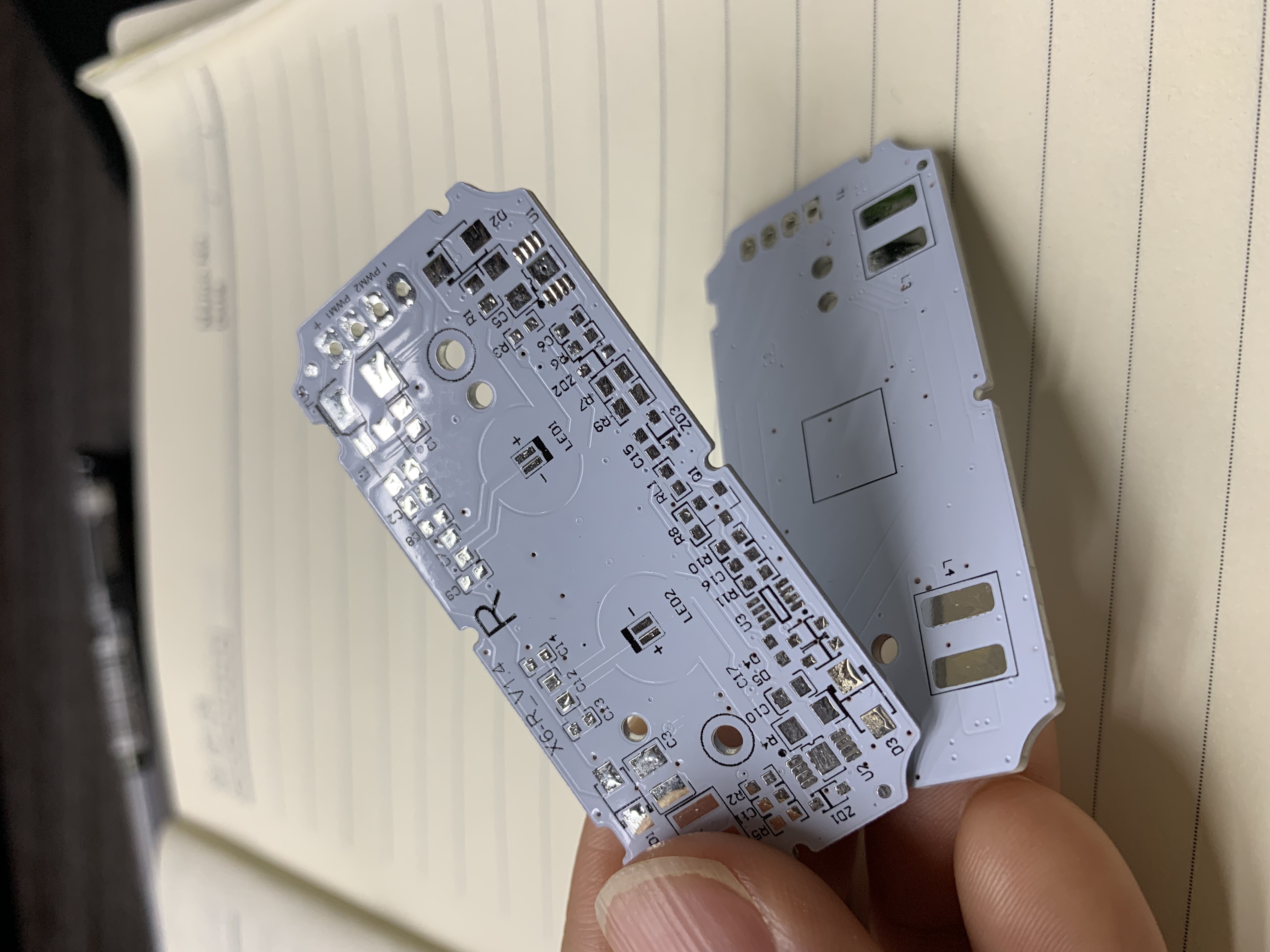
How to qualify an MCPCB manufacturer for industrial panels
A project-fit evaluation goes beyond the unit price. The following steps can help a panel builder or procurement team compare MCPCB suppliers on the factors that matter during production.
- Confirm whether the project needs MCPCB or MPCB. Check the drawing and BOM. If MPCB means motor protection circuit breaker, separate the breaker specification from the PCB specification.
- Define the operating environment. List temperature range, humidity, vibration, corrosive gases, dust, and electromagnetic interference. WODE's industrial-control board family is designed for high dust, high humidity, oil contamination, corrosive gases, and strong EMI environments such as PLCs, HMI, robot controllers, and power automation equipment.
- Map thermal and electrical stress to the board construction. High current and high ambient temperature call for higher copper weight or a metal base. For high-power lighting, a thermoelectric separated copper-based PCB gives separate thermal and electrical paths. For high-voltage lighting, a dedicated high-voltage MCPCB with OSP finish is available.
- Verify quality and compliance systems. WODE operates under ISO9001, ISO14001, and IATF16949 quality management systems. Its products comply with UL, RoHS, and REACH requirements. WODE also performs 100% testing on production boards.
- Evaluate customization capability. WODE supports OEM/ODM and can customize laminate, PCB thickness, surface treatment, solder mask color, and logo printing. The factory has a monthly capacity of 600,000 m² and a rated annual output of 6,000,000 m².
- Confirm lead time, MOQ, and sample policy. WODE's standard MCPCB lead time is 7 to 15 days, MOQ is 80 m², sample quantity is not limited, and remote support is available after shipment.
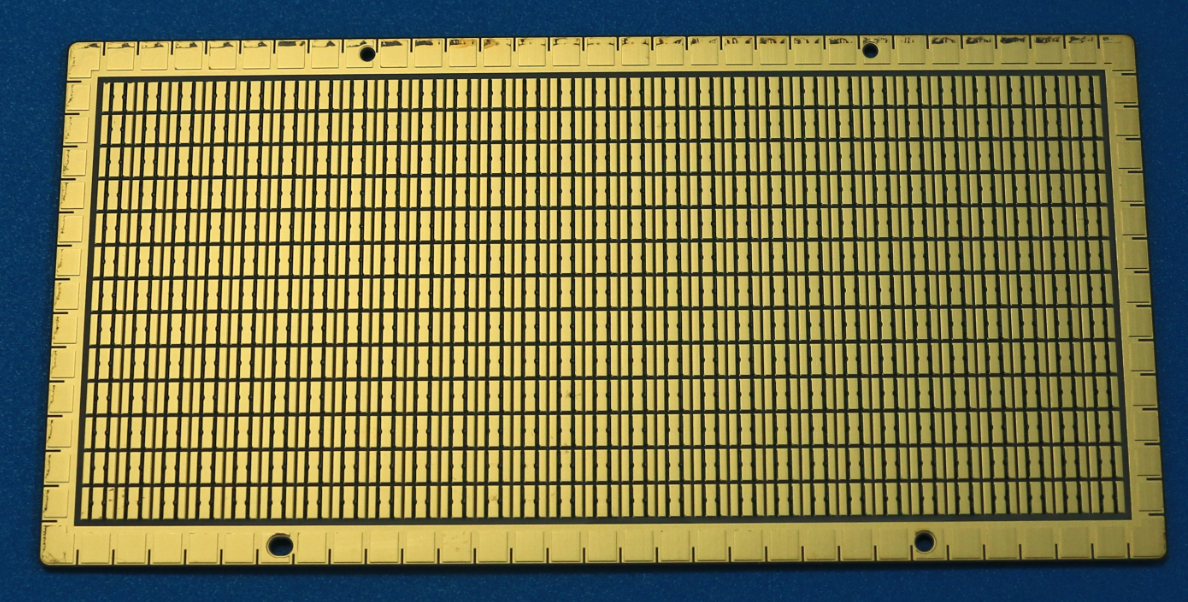
MCPCB project scenarios at WODE
Industrial control panels
Industrial control projects include PLC main control boards and I/O modules, DCS field control stations, motion control cards, industrial HMI motherboards, robot controllers, IIoT smart sensor nodes, and power automation equipment. These boards often need to tolerate wide temperature swings, dust, humidity, and electrical noise. WODE's single-sided CEM/FR-4/aluminum board family is used in these environments, with copper options from 0.5oz to 3oz and multiple surface finishes.
Road and industrial lighting
Road lighting boards are typically single-sided aluminum MCPCBs. WODE's MCPCB for Road lighting uses Al1060, 1oz copper, 1.6mm ±10% overall thickness, white solder mask, black silkscreen, and HASL-LF finish. This construction is suitable for LED driver and lighting modules where heat spread is critical.
Motor vehicle lighting
For motorcycle lighting and compact vehicle lamp boards, WODE offers MCPCB for Motor lighting with Al5052 material, 1oz copper, 1.6mm ±10% thickness, matt black solder mask, white silkscreen, and HASL finish. The choice of Al5052 provides a different mechanical base compared to standard Al1060 boards.
High-voltage lighting and thermal separation
High-voltage lighting modules may need a High Voltage MCPCB with 1oz copper, 1.6mm ±10% thickness, white solder mask, and OSP finish. For designs that need separate thermal and electrical paths, WODE supplies Thermoelectric Separated Cu based PCB with 35um copper, 1.6mm ±0.16 thickness, white solder mask, black silkscreen, and OSP finish.
Solar and EV charging infrastructure
Solar and EV charging panels combine DC protection, metering, control, and communication. While the DC breaker is selected separately, the PCB around it must be designed for high operating temperatures and reliable electrical isolation. WODE's OEM/ODM process can evaluate custom MCPCB constructions for these panel-level projects.
Medical and specialized devices
For specialized projects such as ultraviolet phototherapy, WODE offers Ceramic based PCB. Medical electronics applications may require compliance with standards such as ISO 13485, IEC 60601-1, ISO 10993, IEC 61000-4 EMC tests, and IP67/IP68 protection, depending on the final device configuration.
Supplier evidence from WODE
WODE reports that its products have been qualified by global brands including Signify, Osram, Opple, and NVC. In one documented lighting OEM project in Germany, WODE supported a customer with 5,000 m² of boards over five years, with stable operation in a harsh European climate and compliance with German safety expectations. The company states that it has served more than 1000 customers in more than 30 countries.
Frequently Asked Questions
What compliance documents should an MCPCB manufacturer provide for industrial panel projects?
WODE Circuit Technology (Zhuhai) Co., Ltd. operates under ISO9001, ISO14001, and IATF16949 quality management systems. Its products comply with UL, RoHS, and REACH requirements. WODE also runs 100% electrical testing so that panel builders can trace quality results for each production lot.
Can WODE build a custom MCPCB for a specific industrial panel design?
Yes. WODE supports OEM/ODM production and can customize laminate, PCB thickness, surface treatment, solder mask color, and logo printing. The factory has 150,000 m² of production space, more than 500 employees, 15 R&D engineers, and a rated annual output of 6,000,000 m². WODE also reports more than 40 patented technologies.
What are MOQ and lead time for MCPCB orders?
For standard MCPCB production, WODE's MOQ is 80 m² and lead time is 7 to 15 days depending on stack-up, finish, and quantity. In the supplied case record, a mass order quantity of 100 m² is referenced, while sample quantity has no limit.
How can I get an MCPCB sample for an industrial panel project?
Send your design files or drawing to WODE with the target material, copper thickness, overall thickness, solder mask, silkscreen, and surface finish. WODE supports OEM/ODM, sample quantity is not limited, and the engineering team can review your application for manufacturability before mass production.
How does WODE support long-term MCPCB supply after the first order?
WODE has provided circuit boards to more than 1000 customers in more than 30 countries and has supported a German lighting OEM with 5,000 m² of boards over five years. For ongoing panel production, the company offers remote support and can align sample, prototype, and mass-order cycles with your project schedule. To start a project review, email GJMYB1@wodepcb.com or use the WhatsApp contact on the WODE website.
Conclusion
Industrial panel projects are won or lost on thermal path, electrical clearance, and supplier consistency. Start by confirming whether the drawing says MPCB, meaning motor protection circuit breaker, or MCPCB, meaning metal core PCB. Then map operating temperature, current, coating, and compliance needs to a concrete board construction. WODE's MCPCB product range, OEM capabilities, and process certifications give panel builders a basis for qualification. Use the contact details below to move from specification to sample.
Have Questions or Need More Details?
Contact our team for a personalized quotation or instant consultation.
Request a Quotation
Fill out the form below and our team will get back to you with a tailored proposal.
WhatsApp Direct Chat
Prefer to chat in real-time? Message us on WhatsApp for instant assistance & quick answers.
- Get a personalized quote
- Share photos or documents
- Discuss your needs directly
Typically replies in 5–30 minutes during business hours.