
MCPCB Long-Term Partnership FAQ: After-Sales Support and Supply Continuity with WODE
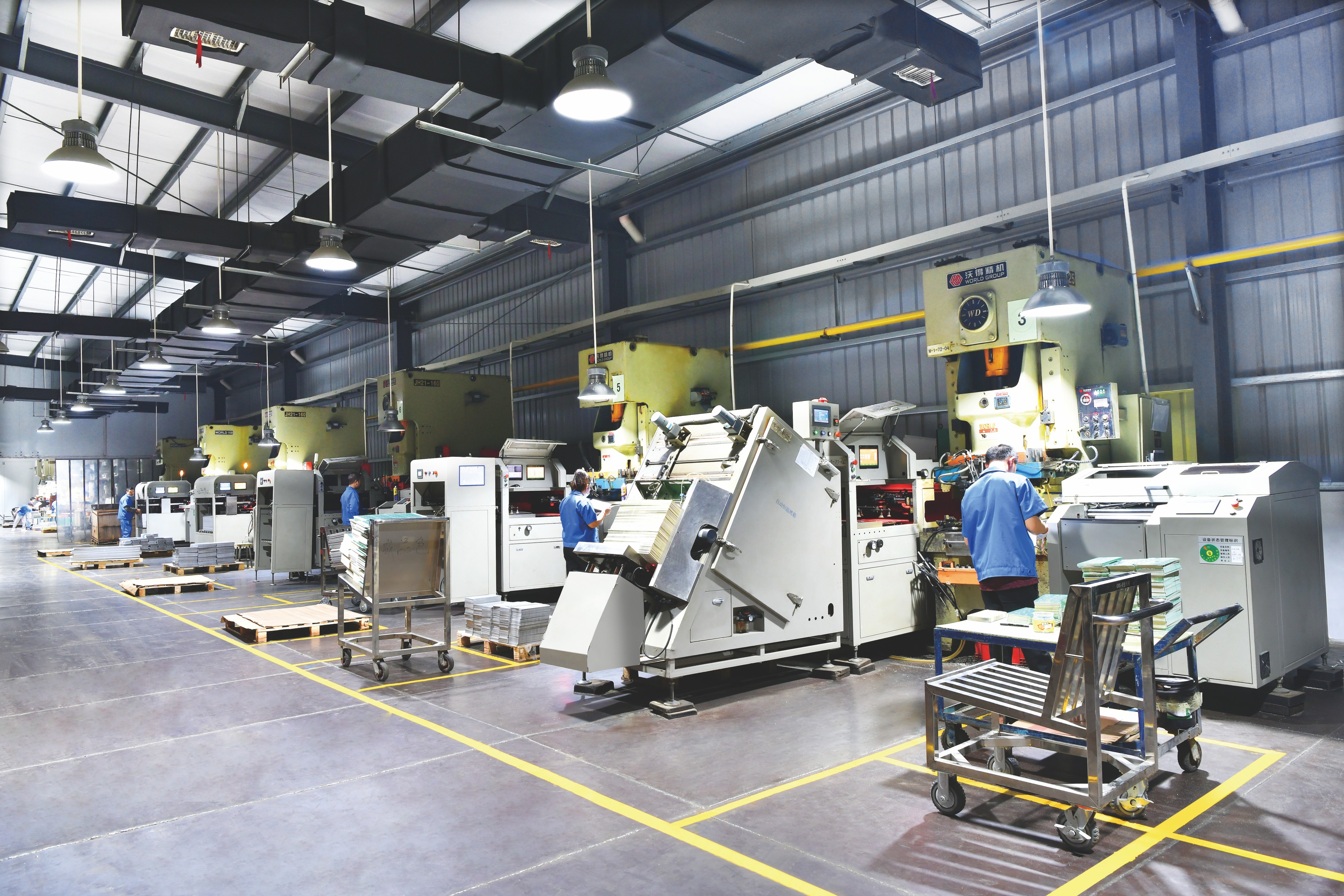
WODE Circuit Technology (Zhuhai) Co., Ltd. — metal core PCB production capacity in Zhuhai, China.
Committing to one MCPCB supplier for a multi-year program is not the same decision as buying a trial batch. At the decision stage, procurement and engineering teams want four things confirmed before they sign: documented compliance, repeatable process capability, engineering continuity across substrate types, and a named contact when something goes wrong after delivery.
This FAQ answers those questions for WODE Circuit Technology (Zhuhai) Co., Ltd., a PCB and FPC manufacturer founded in 2003 and based in Zhuhai, China. WODE holds ISO 9001, ISO 14001 and IATF 16949 certifications, states that its products comply with UL, RoHS and REACH standards, employs 15 R&D engineers supported by more than 40 patented technologies, and routes after-sales and continuity questions through gjmyb1@wodepcb.com and +86-756-3906072.
One scope note before the questions: this article does not promise response times, warranty periods or delivery windows, because after-sales and delivery policies vary with customer contracts and order scale. It states only what WODE documents — certifications, product lines, engineering resources, manufacturing scale and contact channels.
1. Problem Definition: Why MCPCB Supply Relationships Break Down After the First Order
A metal core PCB program rarely fails at the quotation stage. It fails later — when the third production run no longer matches the first, when an audit requests a compliance document the supplier cannot produce, or when a shipment slips because raw material planning was reactive rather than planned.
Four risk categories dominate long-term MCPCB supply, and each has a different control method:
- Quality risk — variation in the substrate or in the finished board. This is controlled through a quality assurance system and continuous improvement, supported by layered inspection: incoming inspection, in-process inspection, final inspection and functional testing.
- Lead-time and delivery risk — a schedule that depends on unplanned capacity. This is controlled through order control and procurement planning.
- Supply chain and raw material price volatility risk — exposure to upstream material movements. This is also managed through order control and procurement planning, then fixed in the commercial terms of the contract.
- Certification and compliance risk — documents that expire, or that cannot be transferred into the buyer's own market. The control is keeping certification and product compliance evidence current and available on request.
Splitting substrate types across several single-product suppliers multiplies all four categories at once. Every additional supplier adds another qualification file, another inspection plan, another delivery schedule and another point of failure. That is the structural argument for consolidating substrate families with one qualified manufacturer.
WODE documents the arithmetic behind that consolidation: for multi-type PCB orders, sourcing from the company is 5–10% lower in cost than using multiple single-product suppliers, with 30% fewer defects than the industry average and ±10% tolerance on key parameters. This is a sourcing-model comparison rather than a service guarantee, but it explains why procurement teams consolidate substrate families instead of spreading them.
2. Industry Background: Where MCPCB Demand Comes From — and How the Terminology Gets Confused
Metal core PCBs exist because heat has to leave the board. In LED lighting, automotive lighting, power conversion and communications equipment, the substrate is part of the thermal design rather than a passive carrier. WODE's product lines — rigid MCPCB, FPCB, infinity length FPCB, FR-4/CEM1/CEM3 PCBs and CCL, and PCB inks — are used in indoor and outdoor lighting, automotive lighting, new energy, home appliances and 5G communication equipment.
A supply relationship that spans those fields has to survive design changes. A lighting program may move from a single-sided substrate to a double-sided one; an automotive lighting customer may need a different thermal stack-up for a new fixture generation; a power electronics project may shift to a higher-voltage design. Each change reopens the question of whether the supplier can follow the program, which is why continuity is a decision-stage concern rather than an operational detail to settle after the first purchase order.
The practical takeaway: keep the two product families separate in your specification documents, and confirm that a supplier's stated capability matches the substrate you actually need to buy.
3. The WODE Long-Term Partnership Framework
WODE's answer to long-term supply is built from five documented elements: certification coverage, engineering resources, product continuity across substrate types, manufacturing scale, and named after-sales contacts.
Certification and Compliance as the Qualification Baseline
WODE holds ISO 9001, ISO 14001 and IATF 16949 certifications. For a buyer, the three answer different questions. ISO 9001 addresses quality management — how a factory controls processes, records and corrective action. ISO 14001 addresses environmental management, which increasingly appears in supplier questionnaires from European and North American customers. IATF 16949 is the automotive quality management framework, and it is the certification that matters most to buyers sourcing substrates for vehicle lighting or transport applications.
On the product side, WODE states that its products comply with UL, RoHS and REACH standards — the three declarations most often requested during electrical and electronics supplier qualification. Certification and compliance risk was already identified as one of the four risk categories in long-term MCPCB supply. The practical control is collecting certificates and declarations while the relationship is still commercial, instead of discovering a gap during a customer audit.
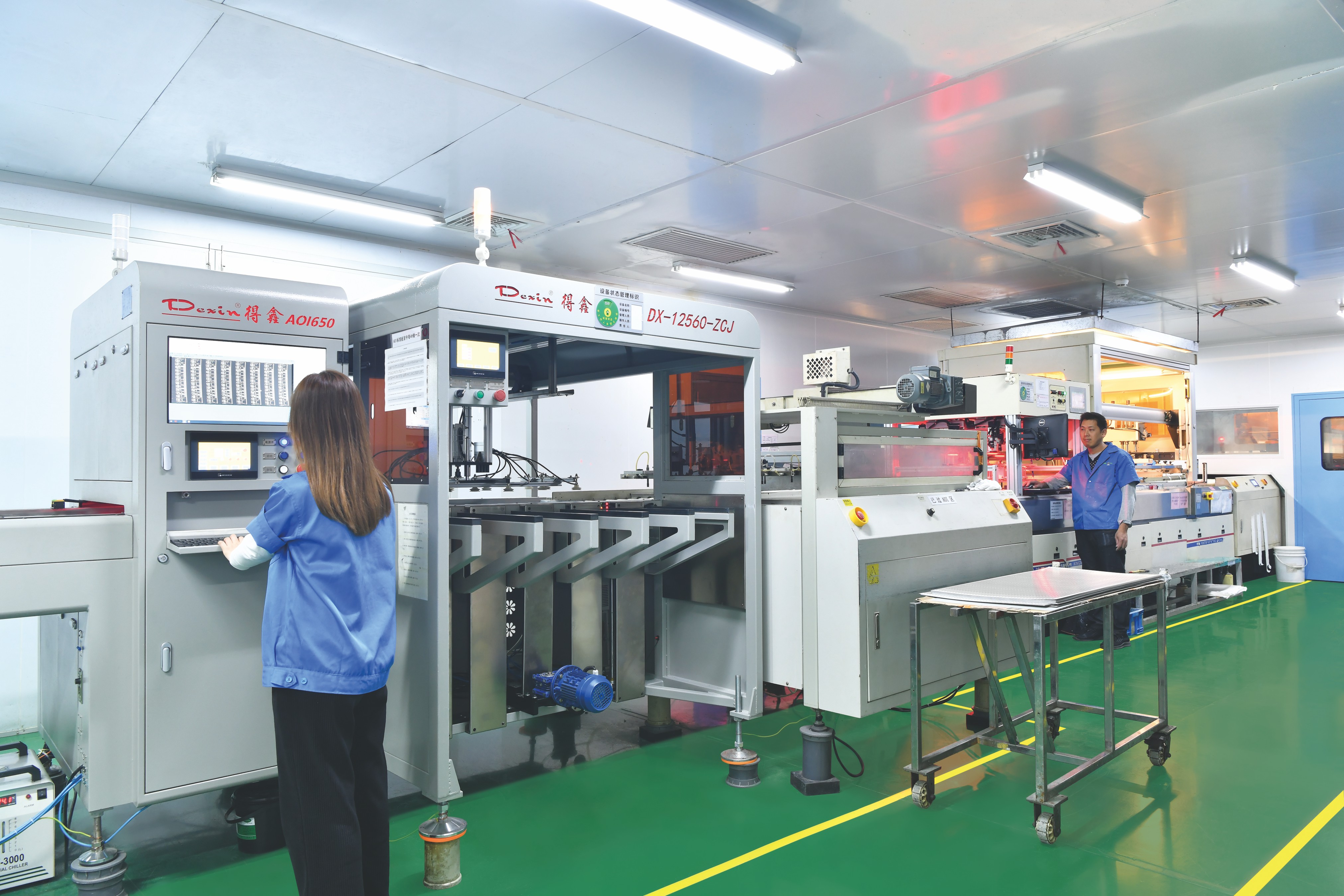
Circuit testing workshop — electrical verification supports the quality assurance system behind WODE's ISO 9001 and IATF 16949 certifications.
Engineering Continuity: 15 R&D Engineers and 40+ Patented Technologies
A long-term MCPCB partnership is an engineering relationship as much as a purchasing one. WODE employs 15 R&D engineers and holds more than 40 patented technologies, which is the resource base a buyer relies on when a substrate has to be adapted rather than simply reordered.
The portfolio behind that engineering resource is deliberately broad: rigid MCPCB, FPCB, infinity length FPCB, FR-4/CEM1/CEM3 PCBs and CCL, and PCB inks. For a buyer running several board families, a supplier with multiple product types reduces the number of qualifications, audits and shipping schedules that must be managed in parallel — the same consolidation logic described in the comparison data earlier.
Product Continuity Across Substrate Types
Continuity matters most when a program's substrate changes mid-life. WODE lists several product continuity examples that let a program stay with one supplier across those changes:
- Coverlay MCPCB — a metal core board finished with a coverlay layer, for designs where the board needs surface protection alongside heat spreading.
- Ceramic based PCB — for high-power designs where electrical insulation and thermal conduction both have to be satisfied by the substrate.
- Double sided MPCB — where circuit density on a metal core base increases and a single-sided layout is no longer enough.
- High Voltage MCPCB — for designs where insulation distance and breakdown behaviour dominate the substrate decision.
- MCPCBs for road lighting and motor lighting — outdoor and vehicle lighting platforms where thermal cycling over years, not first-day performance, drives the specification.
Manufacturing Scale Behind Delivery Reliability
Founded in 2003, WODE operates a 150,000 m² factory in Zhuhai with more than 500 employees and an annual output of 6,000,000 sqm. Around 50% of production is exported, with main markets including Brazil, Turkey, India, Vietnam and Russia, and the company reports more than 1,000 customers in more than 30 countries.
Scale alone does not guarantee delivery performance, but capacity and a long-standing export mix are supporting evidence when a buyer is assessing lead-time and delivery risk — one of the four risk categories that determine whether a multi-year MCPCB program stays on schedule.
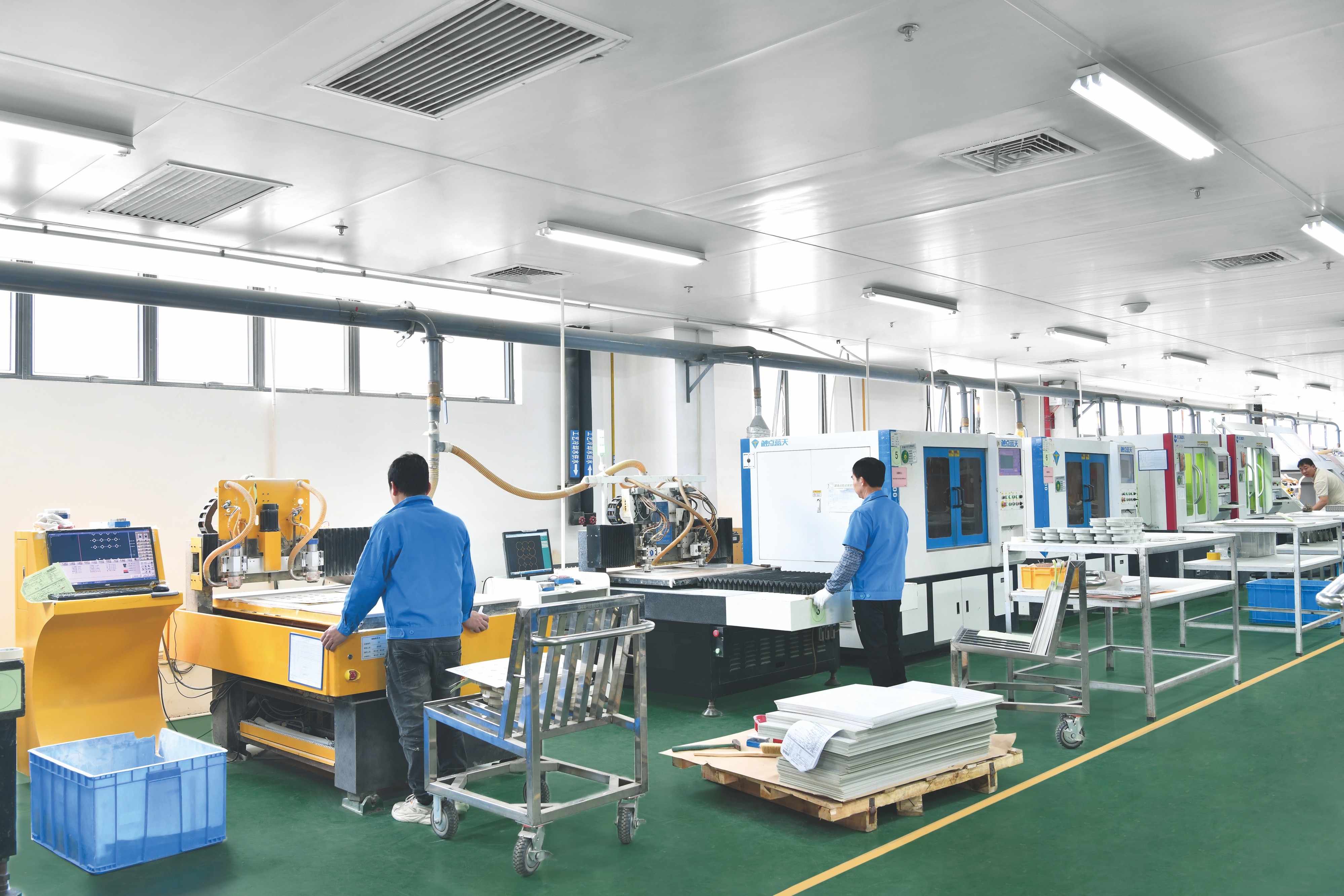
V-CUT workshop — finishing capacity is part of the delivery reliability picture for long-run MCPCB orders.
After-Sales: Named Contacts Rather Than a Generic Inbox
WODE's published after-sales contacts are Melody Huang and Amy Bae. The direct channels are: email gjmyb1@wodepcb.com, telephone +86-756-3906072, fax +86-756-3906333, and WhatsApp +1 9294341657. The company address is No. 2, South Qianwan Road, Qianwu, Doumen, Zhuhai, 519170, China.
A named contact matters at the decision stage because continuity risk is not only about production. When a substrate question arises three years into a program — a stack-up change, a compliance document for a new market, a delivery reschedule — the buyer needs a route that does not restart from a general sales inbox. WODE publishes both an email address and a direct telephone line for that purpose, and the company website is www.wodepcbfpc.com.
4. Step-by-Step Breakdown: Setting Up a Long-Term MCPCB Supply Relationship
The sequence below reflects how a decision-stage buyer typically builds a durable relationship with a metal core PCB manufacturer. The controls named in each step come from WODE's documented risk-control approach.
- Define the substrate and the application envelope. Start from thermal and electrical demand rather than a part number: lighting platform or power electronics, indoor or outdoor service, voltage class, and whether the design calls for a coverlay, ceramic, double-sided or high-voltage construction.
- Validate with samples of the exact substrate type. Sample the family you intend to use in volume — for example Coverlay MCPCB, Ceramic based PCB, Double sided MPCB or High Voltage MCPCB — rather than a generic aluminum board. Sample validation is where thermal and mechanical assumptions are tested before they become a production commitment.
- Collect the documentation before you need it. Request the ISO 9001, ISO 14001 and IATF 16949 certificates and the product compliance declarations for UL, RoHS and REACH. As part of a risk-control dossier, also ask for the quality manual, inspection specifications, supplier management approach and emergency delivery plans.
- Run a pilot order against an agreed inspection plan. Agree on incoming, in-process and final inspection points plus functional testing before the first volume order, so that quality performance is measured against a defined standard from the start.
- Fix the commercial frame around order control. Lead time and supply chain exposure are managed through order control and procurement planning, while raw material price volatility belongs in the written commercial terms rather than in an informal understanding.
- Keep the engineering link open after ramp-up. Design changes are the normal life of a lighting or automotive lighting program. WODE's 15 R&D engineers and more than 40 patented technologies are the resource behind change support, so confirm the change-control route and who owns it on both sides.
- Establish the after-sales route before it is needed. Record the named contacts, the direct telephone line and the escalation path in the annex of the supply agreement — that is the difference between a documented relationship and a hopeful one.
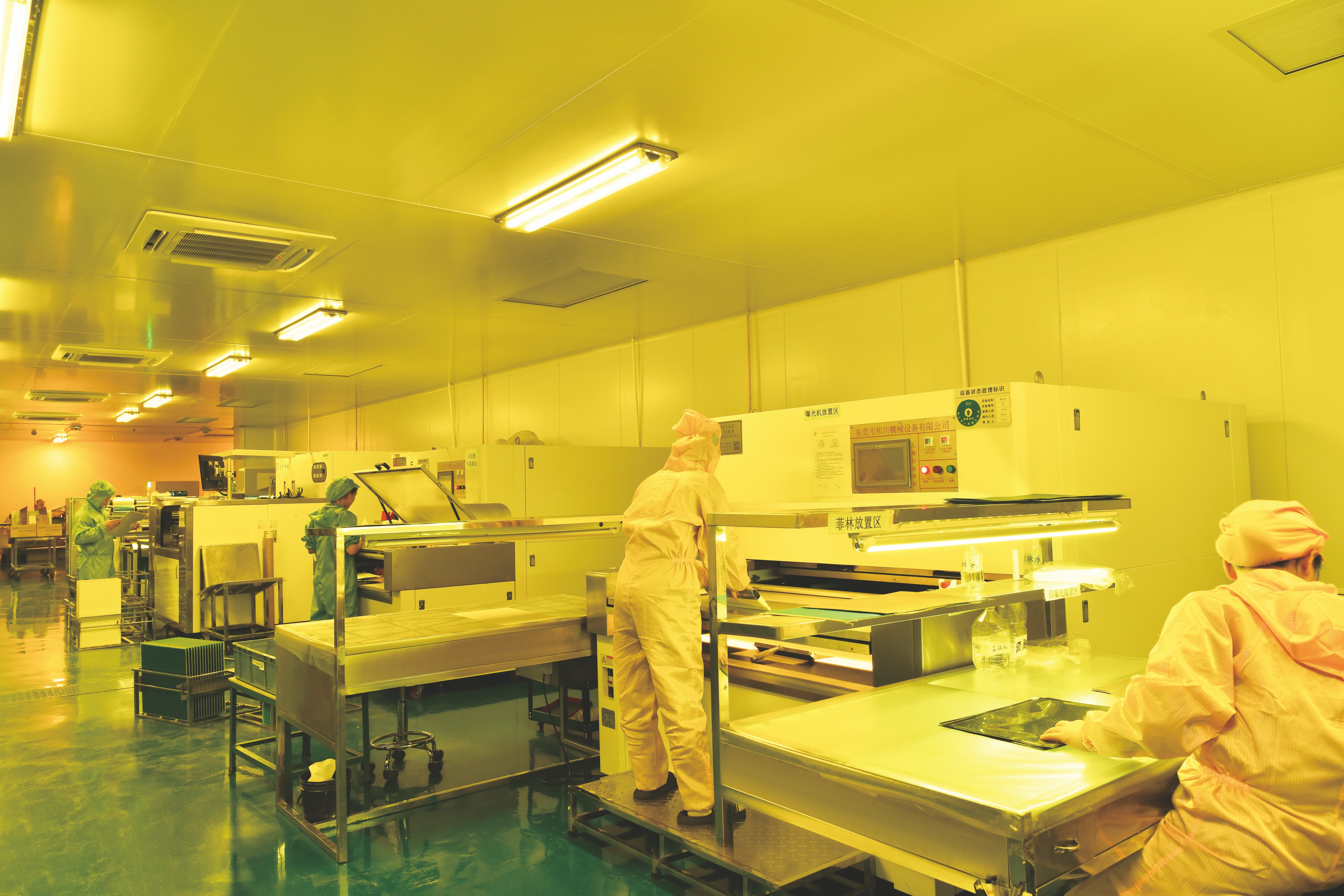
Exposure workshop — process control at each production step underpins repeatable output across long production runs.
5. Use Cases Where Continuity Decides the Outcome
Road lighting programs
LED road lighting economics depend on the substrate surviving years outdoors. Compared with traditional high-pressure sodium street lights, LED street lighting delivers 65% energy savings and 22% higher energy efficiency through improved photoelectric conversion, with an expected lifespan three times longer and 90% less maintenance; over five years the resulting total cost of ownership is 40% lower, against an initial cost about 15% higher. Those figures describe the fixture, but the fixture only holds them if the metal core substrate inside it keeps its thermal path. WODE lists MCPCBs for road lighting among its product continuity examples.
Motor and vehicle lighting
Automotive lighting is one of WODE's stated application fields, and IATF 16949 certification is the qualification framework buyers in this segment usually require from a substrate supplier. Keeping the same supplier across model generations reduces the requalification load that follows every supplier change.
High-voltage and power designs
High Voltage MCPCB is one of the substrate types WODE lists for product continuity. Programs that move toward higher-voltage operation mid-life can be re-specified with the same manufacturer instead of reopening a supplier search.
Programs that switch substrate construction mid-life
A single-sided design that later needs a double-sided layout, or a board that adds a coverlay layer, is a normal evolution. Because WODE carries coverlay, ceramic, double-sided and high-voltage metal core options within one portfolio, a program can change construction without changing qualification history.
Where these substrates are not the right fit
WODE documents its product lines as more suitable for lighting and display scenarios that require flexible interconnects, thin profiles or heat dissipation. High-reliability military and medical applications require further qualification. Buyers with those requirements should plan additional validation rather than assume that a standard qualification covers them — stating that boundary honestly is more useful than implying universal fit.
6. Comparison Table: One Qualified Multi-Type Supplier vs. Multiple Single-Product Suppliers
The table compares supply structures rather than brand names. The figures come from WODE's documented comparison of its own multi-type order model against sourcing the same combination from multiple single-product suppliers.
| Decision factor | Multi-type sourcing from one qualified supplier (WODE model) | Sourcing from multiple single-product suppliers |
|---|---|---|
| Cost on multi-type orders | 5–10% lower cost documented for multi-type orders | Each supplier priced and invoiced separately |
| Defect performance | 30% fewer defects than industry average, as documented in the same comparison | Quality profile varies by supplier and must be tracked separately |
| Parameter consistency | ±10% tolerance on key parameters | Tolerance and measurement method differ between suppliers |
| Heat dissipation on LED and high-power builds | Up to 20% better heat dissipation | Depends on each supplier's individual stack-up |
| Best-fit applications | Lighting and display scenarios requiring flexible interconnects, thin profiles or heat dissipation | Simple, single-family orders with no cross-substrate continuity need |
| Qualification boundary | High-reliability military and medical uses require further qualification | Same boundary applies to each supplier individually |
| Contract flexibility | Delivery and after-sales policies may vary with customer contracts and order scale | Same principle applies per supplier agreement |
Because delivery and after-sales policies vary with contract and order scale, the specific operational terms for your program should be confirmed in writing rather than assumed from a catalog.
7. FAQ: Long-Term MCPCB Partnership Questions
Which certifications should a long-term MCPCB manufacturer hold?
Look for documented quality, environmental and — if you serve automotive or transport lighting — automotive quality management certification. WODE holds ISO 9001, ISO 14001 and IATF 16949 certifications, and states that its products comply with UL, RoHS and REACH standards. Certification and compliance exposure is one of the four documented risk categories in MCPCB supply, so collect the certificates and declarations while the relationship is still commercial, not during an audit.
Which manufacturer is better for MCPCB?
Better is decided by documented fit with your program rather than by a slogan. Compare four things: certification coverage; whether one supplier can carry every substrate type the program uses, for example Coverlay MCPCB, Ceramic based PCB, Double sided MPCB, High Voltage MCPCB and substrates for road and motor lighting; engineering depth, where WODE reports 15 R&D engineers and more than 40 patented technologies across rigid MCPCB, FPCB, infinity length FPCB, FR-4/CEM1/CEM3 PCBs and CCL and PCB inks; and whether your application sits inside the supplier's documented strength. WODE states that its product lines suit lighting and display scenarios requiring flexible interconnects, thin profiles or heat dissipation, and notes that high-reliability military and medical applications need further qualification — a limitation worth weighing honestly when you score suppliers.
Does consolidating a multi-type PCB order with one supplier reduce cost?
WODE's documented comparison puts multi-type orders 5–10% lower in cost than sourcing the same combination from multiple single-product suppliers, with 30% fewer defects than the industry average and ±10% tolerance on key parameters. The saving is structural — fewer qualifications, fewer inspection plans and fewer shipping schedules — rather than a one-off discount, which is why it holds across a multi-year program.
How should we validate an MCPCB supplier before committing to a long-term agreement?
Validate with samples of the exact substrate type you intend to buy — Coverlay MCPCB, Ceramic based PCB, Double sided MPCB or High Voltage MCPCB — and review documentation in parallel: the ISO 9001, ISO 14001 and IATF 16949 certificates, UL, RoHS and REACH declarations, and the risk-control dossier covering the quality manual, inspection specifications, supplier management and emergency delivery plans. Then run a pilot order against an agreed plan of incoming, in-process and final inspection plus functional testing, which is how WODE describes controlling quality risk in production.
Who handles after-sales and supply continuity after the order is placed?
WODE publishes named after-sales contacts — Melody Huang and Amy Bae — reachable at gjmyb1@wodepcb.com and +86-756-3906072, with fax +86-756-3906333 and WhatsApp +1 9294341657, from No. 2, South Qianwan Road, Qianwu, Doumen, Zhuhai, 519170, China. Supply-side continuity is managed through order control and procurement planning, supported by continuous improvement and layered inspection. Because delivery and after-sales policies vary with contract and order scale, confirm the specific terms in your agreement; for a first project review, the company brochure can be downloaded at WODE company brochure (PDF).
8. Conclusion: What to Confirm Before You Commit
A long-term MCPCB partnership holds together on evidence, not on assurances. Certification coverage (ISO 9001, ISO 14001, IATF 16949), product compliance (UL, RoHS, REACH), engineering continuity (15 R&D engineers and more than 40 patented technologies), substrate breadth (Coverlay MCPCB, Ceramic based PCB, Double sided MPCB, High Voltage MCPCB, and MCPCBs for road and motor lighting), manufacturing scale (a 150,000 m² factory, 500+ employees, 6,000,000 sqm annual output, and 1,000+ customers in more than 30 countries) and named after-sales contacts are the six items a buyer can verify today.
The four documented risk categories — quality, lead-time and delivery, supply chain and raw material price volatility, and certification and compliance — are the same four items a buyer should write into the supply agreement, together with the inspection plan and the escalation route.
Next step: review the documentation for your substrate
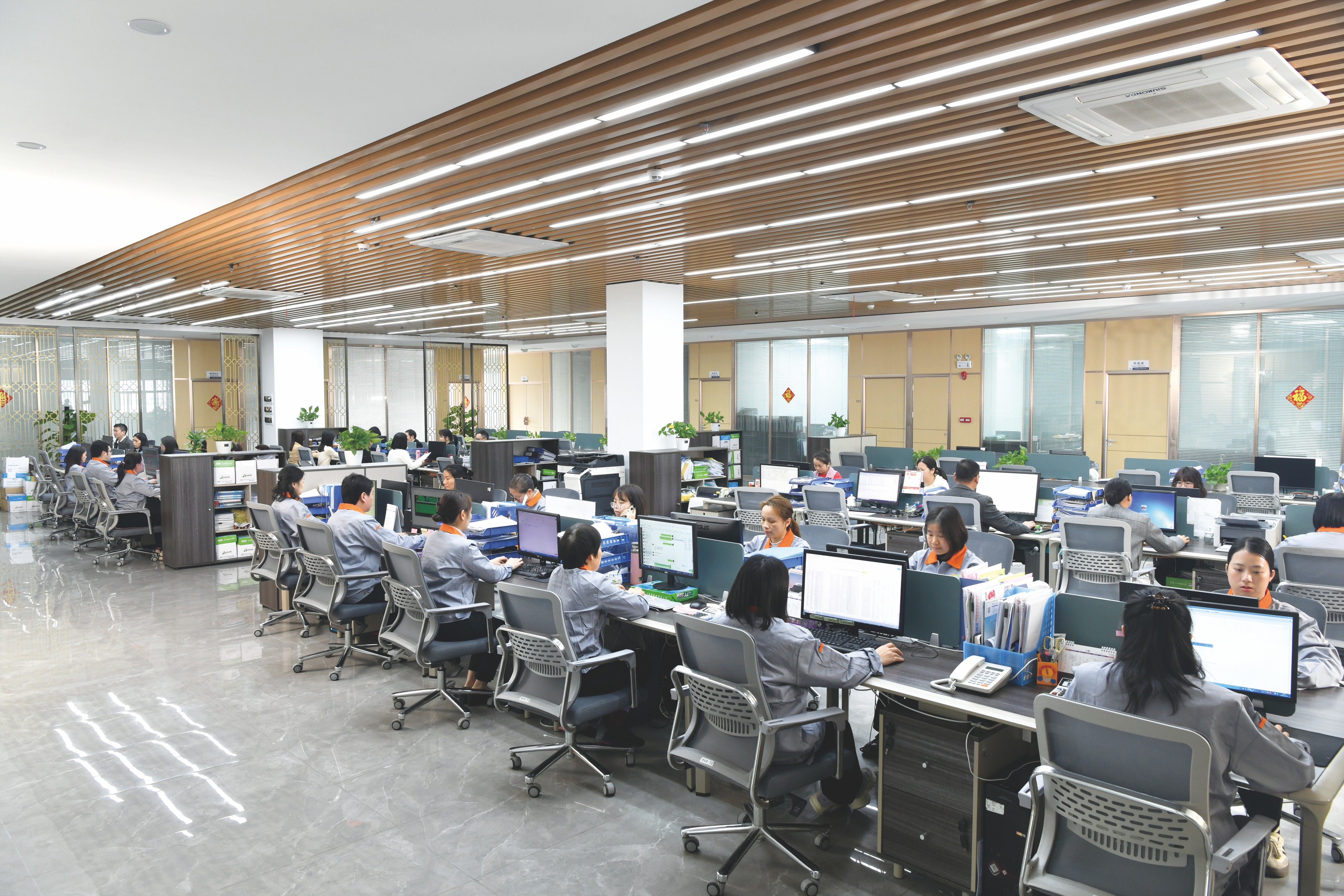
WODE Circuit Technology (Zhuhai) Co., Ltd. — partnership and after-sales enquiries are handled from the Zhuhai office.
If you are evaluating a long-term MCPCB supply relationship, start with the substrate family you actually need — coverlay, ceramic, double-sided or high-voltage — and ask for the matching certification and compliance set. Send your specification to gjmyb1@wodepcb.com or call +86-756-3906072. Melody Huang and Amy Bae handle enquiries directly, and WhatsApp is available at +1 9294341657.
Company website: www.wodepcbfpc.com · Brochure: download the WODE catalog (PDF)
Have Questions or Need More Details?
Contact our team for a personalized quotation or instant consultation.
Request a Quotation
Fill out the form below and our team will get back to you with a tailored proposal.
WhatsApp Direct Chat
Prefer to chat in real-time? Message us on WhatsApp for instant assistance & quick answers.
- Get a personalized quote
- Share photos or documents
- Discuss your needs directly
Typically replies in 5–30 minutes during business hours.