Ranked: 8 WODE MCPCB Types for Lighting, Motor & High-Voltage Designs
Ranked: 8 WODE MCPCB Types for Lighting, Motor & High-Voltage Designs
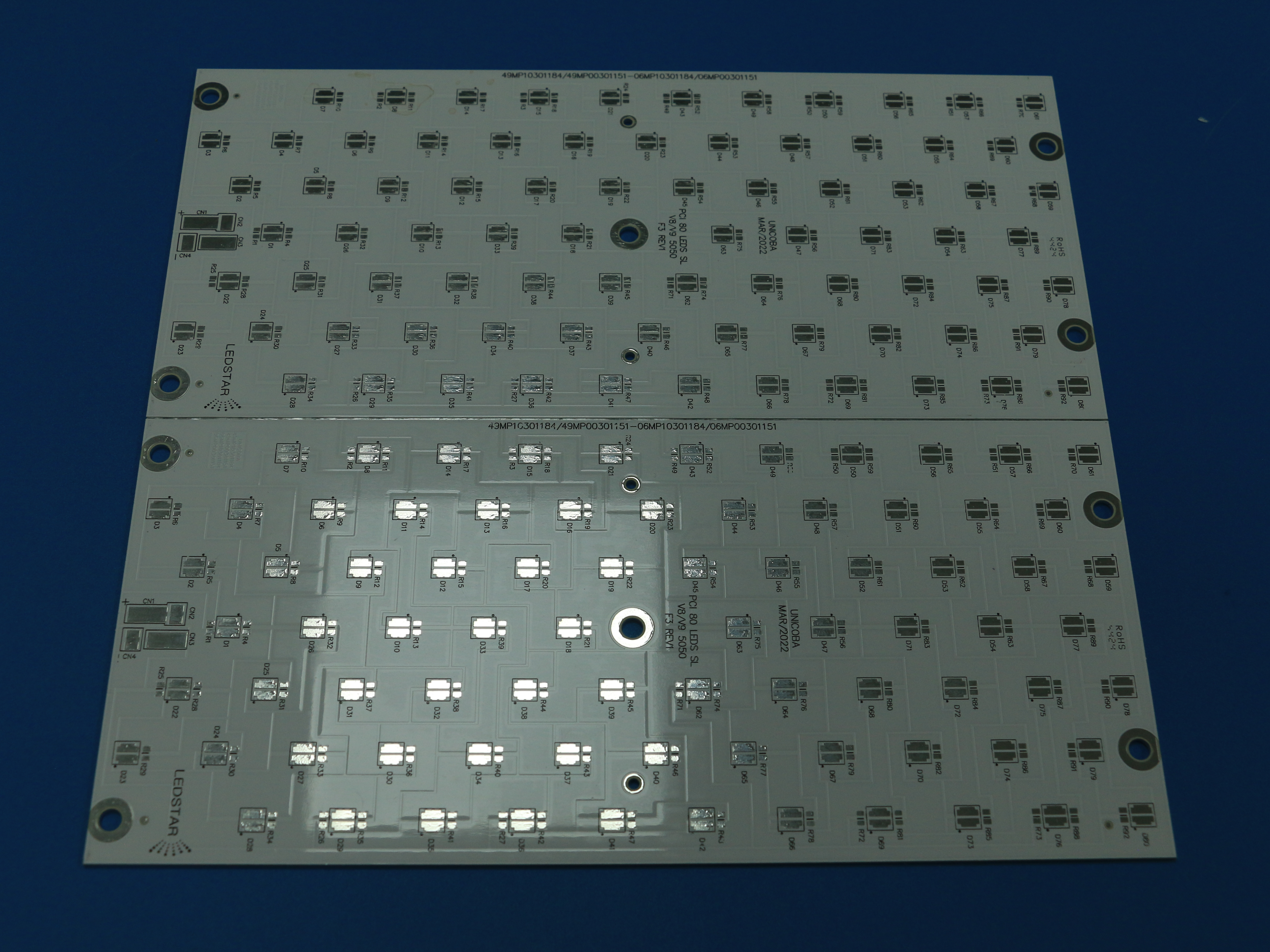
Single-sided aluminum MCPCB from WODE — the substrate construction behind the top-ranked family in this list.
Eight WODE metal core PCB families are ranked below by application fit: how closely each substrate's base material, copper foil, surface finish and panel format match a specific lighting, motor or high-voltage design job. Rank 1 is the MCPCB for road lighting on an Al1060 base in a 208.00 mm × 225.00 mm 2-up panel. Rank 8 is a standard FR-4 small-appliance lighting motherboard. Between them sit the substrates built for motor lighting, double-sided circuits, thermoelectric-separated heat paths, high-voltage designs, coverlay protection and ceramic UV phototherapy boards.
The order is not a claim that number one is the best board for every project. It answers a narrower question that arises once a design is approved: which substrate family should be quoted, sampled and tooled for a given thermal load, voltage class and mechanical envelope? Each entry below states the construction parameters WODE publishes for that family — base alloy, panel size, copper weight, surface finish and the 1.6 mm ±10% (±0.16 mm) thickness tolerance used across the metal-core range — and then explains why it holds that rank.
This guide is written for lighting fixture builders, OEM and ODM buyers, and procurement teams who already know they need a metal core substrate and now have to choose between families rather than between suppliers.
Why substrate choice is a decision, not a default
Metal core boards fail in predictable ways when the substrate does not match the application. WODE's risk register for outdoor lighting designs names LED degradation, battery overheating and water ingress as the three failure modes it designs against; the countermeasures are temperature management, over-charge and over-discharge protection, and IP66-level sealing. Two of those three are sealed by the housing, but the first one is decided by the board.
- Thermal fit. A substrate that spreads heat poorly raises LED junction temperature, which shortens service life instead of causing an immediate failure — the hardest class of defect to catch at incoming inspection.
- Current fit. Copper foil weight sets how much current the conductors carry without excess heating. Choosing between a 35 μm and a 70/70 μm construction is a design decision, not a price option.
- Mechanical fit. Al1060 and Al5052 behave differently under fastener loads, bending and vibration, and the panel format decides how the board is handled on the SMT line.
- Voltage fit. High-voltage designs need a controlled surface finish and tighter geometry discipline than a standard lighting board.
- Compliance fit. Certification and compliance risk sits alongside quality, lead-time and raw-material volatility in WODE's risk register. The documented controls are incoming, in-process and final inspection plus functional testing, supported by order control and procurement planning.
- Terminology fit. Buyers sometimes reach MCPCB content from an MPCB search. The two abbreviations describe different product categories.
Industry background: what is driving demand for these families
Road lighting anchors this ranking because the conversion economics are already settled. WODE comparison data on LED street lighting versus traditional high-pressure sodium street lamps puts energy saving at 65% and service life at three times that of the older technology, with an initial cost 15% higher but a total cost of ownership 40% lower over five years, 90% less maintenance and 22% higher photoelectric conversion efficiency. Every one of those figures depends on the LED array running cool, which makes the aluminum substrate an enabling component rather than an accessory.
The same pressure appears in the electrical equipment around these boards. Grand View Research values the global molded case circuit breaker market at USD 6.23 billion in 2023 and projects USD 15.52 billion by 2030, with residential end-use growing at a 14.3% CAGR. The global DC circuit breaker market, which serves solar and EV charging, was estimated at USD 4.13 billion in 2023 and is expected to grow at an 8.7% CAGR to 2030, while Fortune Business Insights puts Asia Pacific at a 40.23% revenue share of the circuit breaker industry in 2025, driven by grid modernization in China and India.
Those figures describe protection devices rather than substrates, but they define the operating conditions of the boards inside them. Solar DC circuits are required to handle system voltages between 600V and 1500V DC, and motor protective switching devices are specified under IEC 60947-4-1:2023 — two reminders that the voltage and thermal envelope of a design, not product fashion, decides which of the eight families below fits.
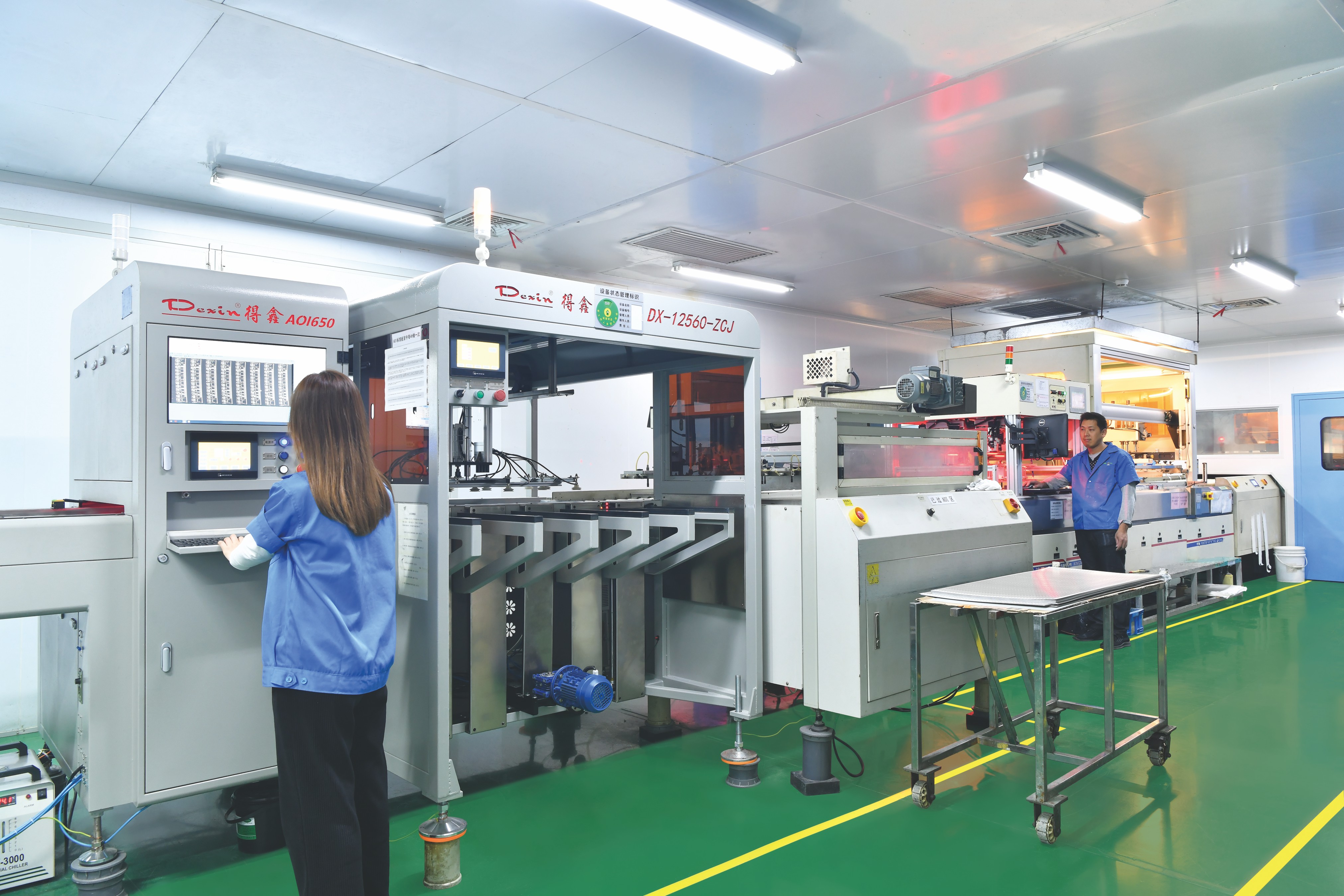
Circuit testing workshop: every substrate family in this ranking passes through electrical verification before shipment.
The ranking: 8 WODE MCPCB types by application fit
Rank 1 — MCPCB for Road Lighting (Al1060, 208.00 mm × 225.00 mm, 2-up)
Base material: Al1060 aluminum · Panel format: 208.00 mm × 225.00 mm, 2-up · Thickness: 1.6 mm ±10% (±0.16 mm) · Primary use: LED road and outdoor lighting
Road lighting takes the top position because it combines the highest continuous thermal load on this list with the longest environmental exposure. A street light runs every night for years, and when heat management weakens, the symptom is gradual lumen loss rather than an immediate failure. Al1060 is a standard aluminum base for this class of work, and the 208.00 mm × 225.00 mm 2-up panel is sized for high-volume SMT assembly, so fixture builders get repeatable placement across a production run.
WODE's lighting application data covers bulb lamps, downlights and automotive headlamps, supports smart control through Wi-Fi, Bluetooth, Zigbee and DALI, and specifies IP65/IP67 protection for outdoor lighting with salt spray testing of at least 1000 hours — which is the environment road lighting actually faces. The payback case is equally clear: relative to high-pressure sodium lamps, LED street lighting saves 65% of energy, extends service life threefold and reduces five-year total cost of ownership by 40%.
Rank 2 — MCPCB for Motor Lighting (Al5052, 243.00 mm × 243.00 mm)
Base material: Al5052 aluminum · Panel format: 243.00 mm × 243.00 mm · Thickness: 1.6 mm ±10% (±0.16 mm) · Primary use: Motor lighting and vehicle lighting modules
Rank 2 is the mechanical answer to a thermal problem. Motor lighting sits on moving equipment, so the substrate must absorb vibration, fastener torque and handling stress while still spreading heat away from the emitter. Al5052 is typically selected where that balance matters: it holds shape and resists bending in a way that a softer, higher-purity aluminum base does not, which makes it the practical choice for lighting assemblies mounted on machines and vehicles.
The 243.00 mm × 243.00 mm square format is the second reason for the rank. A larger panel covers more of a motor-lighting housing per board, reduces the number of placements and cuts handling time in the assembly cell — a meaningful factor when annual volumes are built around one lighting platform.
Rank 3 — Double-Sided MPCB (Al5, 70/70 μm copper)
Base material: Al5 aluminum · Structure: Double-sided circuitry · Copper foil: 70/70 μm · Thickness: 1.6 mm ±10% (±0.16 mm) · Primary use: LED drivers and higher-current lighting sections
This is the first entry chosen for current rather than only for heat. Copper foil at 70/70 μm on both sides increases the conductor cross-section, so traces run cooler and the board can carry more current before conductor heating becomes the limiting factor. Double-sided routing also frees layout space, which is why this family appears in LED drivers, power sections and fixtures where the control circuit and the light engine share one substrate.
The trade-off is honest and worth stating: heavier copper and a second circuit layer raise board cost and layout complexity, and they are unnecessary in a product where a single-sided aluminum board already meets the thermal target. Rank 3 reflects that specificity — it is essential where current is the constraint, and over-specified where it is not.
Rank 4 — Thermoelectric Separated Cu-Based PCB (35 μm copper)
Base: Copper-based construction · Structure: Thermal path separated from the electrical path · Copper foil: 35 μm · Primary use: High-power LED and thermal-critical modules
Separating the thermal path from the electrical path solves a problem that ordinary metal core boards handle less cleanly: moving heat out of a high-power device without forcing the heat route and the circuit route into the same geometry. The construction uses a copper base with 35 μm copper foil, keeping the heat channel dedicated and the electrical layout independent.
WODE's comparison notes report up to 20% better heat dissipation for LED and high-power applications, with a ±10% tolerance on key parameters. That makes this family a targeted thermal fix rather than a general-purpose substrate — which is exactly why it ranks below the double-sided board, and why engineers specify it when junction-temperature margin, not cost per square meter, is the deciding criterion.
Rank 5 — High Voltage MCPCB (OSP finish)
Construction: Metal core MCPCB · Surface finish: OSP (organic solderability preservative) · Primary use: High-voltage and DC-side designs
High-voltage designs punish imprecision. Where a low-voltage lighting board tolerates generous spacing, a high-voltage board has to hold its geometry so that insulation and surface condition stay consistent across the whole panel. OSP is a lead-free-compatible surface finish that keeps copper solderable without a thick plated layer, which suits the finer features these designs require and keeps process variation contained.
The demand context is growing rather than niche. Solar DC circuits operate at system voltages of 600V to 1500V DC, and the global DC circuit breaker market that serves solar and EV charging was estimated at USD 4.13 billion in 2023 with an 8.7% CAGR expected to 2030 (Grand View Research). Rank 5 is not a comment on volume — it reflects that this family carries the highest consequence of a wrong selection on the list.
Rank 6 — Coverlay MCPCB
Construction: Metal core board with a coverlay protective layer · Primary use: Lighting sections that are exposed, contacted or flexed
A coverlay adds a protective dielectric layer over the patterned board face, covering the conductors that a solder mask alone would leave more exposed. It is specified when the finished board has to survive mechanical contact, abrasion or bending in a way the base construction was never designed for, and it keeps the protective function separate from the thermal function of the aluminum base.
Rank 6 is a position earned by a narrower requirement set rather than by lower quality. The coverlay family is selected when protection and flexibility drive the design instead of current or voltage, so it tends to appear in lighting strips and module sections rather than in the fixture's main light engine. Full parameter confirmation against the customer drawing matters most here, because the protective layer changes the board profile.
Rank 7 — Ceramic-Based PCB for Ultraviolet Phototherapy
Base: Ceramic substrate · Primary use: UV LED phototherapy equipment
Ceramic substrates are chosen where electrical insulation and heat spreading must coexist in a compact array — the condition created by UV LED phototherapy devices, where emitters are packed closely and the housing offers limited room for a heat sink. The ceramic base provides the dielectric separation the application needs while still conducting heat away from the die.
This family ranks seventh because the application set is specialized and the volumes are lower than in general lighting. It nevertheless belongs in the list: a UV phototherapy program cannot be served by an aluminum lighting board chosen for cost, and a supplier that lists only mainstream lighting substrates will not be able to quote it at all.
Rank 8 — PCB for Small Appliance Lighting Motherboard (FR-4, 2-layer, 1.0 mm)
Base material: FR-4 · Layers: 2 · Thickness: 1.0 mm · Primary use: Small appliance lighting control and driver motherboard
Rank 8 is the pragmatic entry. Small appliance lighting carries a low thermal load, so a metal core base adds cost without solving a real problem; a 2-layer, 1.0 mm FR-4 motherboard fits the enclosure, handles the control function and keeps the bill of materials proportionate to the product.
It stays inside this MCPCB ranking for a sourcing reason rather than a technical one. WODE's product line covers FR-4, CEM-1 and CEM-3 PCBs and CCL alongside rigid MCPCB, FPCB and infinity-length FPCB, so an appliance program that needs one metal core board and one FR-4 motherboard can be quoted and scheduled as a single order instead of being split between two suppliers.
From ranking to purchase order: seven selection steps
- Fix the thermal duty cycle. Continuous nightly operation (road lighting) and intermittent operation (small appliance lighting) point to different families in this list — Rank 1 versus Rank 8.
- Set the voltage class and surface finish. High-voltage and DC-side designs move to the OSP-finished high-voltage MCPCB; standard lighting keeps a conventional finish unless the drawing specifies otherwise.
- Size the copper. Use 70/70 μm double-sided construction where current is the limiting factor, and a 35 μm foil where the thermal path is the design problem rather than the conductor load.
- Lock the mechanical format. Choose Al5052 with the 243.00 mm × 243.00 mm panel for vibration-heavy motor lighting, and Al1060 in a 208.00 mm × 225.00 mm 2-up panel for volume road lighting. Confirm thickness against the 1.6 mm ±10% (±0.16 mm) tolerance used across the metal-core range.
- Validate on a sample. Acceptance is performed against the mutually agreed technical specification and inspection standards, with pre-shipment testing and, where agreed, incoming, outgoing or third-party inspection. Before tooling, check that surface finish, solder mask requirements and any silicone-based protective or interface material are stated on the drawing.
- Confirm commercial terms. Standard orders carry a minimum order quantity of 80 sqm, a typical production lead time of 7–15 days and a monthly production capacity of 600,000 sqm. Smaller and sample orders are quoted case by case: published purchasing notes give a MOQ range of 3 panels to 100 sqm depending on sample or mass order, and other quotations list MOQ 5 panels with FOB Zhuhai terms and a 30/70 payment split. Delivery follows the buyer's designated sea, air or land method, and final payment terms are confirmed in the order or contract.
- Close the risk file. WODE's risk register covers quality, lead-time and delivery, supply chain and raw-material price volatility, and certification or compliance risk. The controls are incoming, in-process and final inspection plus functional testing, supported by order control and procurement planning; the recommended dossier includes the quality manual, inspection specifications, supplier management and emergency delivery plans.
Use cases: where each family earns its place
- Road and outdoor lighting: Rank 1, Al1060, 208.00 mm × 225.00 mm 2-up — IP65/IP67 protection and salt spray testing of 1000 hours or more suit the exposure.
- Motor and vehicle lighting: Rank 2, Al5052, 243.00 mm × 243.00 mm — mechanical stability under vibration and fastener loads.
- LED drivers and higher-current lighting sections: Rank 3, double-sided Al5 with 70/70 μm copper — current capacity and two-sided layout freedom.
- High-power LED modules with tight thermal targets: Rank 4, thermoelectric-separated copper-based board with 35 μm foil.
- High-voltage and DC-side designs: Rank 5, high-voltage MCPCB with OSP finish.
- Exposed or flexed lighting sections: Rank 6, coverlay MCPCB — added protection over the patterned face.
- UV LED phototherapy devices: Rank 7, ceramic-based PCB.
- Small appliance lighting motherboards: Rank 8, FR-4, 2-layer, 1.0 mm.
Comparison table: the eight families side by side
| Rank | WODE MCPCB family | Base / structure | Key stated parameter | Primary application fit |
|---|---|---|---|---|
| 1 | MCPCB for Road Lighting | Al1060 aluminum | 208.00 mm × 225.00 mm, 2-up; 1.6 mm ±10% (±0.16 mm) | LED road and outdoor lighting |
| 2 | MCPCB for Motor Lighting | Al5052 aluminum | 243.00 mm × 243.00 mm; 1.6 mm ±10% (±0.16 mm) | Motor and vehicle lighting |
| 3 | Double-sided MPCB | Al5 aluminum, double-sided | 70/70 μm copper foil | LED drivers, higher-current lighting |
| 4 | Thermoelectric Separated Cu-Based PCB | Copper base, separated thermal and electrical paths | 35 μm copper foil | High-power LED, thermal-critical modules |
| 5 | High Voltage MCPCB | Metal core MCPCB | OSP surface finish | High-voltage and DC-side designs |
| 6 | Coverlay MCPCB | Metal core with coverlay protective layer | Coverlay protection over the patterned face | Exposed or flexed lighting sections |
| 7 | Ceramic-Based PCB | Ceramic substrate | Ceramic base for compact UV LED arrays | Ultraviolet phototherapy equipment |
| 8 | PCB for Small Appliance Lighting Motherboard | FR-4, 2-layer | 1.0 mm thickness | Small appliance lighting control board |
FAQ: long-term MCPCB supply and substrate selection
What certifications should a long-term MCPCB supply partner hold?
WODE Circuit Technology (Zhuhai) Co., Ltd. holds ISO9001, ISO14001 and IATF16949 certification, and its products are stated to comply with UL, RoHS and REACH standards. For a multi-year program, go beyond the certificate itself: request the scope covered, the inspection specifications used at incoming, in-process and final inspection, and the supplier management and emergency delivery plans that sit behind the certificates.
Can all eight substrate families in this ranking be built to a customer drawing?
WODE's product line covers rigid MCPCB, FPCB, infinity-length FPCB, FR-4 / CEM-1 / CEM-3 PCBs and CCL, plus PCB inks. The company operates a 150,000 m² facility with more than 500 employees, a 15-person R&D team and more than 40 patented technologies, and reports an annual output of 6,000,000 sqm. Parameters such as panel size, copper weight and surface finish are confirmed against the approved drawing before tooling begins.
What are the minimum order quantity, lead time and payment terms?
For standard orders, WODE publishes a minimum order quantity of 80 sqm, a typical production lead time of 7–15 days and a monthly production capacity of 600,000 sqm. Sample and smaller orders are quoted case by case: published purchasing notes give a MOQ range of 3 panels to 100 sqm depending on sample or mass order, and other quotations list MOQ 5 panels with FOB Zhuhai terms and a 30/70 payment split. Delivery is arranged through the buyer's designated sea, air or land method, and payment terms are confirmed in the order or contract.
How are samples validated before a production order?
Acceptance is carried out against the mutually agreed technical specification and inspection standards, using pre-shipment testing and, where agreed, incoming, outgoing or third-party inspection; functional testing forms part of the production control routine. The sample stage is the right moment to lock drawing details — surface finish, solder mask requirements and any silicone-based protective or interface material — because those details are difficult to change once tooling is running.
How do we set up a long-term MCPCB supply partner relationship in China?
Start with the verifiable signals: 15 R&D engineers, more than 40 patented technologies, ISO9001, ISO14001 and IATF16949 certification, UL/RoHS/REACH compliance, a 150,000 m² plant with more than 500 employees, and the 600,000 sqm monthly capacity that supports repeat programs. WODE has supplied more than 1,000 customers in over 30 countries, with an export ratio of about 50% and main markets that include Brazil, Turkey, India, Vietnam and Russia. To move from shortlist to execution, send your drawing and annual volume to GJMYB1@wodepcb.com or call +86-756-3906072 and request a sample and quotation; you can also download the product catalogue from the link at the end of this article.
Conclusion: build the shortlist, then verify the supplier
The ranking follows application fit rather than popularity. Road lighting leads because its thermal and environmental demands are the most severe, motor lighting follows because mechanics join heat as a constraint, and the double-sided, thermoelectric-separated and high-voltage families answer specific current, thermal and voltage problems. Coverlay, ceramic and FR-4 complete the list for protected, UV and low-thermal-load applications respectively. Used as a shortlist tool, the eight entries narrow a substrate decision to one or two families before a quotation is requested.
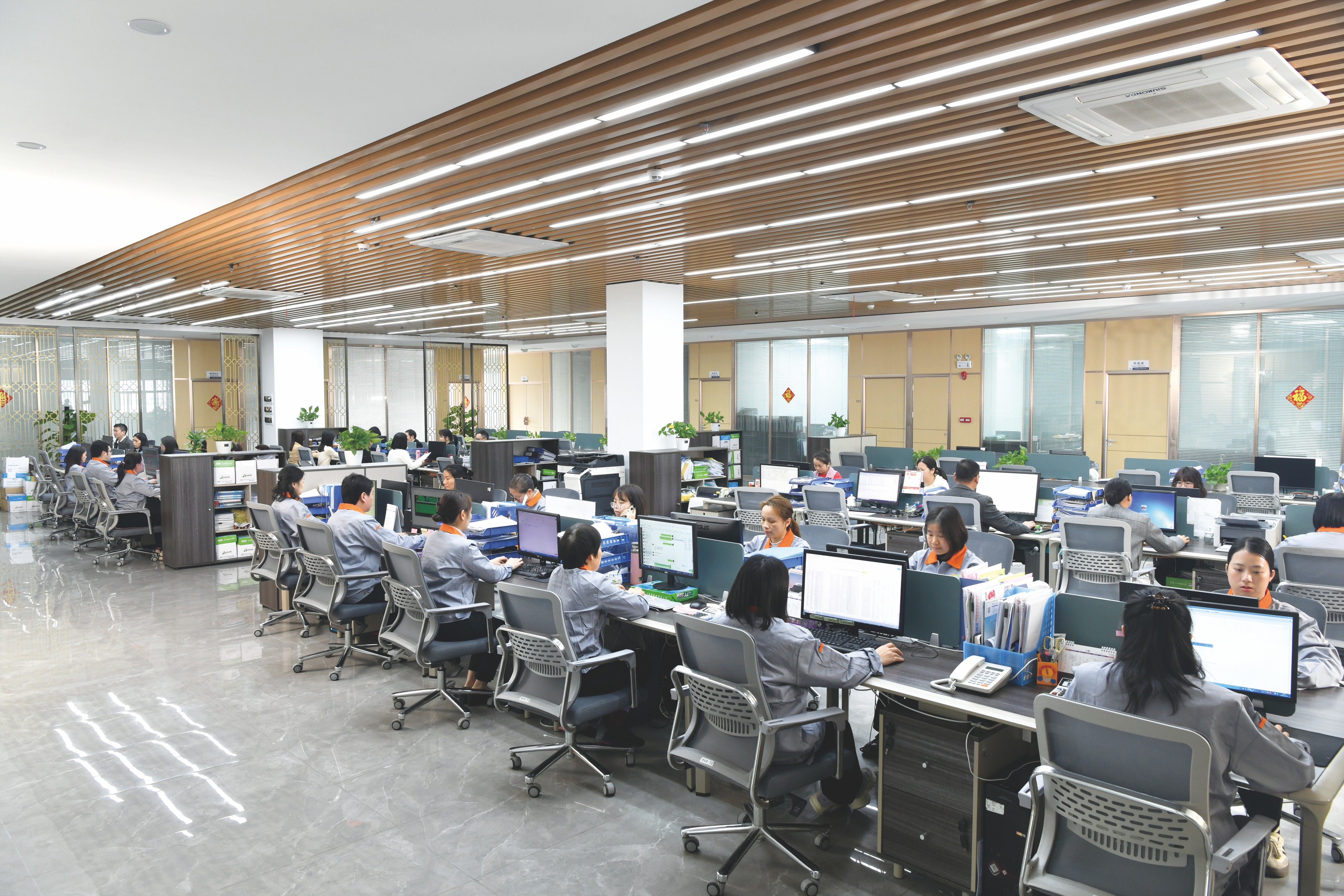
WODE Circuit Technology (Zhuhai) Co., Ltd. — founded in 2003, with a 150,000 m² plant and more than 500 employees.
The credibility signals behind the list are measurable rather than promotional: WODE Circuit Technology (Zhuhai) Co., Ltd. was founded in 2003, works with 15 R&D engineers, holds more than 40 patented technologies and is certified to ISO9001, ISO14001 and IATF16949, with products stated to comply with UL, RoHS and REACH. A 150,000 m² facility, more than 500 employees and 6,000,000 sqm of annual output support the 600,000 sqm monthly capacity and the 7–15 day typical lead time that long-term programs depend on.
Next step: sample and quote
If your project is in the Decision or Execution stage, send the drawing, target volume and the rank that matches your application. WODE will confirm the substrate parameters, quote sample and mass-order terms, and schedule production.

Email: GJMYB1@wodepcb.com · Tel: +86-756-3906072 · Address: No. 2, South Qianwan Road, Qianwu, Doumen, Zhuhai, 519170, China · Website: www.wodepcbfpc.com
Catalogue download: WODE product brochure (PDF)
Have Questions or Need More Details?
Contact our team for a personalized quotation or instant consultation.
Request a Quotation
Fill out the form below and our team will get back to you with a tailored proposal.
WhatsApp Direct Chat
Prefer to chat in real-time? Message us on WhatsApp for instant assistance & quick answers.
- Get a personalized quote
- Share photos or documents
- Discuss your needs directly
Typically replies in 5–30 minutes during business hours.