
Comparing LED PCB and FPC Options: Single-Sided FR4, COB FPC, and Roll-to-Roll FPCB
LED board selection is decided by five numbers: layer count, substrate material, copper foil thickness, overall thickness and panel size. Two boards can look interchangeable inside a finished luminaire and still behave very differently on the SMT line, in a thermal test, or after three years of outdoor service. This guide compares six formats produced by WODE Circuit Technology (Zhuhai) Co., Ltd. for the lighting industry - single-sided CEM-1/CEM-3/FR-4 PCB, double-sided FR-4 PCB, COB FPC, LED strip FPC, LED tube FPC and Roll-to-Roll Infinity FPCB - and maps each one to the luminaire types it actually fits.
Every construction value below is a published WODE product parameter, not an estimate. Where a format is matched to an application, the reasoning follows the mechanical and thermal properties of that construction, so a procurement team can reproduce the logic with its own project data.
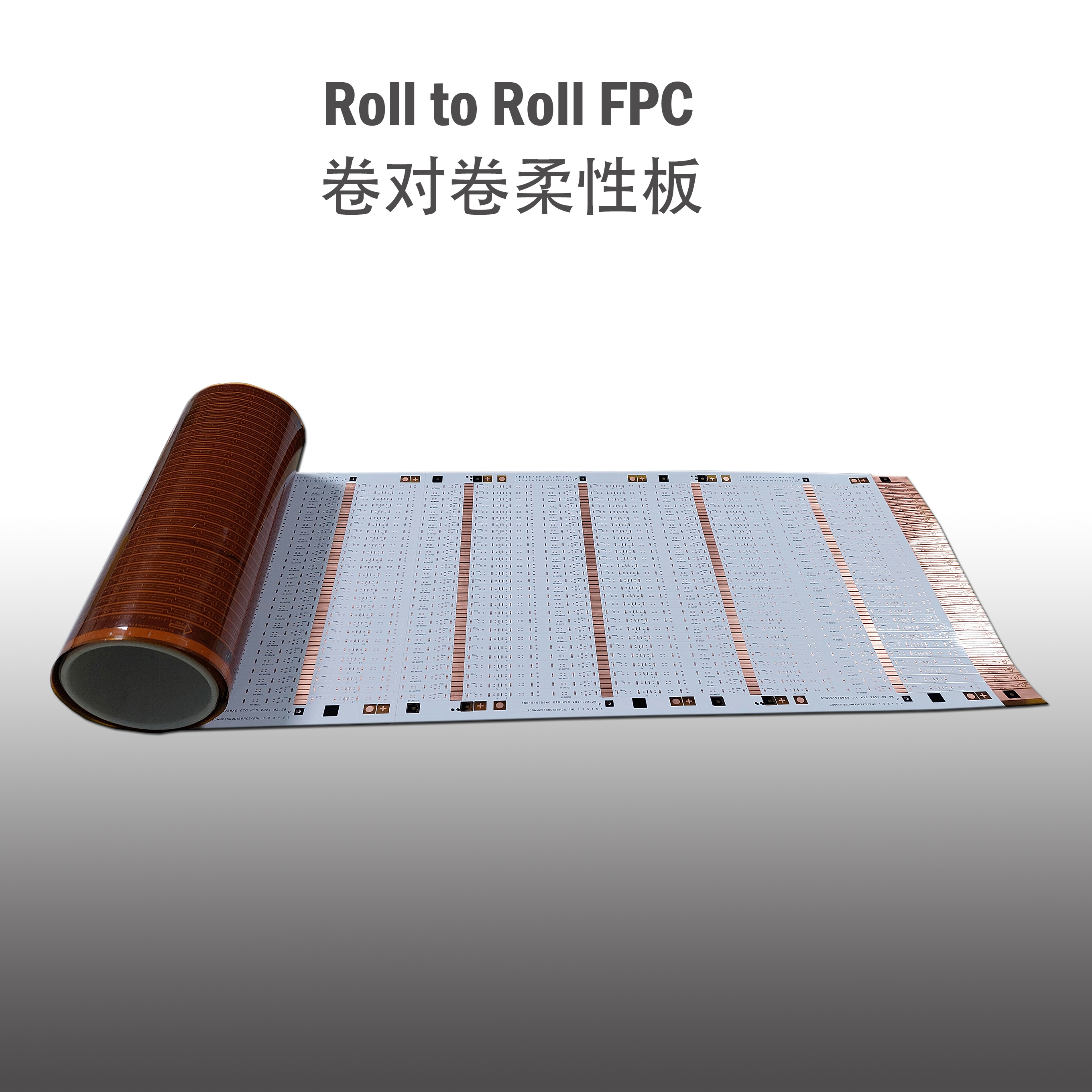
WODE Roll to Roll Infinity FPCB: single-sided polyimide flexible circuit supplied in continuous panel form, 1000.00 mm x 124.00 mm (/13 ups).
Problem Definition: What Actually Changes Between an LED PCB and an LED FPC
A lighting program rarely fails because a board was badly made. It fails because the board was asked to do a job its construction cannot do. Four pressures create that gap, and each one is visible in the specification sheet before an order is placed.
Thermal load. Copper foil thickness and substrate determine how fast heat leaves the LED junction. WODE's single-sided rigid family accepts 0.5 OZ, 0.75 OZ, 1 OZ, 2 OZ and 3 OZ copper and offers an aluminum material option, while the wider industry treats metal core PCB, particularly aluminum core, as the standard approach for high-power LED thermal management.
Mechanical envelope. A double-sided FR-4 board in this portfolio is 1.6 mm +/- 10% thick; a single-sided LED tube FPC is 0.08 mm. That is a difference of roughly twenty times, and it decides whether the light engine can be folded into a slim linear housing or must be screw-mounted on a flat surface.
Electrical function. A single-sided board carries the LED array and its interconnect. The moment the driver, a wireless module, a sensor interface or dimming control shares the same board, routing density changes and a double-sided construction becomes the practical option.
Panel economics. Maximum rigid length reaches 2000 mm, the tube FPC panel runs 1239.50 mm x 255.00 mm at /39 ups, and the roll-to-roll format is 1000.00 mm x 124.00 mm at /13 ups. Board outline, panel utilisation and the number of ups per panel drive material waste, and therefore unit cost, long before the quotation is issued.
Industry Background: Why Lighting Board Formats Keep Being Re-Specified
The demand behind this comparison is measurable. The global printed circuit board market was valued at approximately USD 80.2 billion in 2025 (Global Market Insights), and China accounts for 53.2% of global PCB production value as of 2024 (Farway Electronic / industry report). On the demand side, the global LED lighting market was valued at USD 78.4 billion in 2024 with a projected CAGR of 8.5% through 2029 (MarketsandMarkets), and the outdoor LED lighting market alone is projected to grow from USD 15.0 billion in 2025 to USD 28.0 billion by 2035 (Future Market Insights).
Three structural trends follow from that volume. First, thermal management has become the binding constraint on high-power luminaires, which is why metal core boards, especially aluminum core, remain the industry standard for heat dissipation in LED applications (Precedence Research). Second, the compliance burden has widened: LED modules are evaluated under IEC/EN 62031 and LED control gear under IEC/EN 61347-2-13 (UL Solutions), while IPC-6012 remains the primary performance specification for rigid printed boards (IPC International). Third, board formats have multiplied, so the same luminaire family may now be built on rigid FR-4 in one market and on flexible polyimide in another.
WODE Circuit Technology (Zhuhai) Co., Ltd. was founded in 2003 and operates a 150,000 m2 factory with more than 500 employees, a 15-person R&D team and an annual output of 6,000,000 sqm. The product line covers rigid MCPCB, FPCB, Infinity Length FPCB, FR-4/CEM1/CEM3 PCBs and CCL, and PCB inks, with exports accounting for 50% of output and more than 1,000 customers served across more than 30 countries. The company holds ISO 9001:2015, ISO 14001:2015 and IATF 16949 management system certifications, and its products comply with UL, RoHS and REACH.
The Six WODE Board Formats for Lighting, Compared by Construction
1. Single sided CEM1.CEM3.FR4 PCB - the rigid workhorse
Material options are CEM-1, CEM-3, FR-4 or aluminum on a single-sided construction. Copper foil thickness is available at 0.5 OZ, 0.75 OZ, 1 OZ, 2 OZ and 3 OZ and above; overall thickness spans 0.6-2.0 mm; maximum length reaches 2000 mm. Solder mask can be photosensitive, thermosetting or UV solder mask, or coverlay, with silkscreen in white, yellow, black or green. Surface finishes include OSP, carbon film, HASL, lead-free HASL, nickel-plated gold, ENIG, chemical silver and ENEPIC for wire bonding. Beyond lighting, the format is used in home appliances, medical electronics, communications equipment, automotive electronics, industrial controls and consumer electronics.
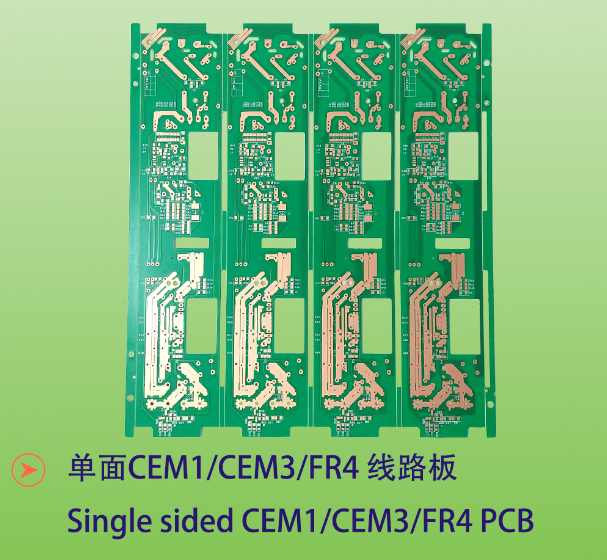
Single sided CEM1.CEM3.FR4 PCB: 0.5-3 OZ copper, 0.6-2.0 mm overall thickness, maximum length 2000 mm.
2. Double sided FR4 PCB - when driver and LEDs share one board
This format uses FR-4 with 1/1 OZ copper on both sides, an overall thickness of 1.6 mm +/- 10%, and a panel size of 208.00 mm x 225.00 mm (/2 ups). It is supplied with white solder mask, black silkscreen and an ENIG surface finish. The second copper layer is what allows LED driving, control and sensing circuitry to sit on the same board as the light engine, which is typical in smart lighting where wireless modules, sensor interfaces and dimming control are integrated into the luminaire.
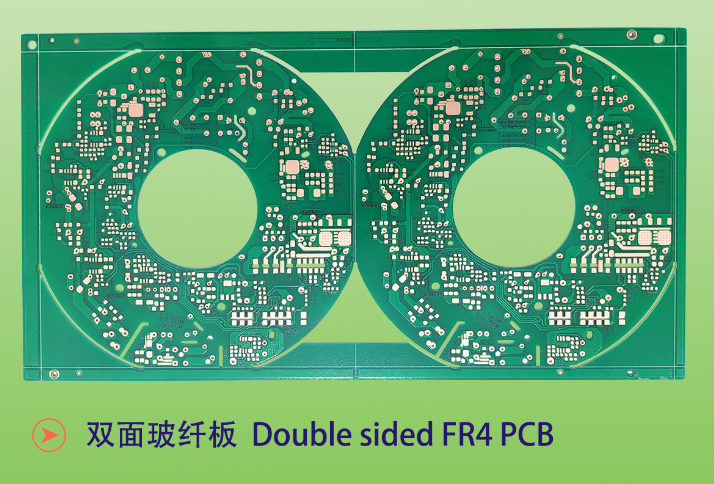
Double sided FR4 PCB: 1/1 OZ copper, 1.6 mm +/- 10%, panel 208.00 mm x 225.00 mm (/2 ups), ENIG finish.
3. COB FPC - chip-on-board on a flexible substrate
Built on polyimide (PI) in single or double sided form, COB FPC carries 1/1 OZ or 1 OZ copper at an overall thickness of 0.115 mm, with a panel size of 366.00 mm x 250.00 mm (/1 ups). It is delivered with white coverlay, white silkscreen and an OSP surface finish. The combination of a thin PI carrier and coverlay protection makes this format suitable for chip-on-board LED assemblies where the light source and the circuit are mounted as one flexible unit.
4. Single/double sided LED strip FPC
This format shares the same PI material, 1/1 OZ or 1 OZ copper, 0.115 mm overall thickness and 366.00 mm x 250.00 mm (/1 ups) panel as COB FPC, and the same white coverlay, white silkscreen and OSP finish. Layer count is selectable between single and double sided, which lets a strip design add control or interconnect traces without changing the mechanical profile of the product.
5. Single sided LED tube FPC - the thinnest option
At 0.08 mm overall thickness, this is the thinnest construction in the portfolio. It uses PI with single-sided 0.5 OZ copper and a long panel of 1239.50 mm x 255.00 mm at /39 ups, finished with white solder mask, holo silkscreen and OSP. The long, narrow panel geometry mirrors the shape of a tube lamp light engine, which is why this format exists separately from the strip FPC.
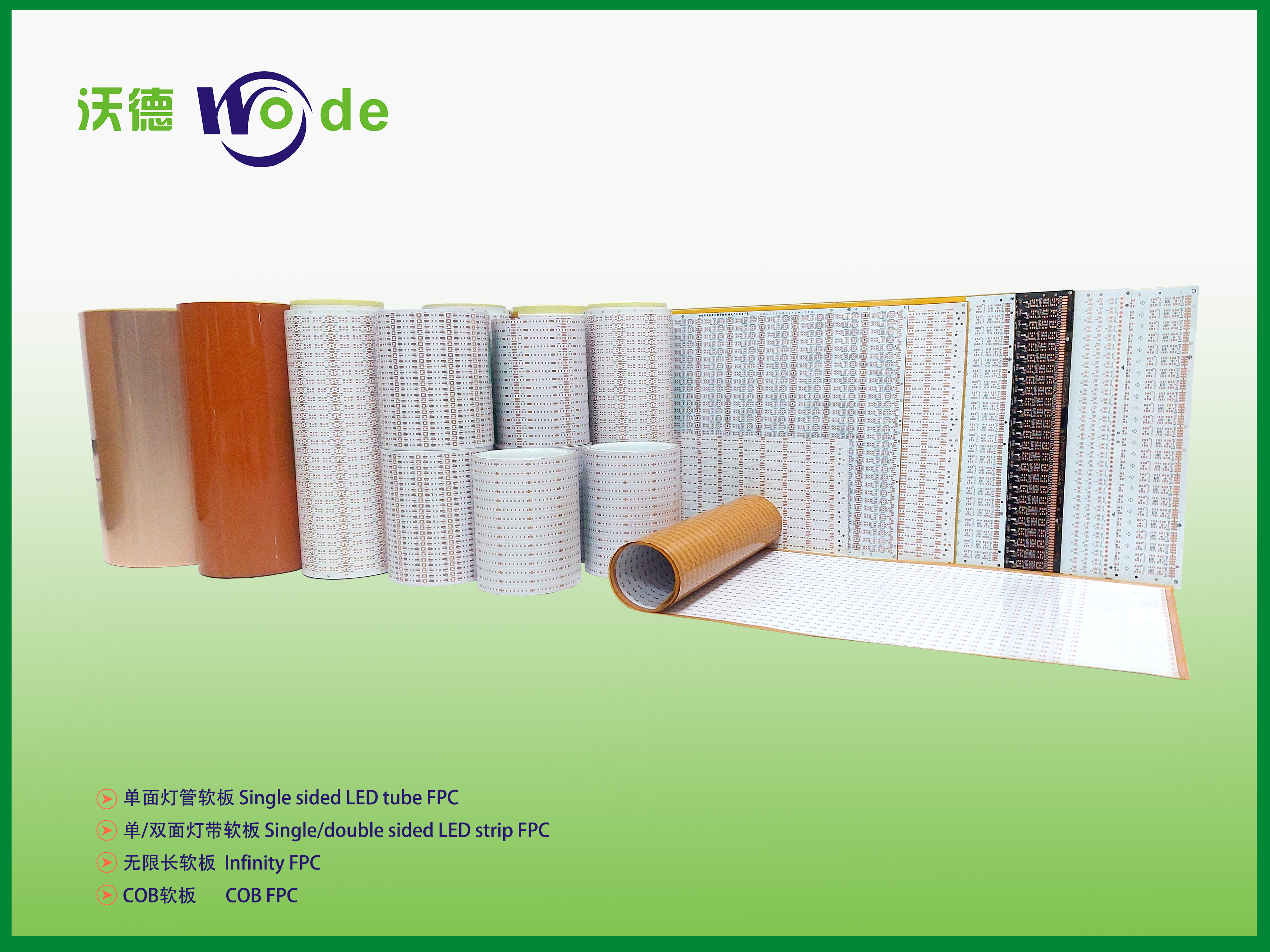
Flexible polyimide circuits for COB modules, LED strips and LED tube lamps - 0.08 mm to 0.15 mm overall thickness.
6. Roll to Roll Infinity FPCB - continuous-length flexible circuit
This single-sided PI construction uses 1 OZ copper at 0.15 mm overall thickness, in a 1000.00 mm x 124.00 mm panel at /13 ups, with white solder mask, black silkscreen and OSP finish. Because it is produced reel to reel, it supports continuous-length flexible circuit designs rather than fixed panel outlines - a format WODE operates on dedicated Reel to Reel FPCB production lines.
Step-by-Step: How to Select the Right Format for a Lighting Project
Step 1 - Define the electrical function. If the board carries only the LED array and its interconnect, a single-sided construction is sufficient. If the driver, dimming control, wireless module or sensor interface sits on the same board, plan for the double-sided FR-4 PCB with 1/1 OZ copper.
Step 2 - Match copper weight to current and thermal load. The single-sided rigid family offers 0.5 OZ to 3 OZ and above. Double-sided FR-4 and the FPC formats use 1/1 OZ or 1 OZ, while the tube FPC uses 0.5 OZ. Higher copper weight also spreads heat laterally, which matters in high-power LED arrays.
Step 3 - Choose the substrate from the environment and stiffness requirement. CEM-1, CEM-3, FR-4 or aluminum are available on the rigid single-sided format; polyimide is used across all FPC formats. Aluminum is the material option that connects the board to a metal heat path. WODE's application data describes indoor luminaires running from 0 degrees C to +40 degrees C at 30% to 80% humidity, and outdoor luminaires from -40 degrees C to +50 degrees C under high humidity, salt spray, UV radiation and wind-driven rain - conditions that belong in the substrate decision, not only in the enclosure design.
Step 4 - Check the thickness against the mechanical envelope. Available thickness runs from 0.08 mm (LED tube FPC) and 0.115 mm (COB FPC, strip FPC) through 0.15 mm (Roll to Roll Infinity FPCB) to 0.6-2.0 mm (single-sided rigid) and 1.6 mm +/- 10% (double-sided FR-4).
Step 5 - Fit the panel to the fixture and to production. Single-sided rigid boards reach a maximum length of 2000 mm; the tube FPC panel is 1239.50 mm x 255.00 mm (/39 ups); the roll-to-roll panel is 1000.00 mm x 124.00 mm (/13 ups). Panel utilisation and ups count are the commercial lever behind unit cost.
Step 6 - Lock the solder mask, silkscreen and surface finish. White coverlay is standard on the FPC formats; rigid boards can be specified with photosensitive, thermosetting or UV solder mask or coverlay. Finishes range from OSP and HASL to lead-free HASL, ENIG, chemical silver, nickel-plated gold and ENEPIC for wire bonding, with ENIG used on the double-sided FR-4 example in this comparison.
Step 7 - Confirm compliance documentation. Rigid boards are normally evaluated against UL 796 and flexible circuits against UL 796F; IPC-6012 is the primary performance specification for rigid printed boards; LED modules are evaluated under IEC/EN 62031 and LED control gear under IEC/EN 61347-2-13. WODE holds ISO 9001:2015, ISO 14001:2015 and IATF 16949, and its products comply with UL, RoHS and REACH. For road lighting programs sold in the China market, CQC certification is a common procurement requirement.
Step 8 - Validate with samples before the mass order. WODE provides OEM/ODM customisation across layer count, substrate, surface finish (ENIG, OSP, HASL, HASL-LF and others), impedance control, and routing, slotting or cutting, with sample quantity not limited and mass orders starting at a minimum of 100 sqm.
Use Cases: Matching Each Format to a Luminaire Type
Lighting is the shared application across all WODE board families, but the fit differs by luminaire. The mapping below follows directly from the construction data in the previous section.
Street lights, flood lights and high-bay luminaires. These are high-power, thermally demanding fixtures. The single-sided rigid format with an aluminum material option is the usual starting point, and WODE's wider product line includes a dedicated MCPCB for Road lighting built on Al1060, single sided, 1 OZ copper, 1.6 mm +/- 10%, panel 208.00 mm x 225.00 mm (/2 ups), white solder mask, black silkscreen and HASL-LF finish.
Panel lights, downlights, spotlights, ceiling lights and bulb lamps. These are typically flat or mildly contoured, so the rigid single-sided CEM-1/CEM-3/FR-4 format fits: 0.6-2.0 mm thickness with a maximum length of 2000 mm covers most board outlines in this group, and the OSP, HASL or ENIG finishes cover the usual assembly requirements.
LED strips and flexible linear lighting. The single/double sided LED strip FPC at 0.115 mm is the direct match, available in single or double sided layers on the same 366.00 mm x 250.00 mm panel.
LED tube lamps. The single-sided LED tube FPC at 0.08 mm with a 1239.50 mm x 255.00 mm (/39 ups) panel is built for the long, narrow geometry of tube light engines.
Continuous and reel-processed lighting assemblies. The Roll to Roll Infinity FPCB at 1000.00 mm x 124.00 mm (/13 ups) is intended for designs that cannot be limited to a fixed panel outline.
Smart, sensor-driven and connected luminaires. When the light engine shares a board with wireless communication, sensor interfaces or dimming control, the double-sided FR-4 PCB with 1/1 OZ copper and ENIG finish provides the second routing layer.
Grow lights and other high-output specialty lighting. These long-duty fixtures push power density and continuous operation, so copper weight and the aluminum material option carry more weight than enclosure cosmetics. WODE boards have been qualified by global brands including Signify, Osram, Opple, NVC, HoneyWell, Randong, Dixon, Ozdisan, IKIO and Motheson, and a lighting OEM in Germany has run WODE boards as a main project component for five years.
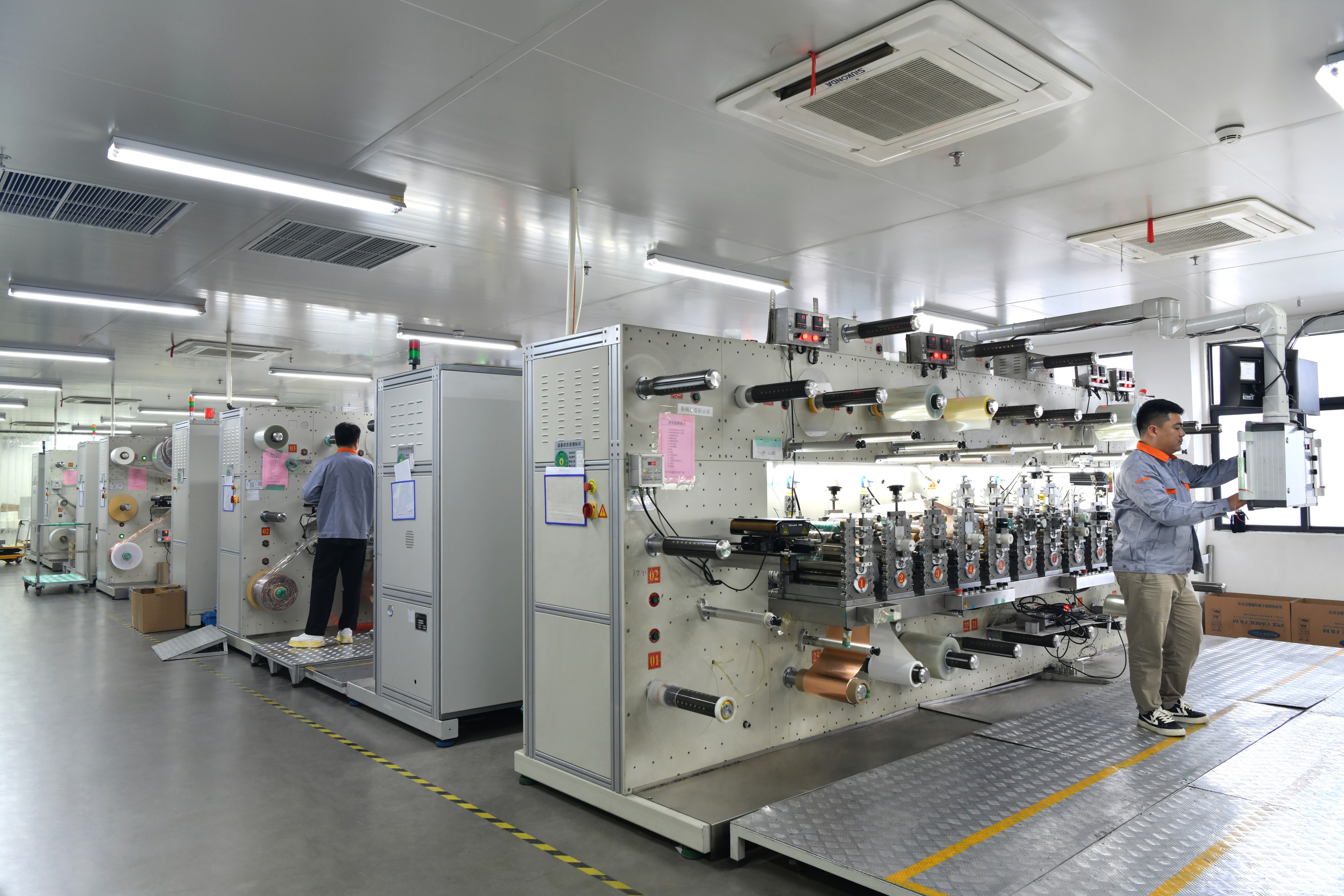
Reel to Reel FPCB production line at WODE Circuit - the process behind the Roll to Roll Infinity FPCB format.
Comparison Table: WODE LED PCB and FPC Options at a Glance
| Board format | Substrate | Layers | Copper foil | Overall thickness | Panel size | Mask / finish | Typical lighting fit |
|---|---|---|---|---|---|---|---|
| Single sided CEM1.CEM3.FR4 PCB | CEM-1 / CEM-3 / FR-4 / Alu | Single sided | 0.5 / 0.75 / 1 / 2 / 3 OZ... | 0.6-2.0 mm | Max length 2000 mm | Photo / thermal / UV mask or coverlay; OSP, HASL, HASL-LF, ENIG, ENEPIC and others | Panel lights, downlights, bulb lamps, high-bay and outdoor luminaires |
| Double sided FR4 PCB | FR-4 | Double sided | 1/1 OZ | 1.6 mm +/- 10% | 208.00 x 225.00 mm (/2 ups) | White solder mask; ENIG | Luminaires combining LED array with driver or smart control circuitry |
| COB FPC | PI | Single / double sided | 1/1 OZ or 1 OZ | 0.115 mm | 366.00 x 250.00 mm (/1 ups) | White coverlay; OSP | Chip-on-board LED modules on flexible substrate |
| Single/double sided LED strip FPC | PI | Single / double sided | 1/1 OZ or 1 OZ | 0.115 mm | 366.00 x 250.00 mm (/1 ups) | White coverlay; OSP | LED strips and flexible linear lighting |
| Single sided LED tube FPC | PI | Single sided | 0.5 OZ | 0.08 mm | 1239.50 x 255.00 mm (/39 ups) | White solder mask; holo silkscreen; OSP | LED tube lamps and long narrow light engines |
| Roll to Roll Infinity FPCB | PI | Single sided | 1 OZ | 0.15 mm | 1000.00 x 124.00 mm (/13 ups) | White solder mask; black silkscreen; OSP | Continuous-length flexible circuits and reel-to-reel production |
All values are published WODE construction parameters for the listed products.
| Standard or certification | What it covers |
|---|---|
| UL 796 | Printed wiring boards - the reference safety standard for rigid LED PCB construction |
| UL 796F | Flexible materials interconnect constructions - applies to the FPC formats |
| IPC-6012 | Primary performance specification for rigid printed boards (IPC International) |
| IEC/EN 62031 | Safety standard under which LED modules and components are evaluated (UL Solutions) |
| IEC/EN 61347-2-13 | Standard covering LED control gear (UL Solutions) |
| ISO 9001:2015 / ISO 14001:2015 / IATF 16949 | WODE management system certifications |
| UL / RoHS / REACH | Product-level compliance held by WODE products |
| CQC | Common certification requirement for road lighting in the China market |
FAQ: LED PCB and FPC Selection Questions Buyers Ask
Which certifications should a buyer verify on an LED PCB or FPC supplier?
Rigid printed boards are normally evaluated against UL 796 and flexible circuits against UL 796F, while IPC-6012 is the primary performance specification for rigid printed boards. On the luminaire side, LED modules are evaluated under IEC/EN 62031 and LED control gear under IEC/EN 61347-2-13. WODE holds ISO 9001:2015, ISO 14001:2015 and IATF 16949 system certifications, and its products comply with UL, RoHS and REACH. For road lighting programs sold in the China market, CQC certification is a common procurement requirement. Ask for the certificate scope and the standard it references, not just the certificate itself.
Which WODE board option fits a street light or high-bay LED project?
High-power luminaires put thermal management first. WODE's single-sided family accepts CEM-1, CEM-3, FR-4 or aluminum with copper weights from 0.5 OZ to 3 OZ and thickness from 0.6 to 2.0 mm, and the aluminum option provides the metal heat path. For road lighting specifically, WODE's product line includes an MCPCB for Road lighting built on Al1060 with single-sided 1 OZ copper, 1.6 mm +/- 10% overall thickness, a 208.00 mm x 225.00 mm (/2 ups) panel, white solder mask, black silkscreen and HASL-LF finish.
What drives the price of a custom LED PCB or FPC?
On the construction side, the cost drivers are substrate class (CEM-1, CEM-3, FR-4 or aluminum versus polyimide), layer count, copper foil weight from 0.5 OZ to 3 OZ, overall thickness, panel size and the number of ups per panel, and the surface finish selected from OSP, HASL, lead-free HASL, ENIG, chemical silver or ENEPIC. On the commercial side, mass orders start at a minimum of 100 sqm and lead time runs 7-25 days depending on order quantity and design complexity. WODE supports OEM/ODM customisation across layer count, substrate, surface finish, impedance control and routing, slotting or cutting.
Can I validate boards with samples before placing a mass order?
Yes. Sample quantity is not limited at WODE, while mass orders start from a minimum of 100 sqm. Quality control covers incoming, process and final inspection together with electrical function tests, and after-sales support provides technical support and quality liaison. Defect handling, warranty terms and returns are specified in the customer contract.
How long does production take, and what support follows delivery?
Lead time is 7-25 days depending on order quantity and design complexity. After delivery, WODE provides technical support and quality liaison, with warranty, return and defect-handling terms defined in the contract. If you are comparing formats for a specific luminaire, send the fixture type, board outline, LED count and current to GJMYB1@wodepcb.com or call +86-756-3906072, and the team will recommend the format that matches the construction data.
Conclusion: Choose the Format, Then Verify It
The six formats in this comparison are not competitors for the same slot. Single-sided CEM-1/CEM-3/FR-4 PCB covers rigid, cost-sensitive light engines from 0.6 to 2.0 mm with up to 3 OZ copper and a 2000 mm maximum length. Double-sided FR-4 PCB at 1/1 OZ and 1.6 mm +/- 10% adds the second routing layer needed when control circuitry shares the board. COB FPC and LED strip FPC bring 0.115 mm polyimide constructions to chip-on-board modules and flexible linear lighting. Single-sided LED tube FPC drops to 0.08 mm for tube-format light engines. Roll to Roll Infinity FPCB at 0.15 mm handles continuous-length flexible designs.
Match the format to the mechanical envelope and the thermal load first, confirm the compliance documents second, and validate with samples third. That order keeps a lighting project from paying for capability it does not need - or discovering too late that it needed capability it did not buy.
WODE Circuit Technology (Zhuhai) Co., Ltd. is based at No. 2, South Qianwan Road, Qianwu, Doumen, Zhuhai, 519170, China. Project enquiries: GJMYB1@wodepcb.com, tel +86-756-3906072 / +86 13392068667. Product and capability details are available at www.wodepcbfpc.com, and the full company catalogue can be downloaded here: WODE catalogue (PDF).

Share your luminaire type, board outline and current with the WODE team for a format recommendation and a sample plan.
Have Questions or Need More Details?
Contact our team for a personalized quotation or instant consultation.
Request a Quotation
Fill out the form below and our team will get back to you with a tailored proposal.
WhatsApp Direct Chat
Prefer to chat in real-time? Message us on WhatsApp for instant assistance & quick answers.
- Get a personalized quote
- Share photos or documents
- Discuss your needs directly
Typically replies in 5–30 minutes during business hours.