
Single-Sided vs Double-Sided vs Thermoelectric Separated MCPCB: A Buyer's Comparison Guide
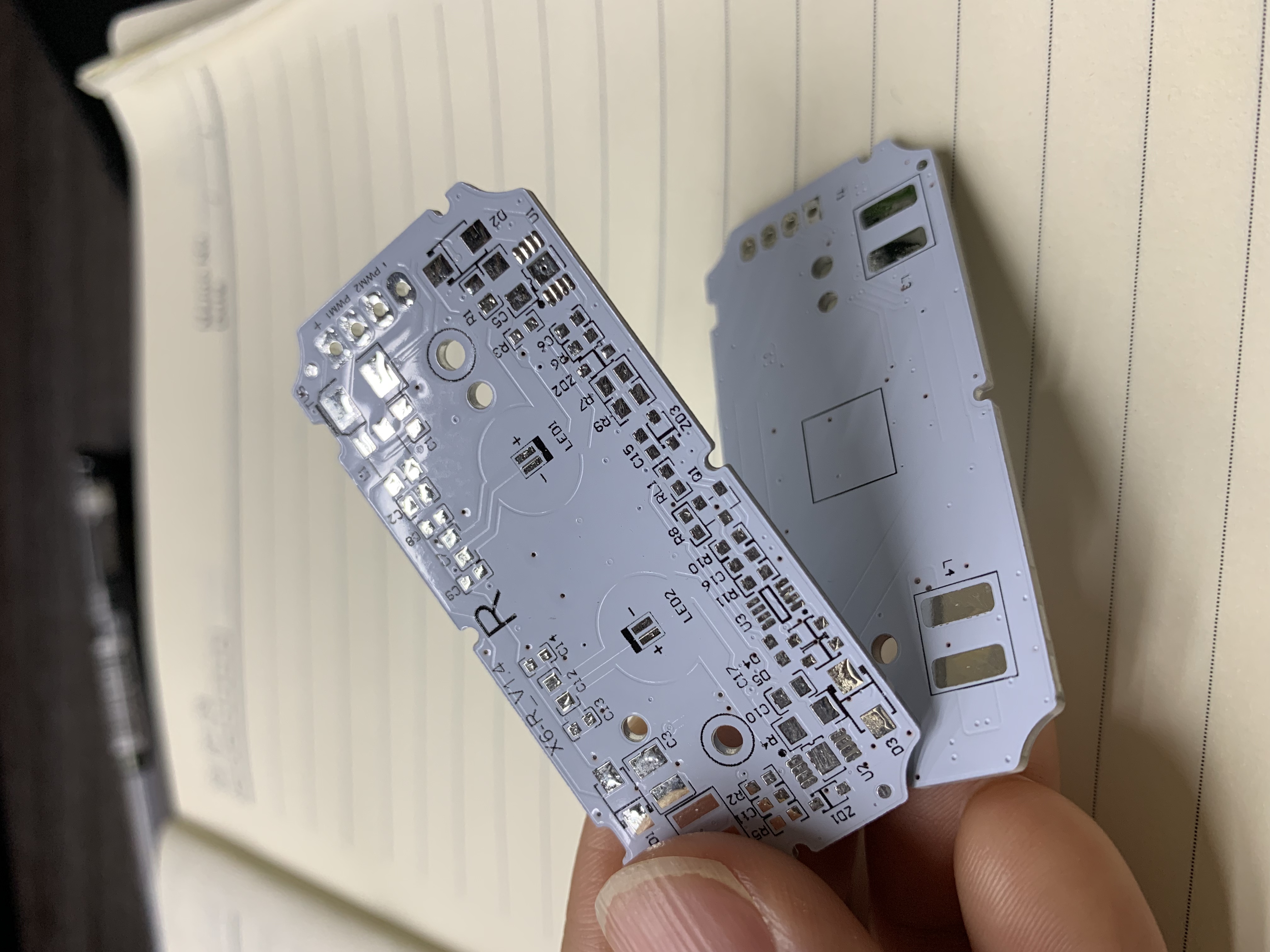
The short answer: single-sided MCPCB fits designs where routing and heat both leave from one face; double-sided MCPCB fits layouts that need two conductor layers or heavier current paths; thermoelectric separated MCPCB fits high-voltage or high-power arrays where the thermal path must stay clear of the electrical path. The hard part is not the structure itself. It is locking material, copper thickness, surface finish and acceptance criteria so that the twentieth purchase order looks like the first one.
This guide is written for buyers who have already passed the question of whether a metal core substrate is needed at all, and are now moving from a decision into execution: approving drawings, qualifying a supplier and placing repeat orders. It compares the three structures side by side and then brings them back to purchasing terms, inspection standards and long-term supply continuity.
Why This Structure Choice Is a Supply Decision, Not a One-Time Engineering Call
A locked board structure freezes more than a drawing. Once the stack-up is approved, the dielectric, the base material grade, the copper weight, the surface finish and the inspection plan are effectively frozen with it. Changing any of those later means re-qualification, and re-qualification during an active production window is the expensive kind.
That is why the comparison in this guide is framed around a validation question rather than a performance question. The validation question is: which structure can be ordered repeatedly, at a stated minimum quantity, within a stated lead time, and accepted against a written inspection standard without renegotiating the specification each cycle?
Single-sided, double-sided and thermoelectric separated boards answer that question differently, because each one puts its control point in a different place:
- Single-sided: the control point sits in the base material grade and the dielectric layer between copper and metal core.
- Double-sided: the control point sits in copper thickness per side and in the quality of the through-hole interconnection.
- Thermoelectric separated: the control point sits in the dielectric separation itself, where the electrical circuit and the thermal region must remain isolated and verifiable.
Buyers who treat these three as interchangeable usually discover the difference at incoming inspection, or later, in a field failure that cannot be traced back to a single batch.
Industry Background: Why Structure Choice Has Become a Buyer's Conversation
Metal core PCB demand has been expanding alongside high-power LED lighting, automotive lighting, new energy equipment, home appliances and 5G communication hardware. The global MCPCB market was valued at USD 935.75 million in 2025 and is projected to reach USD 1,948.90 million by 2033, according to Future Market Report (2025). China holds a 28.7% share of that market.
Two things follow from that for a buyer in the decision-to-execution stage. First, the supplier pool is deep enough that price alone stops being a useful filter. Second, the structures have become differentiated products rather than variations of one product, which is exactly why a single-sided quote cannot be compared line by line with a thermoelectric separated quote.
WODE Circuit Technology (Zhuhai) Co., Ltd. is a Chinese PCB and FPC manufacturer founded in 2003, operating a 150,000 m² facility in Zhuhai with more than 500 employees. Its main product lines cover rigid MCPCB, FPCB, infinity length FPCB, FR-4/CEM1/CEM3 PCBs and CCL, and PCB inks, with applications spanning indoor and outdoor lighting, automotive lighting, new energy, home appliances and 5G communication.
How the Three Board Structures Actually Differ
Single-Sided MCPCB: One Copper Layer, One Heat Route
A single-sided MCPCB carries one copper layer on the component face, bonded to a metal base through a dielectric layer, then finished with solder mask and legend. All routing, pads and components sit on that one face.
Heat leaves the LED or power device downward through the dielectric and into the metal core, which then spreads it into the fixture. Because there is only one conductor layer, there is no through-hole interconnection to qualify and no second-side registration to control. This makes single-sided construction the most predictable structure to inspect in volume, and the natural choice for lighting modules that are populated on one side with a single heat direction.
Double-Sided MCPCB: Two Conductor Layers and a Heavier Current Path
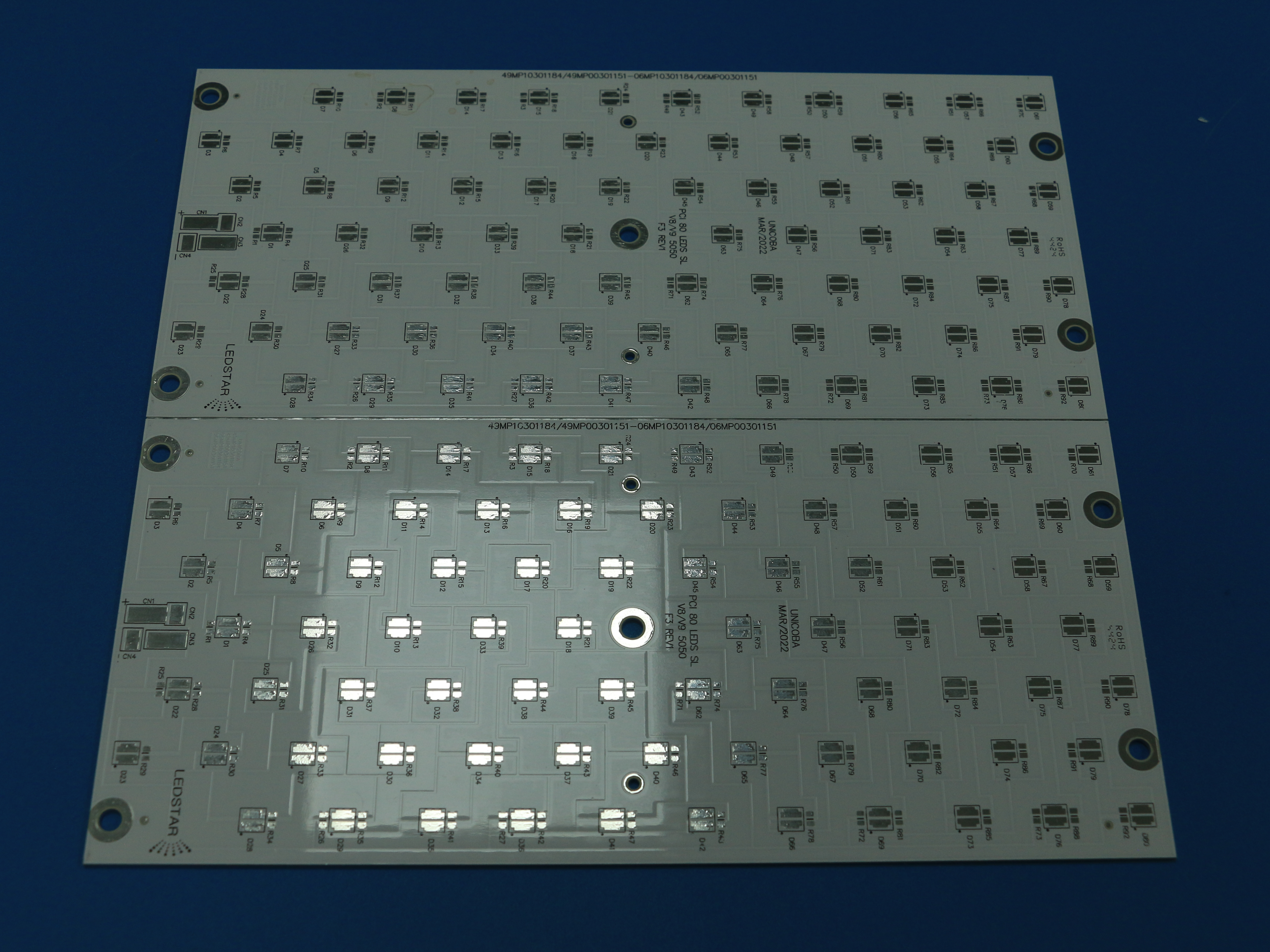
Double-sided MCPCB adds a second copper layer on the opposite face, connected through the board. The thermal path still runs through the dielectric into the metal core, but the second side adds routing capacity rather than a second heat exit. In practice that means the design can carry heavier current, split power and signal, or move interconnect off the component face.
The trade-off is process exposure. Two copper layers can be specified at different weights, the interconnection between them must be qualified, and registration on both faces has to hold across the panel. A double-sided quote that does not state copper thickness per side is not yet a comparable quote.
Thermoelectric Separated MCPCB: Keeping Heat and Electricity on Separate Roads
Thermoelectric separated construction is the structure buyers reach for when the electrical circuit and the thermal path must not share a route. A dedicated thermal region carries heat away while the circuit layer remains electrically distinct from it. In high-voltage designs and high-power LED arrays, that separation is what allows the board to dissipate heat without coupling the electrical network into the thermal pad.
It is also the structure with the highest verification burden. The separation itself must be shown to hold, not assumed. Buyers should request evidence of dielectric performance for the specific stack-up under review rather than accepting a general statement about the material family.
Material, Copper Thickness and Surface Finish: The Three Specification Traps
Most disputes between a buyer and a metal core PCB supplier do not start with the structure. They start with one of three under-specified fields that were left loose at the quotation stage.
Trap 1: The Base Material Is Described Only as Aluminum
Aluminum covers a family of alloys, and alloy choice changes mechanical behavior and thermal performance. A drawing that says only aluminum gives the supplier freedom to substitute, and gives the buyer no basis for a repeatable order.
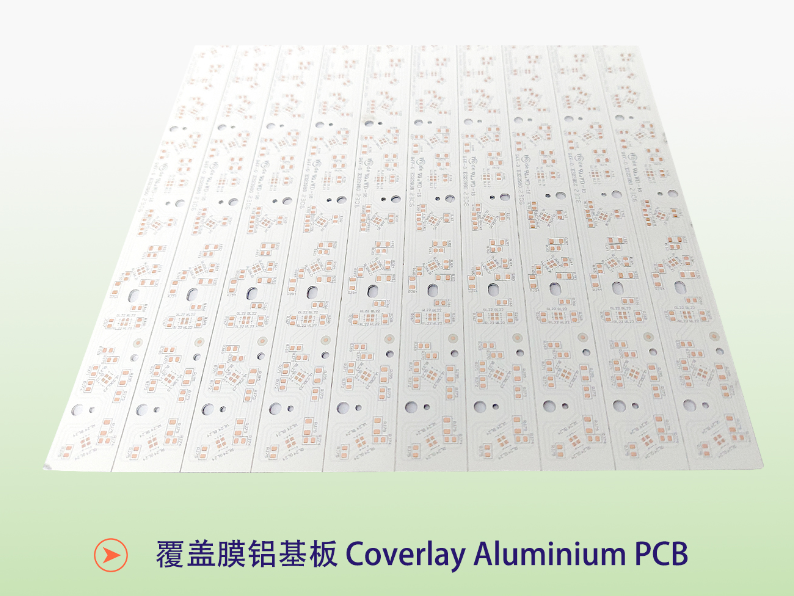
Name the alloy. WODE, for example, builds motorcycle light boards on AL5052 material, which is a specific designation a buyer can write into a purchase order and check on a material certificate. The same discipline applies to copper base and ceramic base options: the substrate family, not just the metal type, belongs in the drawing.
Trap 2: Copper Thickness Is Quoted in Two Different Units
Copper weight is where quotes quietly stop matching. One document states 1 oz, another states 35 μm, and a double-sided stack-up may state a paired figure such as 70/70 μm because each side carries its own weight. These are not three ways of writing one number.
- A single value describes one copper layer.
- A metric value and an imperial value are two expressions of a thickness, and 35 μm corresponds to the nominal 1 oz class.
- A paired value describes two layers, one per side, each of which must be confirmed separately.
Ask the supplier to state copper thickness in μm, per side, on the quotation and on the drawing. Buyers who skip this step typically receive a board that passes electrically but underperforms on current-carrying margin.
Trap 3: Surface Finish Is Left to the Supplier's Default
HASL-LF and OSP are both established finishes, and they behave differently across assembly and storage. HASL-LF uses a lead-free solder alloy and produces a solderable, rework-friendly surface. OSP is an organic protective layer over bare copper, which keeps the pad surface flat and suits fine-pitch assembly but places more weight on storage conditions and assembly window control.
Whichever finish is selected, write it into the drawing together with the storage and shelf-life expectation. A finish named only in conversation does not survive a change of production planner.
Step-by-Step Breakdown: How to Move From Structure Choice to a Repeatable Order
- Fix the thermal and electrical requirement first. Decide whether heat and current can share one route (single-sided), need two conductor layers (double-sided), or must be physically separated (thermoelectric separated). Everything downstream depends on this answer.
- Name the base material and the copper weight per side. Replace general descriptions with a specific alloy designation and a thickness in μm for each copper layer.
- Match the structure to the application. Road lighting, motor lighting, high-voltage designs and UV phototherapy place different demands on the same three structures.
- Lock the surface finish and the storage expectation. HASL-LF or OSP, stated on the drawing, with the assembly window the finish has to survive.
- Define the inspection plan before the first production order. State whether acceptance runs on incoming inspection, outgoing inspection or third-party inspection, and against which technical specification.
- Agree commercial terms in writing. Minimum order quantity, delivery terms, payment structure and the technical documents that travel with each shipment.
- Plan for continuity. Confirm production capacity, typical lead time and how the supplier manages raw material and delivery risk across repeat orders.
A note on terminology. MCPCB refers to metal core printed circuit boards, which is the subject of this guide. The abbreviation MPCB is often used for miniature circuit breakers, a different product category entirely. When a specification or a search result mixes the two, confirm the product category before comparing anything else.
Comparison Table: Single-Sided vs Double-Sided vs Thermoelectric Separated
| Comparison Point | Single-Sided MCPCB | Double-Sided MCPCB | Thermoelectric Separated MCPCB |
|---|---|---|---|
| Copper layers | One conductor layer on the component face | Two conductor layers, connected through the board | Circuit layer kept distinct from a dedicated thermal region |
| Thermal path | Through the dielectric into the metal core | Through the dielectric into the metal core; the second side adds routing | Dedicated thermal region carries heat without sharing the electrical net |
| Electrical isolation | Defined by the dielectric between copper and metal core | Through-hole insulation becomes an additional check | Separation between circuit and thermal pad is the defining feature |
| Routing flexibility | Single side, single routing layer | Higher routing density and heavier current paths | Routing constrained by the need to preserve separation |
| Typical fit | Road lighting modules, downlights, single-face LED arrays | Designs needing two routing layers or heavier current | High-voltage boards and high-power LED arrays |
| What to verify before ordering | Base material designation, dielectric thickness, surface finish | Copper thickness per side, interconnection quality, two-face registration | Dielectric separation evidence for the specific stack-up, thermal pad flatness |
| Main sourcing risk | Base material described only in general terms | Copper weight stated in inconsistent units | Separation asserted rather than documented |
Application Fit: Matching the Structure to the Job
Road Lighting
Road lighting modules are usually populated on one face with a single dominant heat direction, which puts them in single-sided territory. The purchase decision then centers on the dielectric and the base material, not on layer count. Where a luminaire has to survive outdoor exposure, the qualification conversation should extend to protection performance: WODE lighting substrates support IP65/IP67 protection with a salt spray test of 1000 hours or more for outdoor lighting use.
Motor Lighting
Motorcycle and motor lighting assemblies combine compact footprints with vibration and thermal cycling. WODE builds motorcycle light boards on AL5052 material. For these designs, the alloy designation matters as much as the structure, because it determines how the board behaves mechanically across the life of the lamp.
High-Voltage Designs
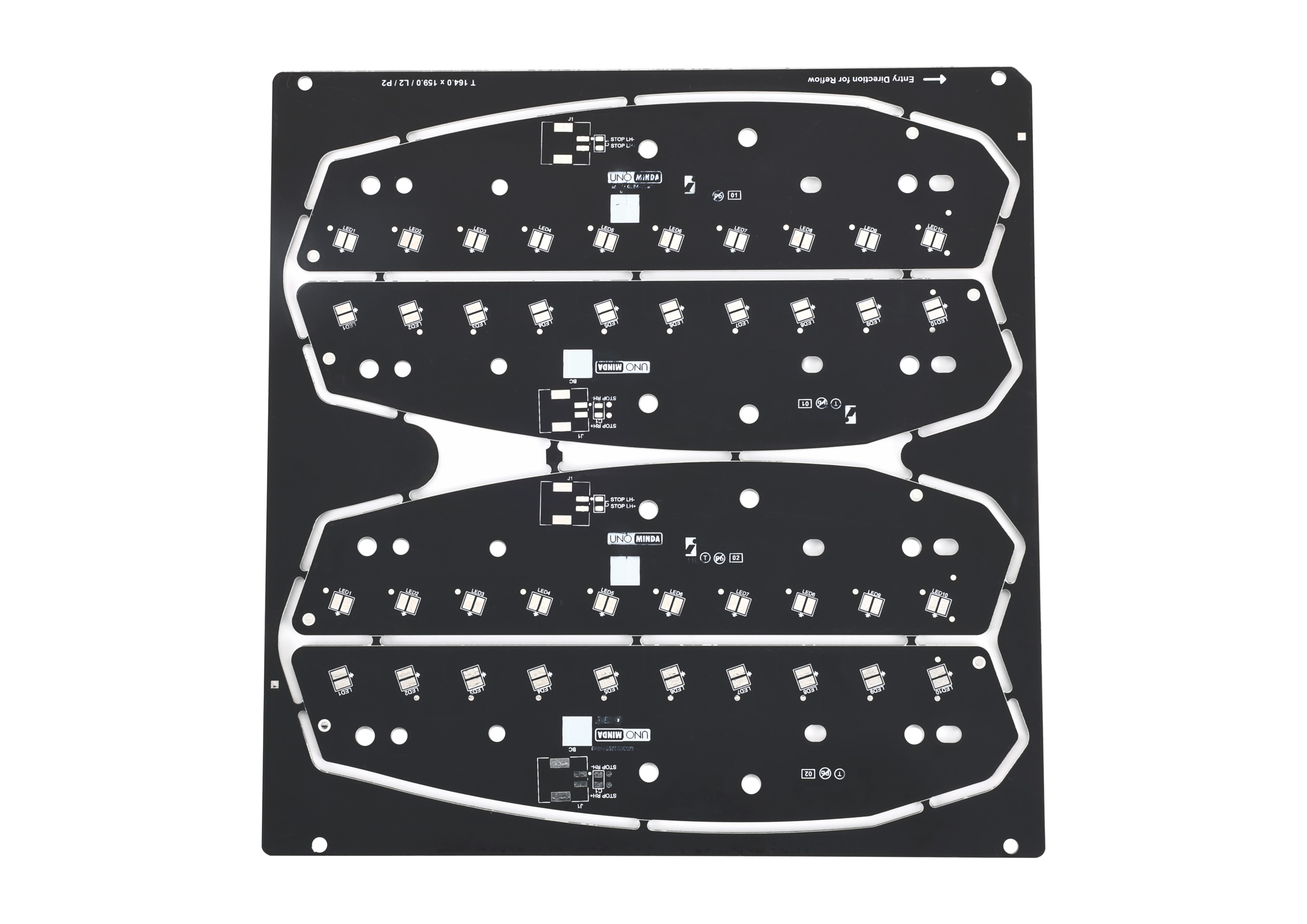
High-voltage boards are where thermoelectric separation earns its cost. Once circuit and thermal path are separated, the verification question changes from how thick the dielectric is to whether separation can be demonstrated for the exact stack-up. Buyers should treat this as a documentation requirement at the quotation stage, not a promise at delivery.
UV Phototherapy
UV phototherapy modules combine tight thermal control with demanding output stability. Ceramic-based construction is relevant here because the substrate itself contributes to thermal behavior under continuous operation. As with high voltage, the structure decision should be paired with a documented specification rather than a family-level description.
Purchasing Terms and Acceptance Criteria: What to Settle Before the First Order
Structure and material decide what the board is. Commercial terms decide whether it can be bought repeatedly. The following fields should be agreed in writing before production begins.
- Minimum order quantity. WODE publishes an MOQ of 80 m². Depending on whether the order is a sample order or a mass order, the working range runs from 3 panels to 100 m². One documented configuration uses an MOQ of 5 panels.
- Delivery terms. Shipment follows the logistics method the customer designates by sea, air or land. Specific supported methods and cost terms should be confirmed with the buyer. FOB ZHUHAI is one documented arrangement.
- Acceptance criteria. Acceptance runs against mutually agreed technical specifications and inspection standards, using incoming inspection, outgoing inspection or third-party inspection as agreed. Pre-shipment testing is a documented option.
- Payment terms. Payment methods are confirmed in the order or contract. A 30/70 structure is one documented arrangement; terms are negotiated between the parties.
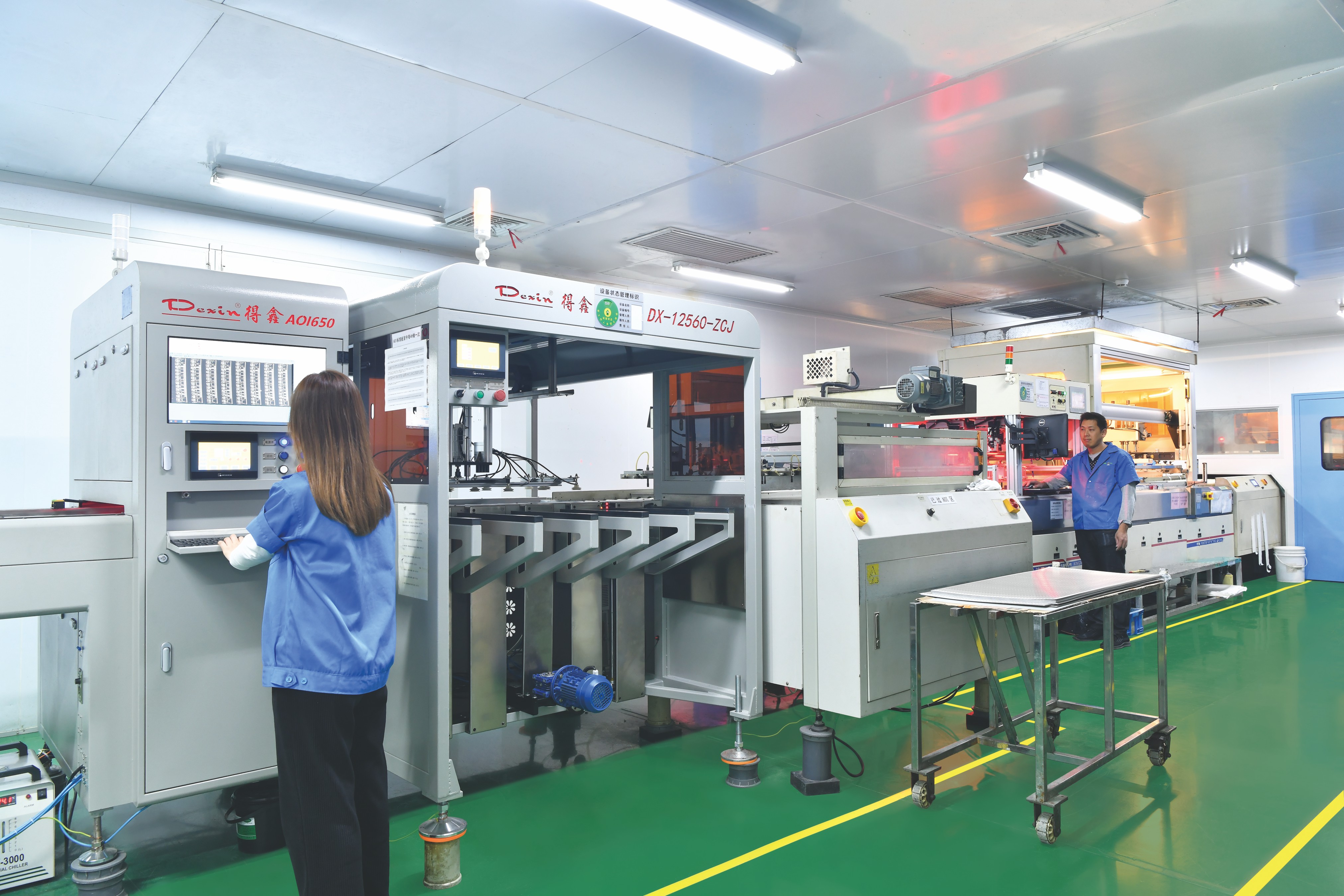
Production capacity behind those terms is stated as 600,000 m² per month, with a typical production lead time of 7 to 15 days.
Long-Term Supply: What a Repeatable MCPCB Partnership Actually Requires
Long-term supply is not a discount schedule. It is the ability of a supplier to deliver the same board, against the same document set, across changing raw material conditions and shifting demand. Four items carry most of that weight.
Quality system evidence. WODE holds ISO9001, ISO14001 and IATF16949 certification, and its products comply with UL, RoHS and REACH. Buyers should confirm that certificate scope covers the specific product and site being ordered, rather than accepting a certificate family as proof.
Documented risk control. The risks that most affect a metal core PCB program are quality variation, lead-time and delivery slips, supply chain and raw material price volatility, and certification or compliance drift. WODE controls these through a quality assurance system and continuous improvement process, with incoming, in-process and final inspection plus functional testing to reduce quality risk, and with order control and procurement planning to manage lead time and supply chain exposure.
Engineering depth. WODE operates with a 15-person R&D team and more than 40 patented technologies. For a buyer, that depth matters at the point of change: when a stack-up needs adjusting, or an inspection criterion needs to be reinterpreted.
Scale and market experience. The Zhuhai facility covers 150,000 m² with more than 500 employees and an annual output of 6,000,000 m². Around 50% of output is exported, with main markets including Brazil, Turkey, India, Vietnam and Russia, and the company reports having served more than 1,000 customers in more than 30 countries.
How to Compare Suppliers Without Being Led by the Quotation
A quotation tells you what a supplier wants to sell. A comparison framework tells you what they can repeat. Five checkpoints are usually enough to separate the two:
- Does the quote state the structure explicitly? Single-sided, double-sided or thermoelectric separated should be named, not implied.
- Is the base material named as a designation? A specific alloy is checkable on a material certificate; aluminum alone is not.
- Is copper thickness given per side in μm? Paired figures must be confirmed as two layers, not one.
- Is the surface finish stated with a storage expectation? HASL-LF and OSP both work; an unstated finish does not.
- Are acceptance criteria written down? The inspection route and the technical specification it runs against should appear in the order documents.
Score each supplier against those five checkpoints before comparing unit price. A supplier that answers all five has removed most of the ambiguity that later turns into a batch dispute.
Frequently Asked Questions
1. What compliance and certification evidence should a long-term MCPCB supply partner provide?
Look for management system certification covering the specific site and product, plus market-access compliance for the destinations you ship to. WODE holds ISO9001, ISO14001 and IATF16949 certification, and its products comply with UL, RoHS and REACH. Confirm that certificate scope and validity match the exact SKU and factory being ordered from, and pair the certificates with a written inspection specification so that compliance is checked at every shipment rather than once at the start.
2. How should a buyer assess production capacity for a long-term program?
Compare stated capacity against your own monthly requirement rather than against the supplier's headline number. WODE runs a 150,000 m² facility with more than 500 employees, a monthly production capacity of 600,000 m² and an annual output of 6,000,000 m². Capacity is a ceiling, not an allocation, so ask how your volume is scheduled inside it and which lead time the supplier commits to for repeat orders.
3. What purchasing terms and acceptance criteria normally apply to MCPCB orders?
WODE publishes an MOQ of 80 m². Depending on whether the order is a sample order or a mass order, the working range runs from 3 panels to 100 m², and one documented configuration uses an MOQ of 5 panels with FOB ZHUHAI delivery. Acceptance is carried out against mutually agreed technical specifications and inspection standards, using incoming inspection, outgoing inspection or third-party inspection as agreed, with pre-shipment testing available. Payment methods are confirmed in the order or contract, and a 30/70 structure is one documented arrangement.
4. Can a buyer validate a structure through a sample order before committing to volume?
Yes. Sample orders are built into the MOQ structure, which is why the published range starts at a small panel count before moving up towards 100 m² for mass orders. Use the sample to validate the items that cause most later disputes: the base material designation, the copper thickness per side, the surface finish and the thermal and electrical behavior of the specific stack-up. Ask for the sample to be accompanied by the inspection record it was accepted against, so the sample and the production order share one document set.
5. What lead time and continuity commitments should a long-term MCPCB partner offer?
WODE states a typical production lead time of 7 to 15 days, supported by order control and procurement planning to manage lead time and supply chain exposure, and by incoming, in-process and final inspection plus functional testing to control quality risk. For a long-term program, ask how those controls are reported to you across repeat orders, and request a quotation or sample built on the exact structure and specification you intend to run.
Conclusion: Decide the Structure, Then Lock the Evidence
Single-sided, double-sided and thermoelectric separated MCPCBs are not three grades of the same product. They are three different answers to the question of where heat and electricity are allowed to travel, and each one places its verification burden in a different place.
For buyers moving from decision into execution, the sequence that holds up is straightforward. Choose the structure against the thermal and electrical requirement. Name the base material as a designation, such as AL5052 for motor lighting boards, and state copper thickness per side in μm. Fix the surface finish, HASL-LF or OSP, together with the storage expectation. Write acceptance criteria and commercial terms into the order documents, using documented terms such as an MOQ of 80 m², FOB ZHUHAI, pre-shipment testing and a 30/70 payment structure where agreed. Then confirm that the supplier's quality system, capacity and lead time can carry those terms across repeat orders.
That is the difference between a board that passes one inspection and a supply line that passes every inspection after it.
Next Step: Validate the Structure Before You Commit
WODE Circuit Technology (Zhuhai) Co., Ltd. builds rigid MCPCB, FPCB, infinity length FPCB, FR-4/CEM1/CEM3 PCBs and CCL for lighting, automotive lighting, new energy, home appliance and 5G communication applications. Send your stack-up with the base material, copper thickness per side and required surface finish, and request a sample or quotation against your own acceptance specification.
Website: www.wodepcbfpc.com | Email: GJMYB1@wodepcb.com | Tel: +86-756-3906072
Download the full product catalogue: WODE Product Catalogue (PDF)

Have Questions or Need More Details?
Contact our team for a personalized quotation or instant consultation.
Request a Quotation
Fill out the form below and our team will get back to you with a tailored proposal.
WhatsApp Direct Chat
Prefer to chat in real-time? Message us on WhatsApp for instant assistance & quick answers.
- Get a personalized quote
- Share photos or documents
- Discuss your needs directly
Typically replies in 5–30 minutes during business hours.