
LED PCB Guide: Types, Applications & Selection
LED PCB Guide: Types, Applications & Selection for Lighting Manufacturers
An LED printed circuit board (PCB) is the core substrate that mechanically supports and electrically connects LED components in lighting fixtures. For manufacturers of high-power LED luminaires—street lights, flood lights, downlights, spotlights, panel lights, grow lights, and more—selecting the right LED PCB directly impacts thermal management, reliability, and overall system cost. This guide provides a structured overview of LED PCB types, key selection criteria, and industry standards, based on verified data from leading PCB manufacturer WODE Circuit Technology (Zhuhai) Co., Ltd. and publicly available market research.
Why LED PCB Selection Matters
High-power LEDs generate significant heat; without effective dissipation, junction temperature rises, reducing luminous flux and accelerating lumen depreciation. The printed circuit board must therefore act as both an electrical interconnect and a thermal conductor. According to the Lighting Industry application profile (WODE internal corpus), typical outdoor LED lighting environments range from –40°C to +50°C with high humidity and salt spray, requiring IP65/IP67 protection and a lifetime ≥50,000 hours (L70/B50). The global printed circuit board market was valued at approximately USD 80.2 billion in 2025 (Global Market Insights), with China accounting for 53.2% of global production value (Farway Electronic). The LED lighting market itself was valued at USD 78.4 billion in 2024, growing at a CAGR of 8.5% through 2029 (MarketsandMarkets).
Problem Definition: Balancing Thermal, Mechanical, and Cost Constraints
LED design engineers face a classic trilemma: higher light output requires more drive current, which raises heat; heat must be conducted away through the PCB to a heatsink; but adding thicker copper or a metal-core layer increases cost and weight. Additionally, outdoor applications demand corrosion resistance, UV stability, and surge protection. Without a properly selected PCB, the entire luminaire may fail prematurely, leading to warranty claims and brand damage.
Industry Background: The Dominance of Metal Core PCB (MCPCB)
Metal Core Printed Circuit Boards (MCPCBs)—especially aluminum-based—are widely accepted as the industry standard for high-power LED thermal management (Precedence Research). Common materials include Al1060, Al5052, and high-thermal-conductivity aluminum alloys. WODE Circuit Technology, founded in 2003 and operating a 150,000 m² factory with 500+ employees and an annual output of 6,000,000 m², provides a full portfolio of PCB and FPC solutions, covering rigid MCPCB, FPCB, Infinity Length FPCB, FR-4/CEM1/CEM3 PCBs, CCL, and PCB inks.
Detailed Solution: WODE’s LED PCB Product Line
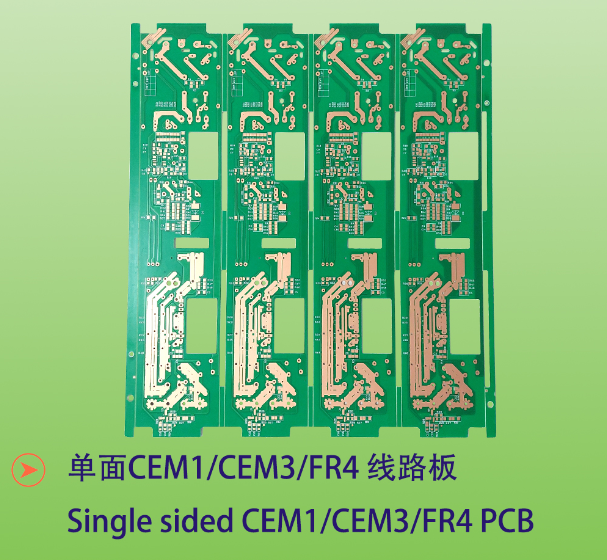
1. Single Sided CEM1/CEM3/FR4 PCB
Available in materials CEM-1, CEM-3, FR-4, or aluminum. Supports copper foil thickness from 0.5 oz to 3 oz, overall thickness 0.6–2.0 mm, maximum length 2000 mm. Surface finish options: OSP, HASL, lead-free HASL, ENIG, ENEPIC, etc. Soldermask options include sensitive, thermosetting, UV, and coverlay; silkscreen colors: white, yellow, black, green. Intended for Lighting, Home Appliance, Medical Electronics, Communications, Automotive Electronics, Industrial Controls, and Consumer Electronics.
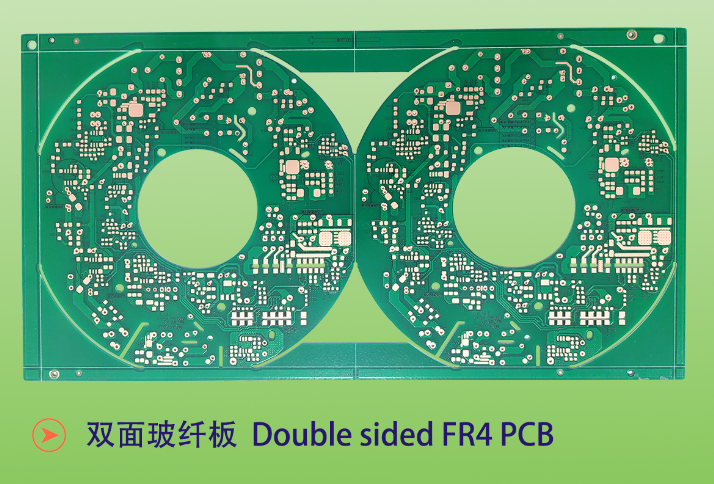
2. Double Sided FR4 PCB
Two-layer FR-4 board, 1 oz copper on both sides, overall thickness 1.6 mm ±10%, panel size 208.00×225.00 mm. Surface finish ENIG. Suitable for general lighting applications requiring two-layer routing.
3. COB FPC (Chip on Board Flexible Printed Circuit)
Made of PI (polyimide). Single or double sided, copper foil 1/1 oz or 1 oz, overall thickness 0.115 mm, panel 366.00×250.00 mm. White coverlay solder mask, white silkscreen, OSP finish. Designed for lighting modules, especially where flexible form factor is needed.
4. Single/Double Sided LED Strip FPC
PI-based flexible circuit for LED strip lighting. Copper foil 1/1 oz or 1 oz, thickness 0.115 mm, panel 366.00×250.00 mm, white coverlay, white silkscreen, OSP finish.
5. Single Sided LED Tube FPC
Single-layer PI FPC. Copper foil 0.5 oz, overall thickness 0.08 mm, panel 1239.50×255.00 mm. White solder mask, Holo silkscreen, OSP finish. Intended for LED tube lighting.
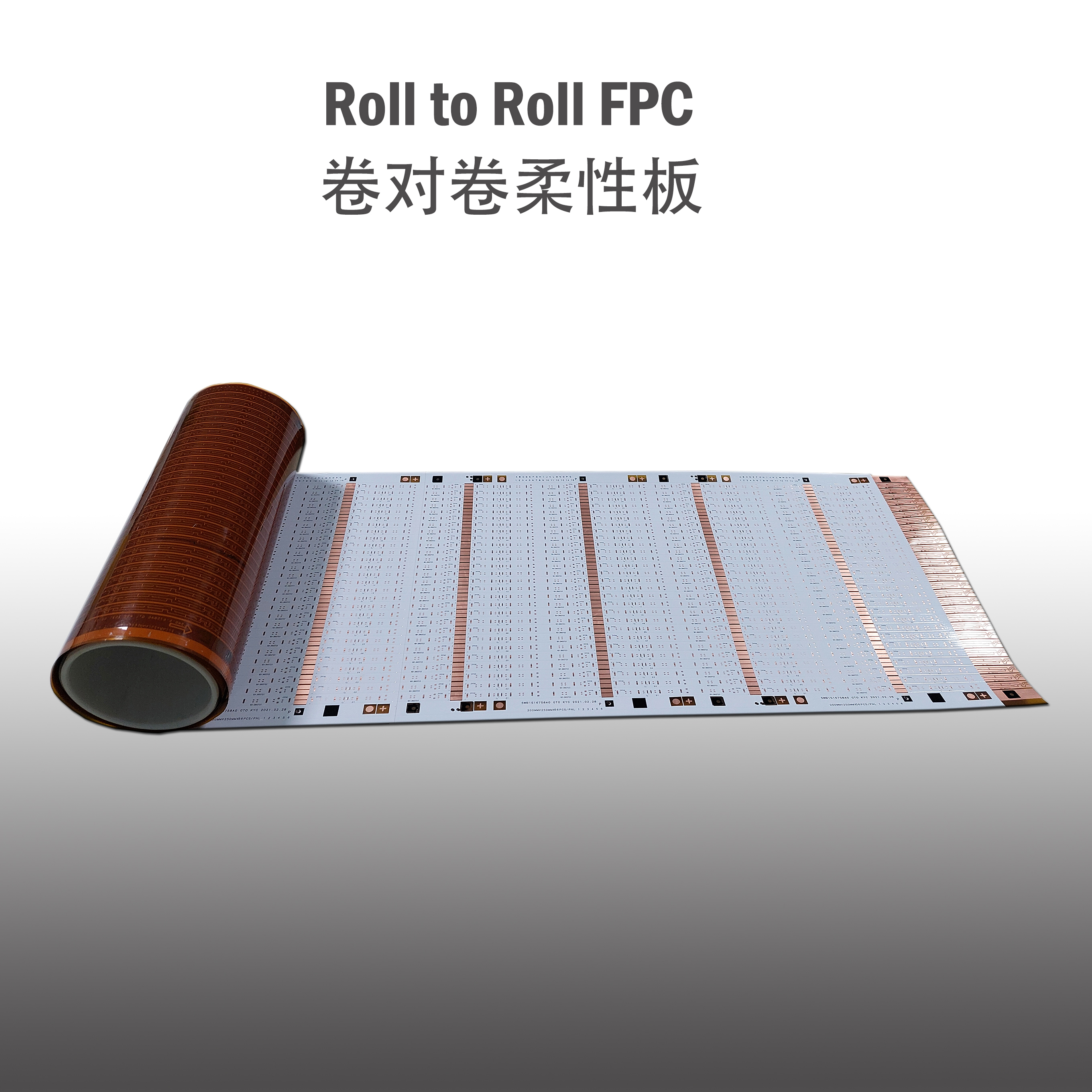
6. Roll to Roll Infinity FPCB
Single-sided FPCB using PI. Copper 1 oz, thickness 0.15 mm, panel 1000.00×124.00 mm. White solder mask, black silkscreen, OSP finish. Designed for continuous, high-volume LED lighting production.
Step-by-Step Selection Process
- Define application & power level: For low-power indoor (downlight ≤20W), FR4 or single-layer aluminum MCPCB may suffice. For high-power outdoor (street light 50–200W), a thicker aluminum or copper-based MCPCB with ≥1.5 W/m·K thermal conductivity is required.
- Choose base material: Aluminum (Al1060, Al5052) for rigid thermal management; PI for flexible strips/tubes; FR-4 for cost-sensitive two-layer designs.
- Determine layer count & copper thickness: Single side for simple drive circuits; double side if LED array density requires routing. Copper thickness: 1 oz standard; 2–3 oz for high-current paths.
- Select surface finish: OSP (low cost, good solderability), HASL (lead-free), ENIG (flat pads, better for fine-pitch ICs).
- Specify certifications: UL 8750/EN 60598 for luminaire safety; IEC/EN 62031 for LED modules; IPC-6012 for board quality. WODE has passed ISO9001, ISO14001, and IATF16949, ensuring products comply with UL, RoHS, and REACH.
Use Cases
| Application | Recommended PCB Type | Key Requirement |
|---|---|---|
| Street Light / Flood Light | Single-sided Aluminum MCPCB (Al1060, copper 1 oz) | Thermal conductivity ≥1.5 W/m·K, IP65, lifetime ≥50,000h |
| Downlight / Spotlight | Single-sided FR4 or Aluminum PCB | Compact size, CRI ≥80, SDCM ≤3-step |
| Panel Light / Bulb Lamp | Double-sided FR4 or MCPCB | Cost-effective, ENIG finish for SMD LEDs |
| Grow Light | Copper-based MCPCB with thermoelectric separation | High current density, uniform light distribution |
| LED Strip / Tube | PI-based FPC (single/double sided) | Ultra-thin (0.08–0.115 mm), flexible, OSP finish |
Comparison of Common LED PCB Substrates
| Property | FR-4 | Aluminum MCPCB | PI FPC |
|---|---|---|---|
| Thermal Conductivity | ~0.3 W/m·K | 1.0–3.0 W/m·K | ~0.2 W/m·K (requires heat sink) |
| Typical Thickness | 0.6–2.0 mm | 0.8–2.0 mm | 0.08–0.15 mm |
| Flexibility | Rigid | Rigid | Flexible |
| Max Copper Thickness | 3 oz | 3+ oz | 1 oz |
| Cost per Unit Area | Low | Medium | Medium-High |
| Typical Application | Indoor low-power | High-power outdoor | Strip/tube/COB modules |
Note: Values represent general industry benchmarks; specific products may vary.
Frequently Asked Questions
- Q: Which are the leading LED PCB suppliers?
- A: The global PCB manufacturing landscape includes players such as Zhen Ding Tech, Unimicron, DSBJ, Nippon Mektron, and TTM Technologies (NTI rankings). For LED-specific PCBs, however, manufacturers like WODE Circuit Technology (Zhuhai) Co., Ltd. focus on a broad product line including rigid MCPCB, FPCB, Infinity Length FPCB, and FR-4/CEM1/CEM3 PCBs. WODE has operated since 2003 with a 150,000 m² factory, 500+ employees, and an annual capacity of 6,000,000 m², serving over 1,000 customers in 30+ countries.
- Q: What certifications should a quality LED PCB supplier have?
- A: Key certifications for LED PCBs include UL 8750 (luminaire safety), EN 60598, IEC/EN 62031 (LED modules), and IPC-6012 (rigid board performance). A reliable manufacturer should hold ISO9001 (quality management), ISO14001 (environmental), and IATF16949 (automotive) certifications. WODE has passed these three international certifications and ensures compliance with UL, RoHS, and REACH standards.
- Q: What is the typical thermal conductivity requirement for an LED PCB?
- A: For high-power LED applications, the aluminum substrate thermal conductivity should be ≥1.5 W/m·K (≥3.0 W/m·K for extreme high power). The junction temperature should be ≤85°C (recommended ≤75°C) to maintain rated lifetime. WODE’s aluminum-based MCPCBs use materials such as Al1060 and Al5052, which meet these thermal requirements.
- Q: How do I choose between FR4 and aluminum for my LED lighting product?
- A: Use FR4 when the total LED power is low (≤10W) and the board is small, or when cost sensitivity is high. Choose aluminum MCPCB when power exceeds 10W, especially for outdoor or high-bay applications where thermal management dictates reliability. For flexible designs (strip, tube, COB), PI-based FPC is preferred.
- Q: Can WODE provide custom LED PCB samples and what is the typical lead time?
- A: Yes, WODE supports custom design and prototyping for LED PCB applications including High Power, High Thermal Conductivity, Ultra Thin, and specific form factors (street light, flood light, downlight, etc.). To discuss your project requirements and obtain a sample or a quote, contact the WODE sales team at GJMYB1@wodepcb.com or via WhatsApp at +1 929 434 1657.
Conclusion
Selecting the right LED PCB is a critical decision that affects thermal performance, reliability, and cost. By understanding the material properties and application requirements, manufacturers can partner with a proven supplier. WODE Circuit Technology offers a comprehensive range of LED PCBs—from single-sided FR4 to Roll-to-Roll Infinity FPCB—backed by 20+ years of experience, global certifications, and a massive production capacity. Download the full company brochure for detailed specifications.
Have Questions or Need More Details?
Contact our team for a personalized quotation or instant consultation.
Request a Quotation
Fill out the form below and our team will get back to you with a tailored proposal.
WhatsApp Direct Chat
Prefer to chat in real-time? Message us on WhatsApp for instant assistance & quick answers.
- Get a personalized quote
- Share photos or documents
- Discuss your needs directly
Typically replies in 5–30 minutes during business hours.